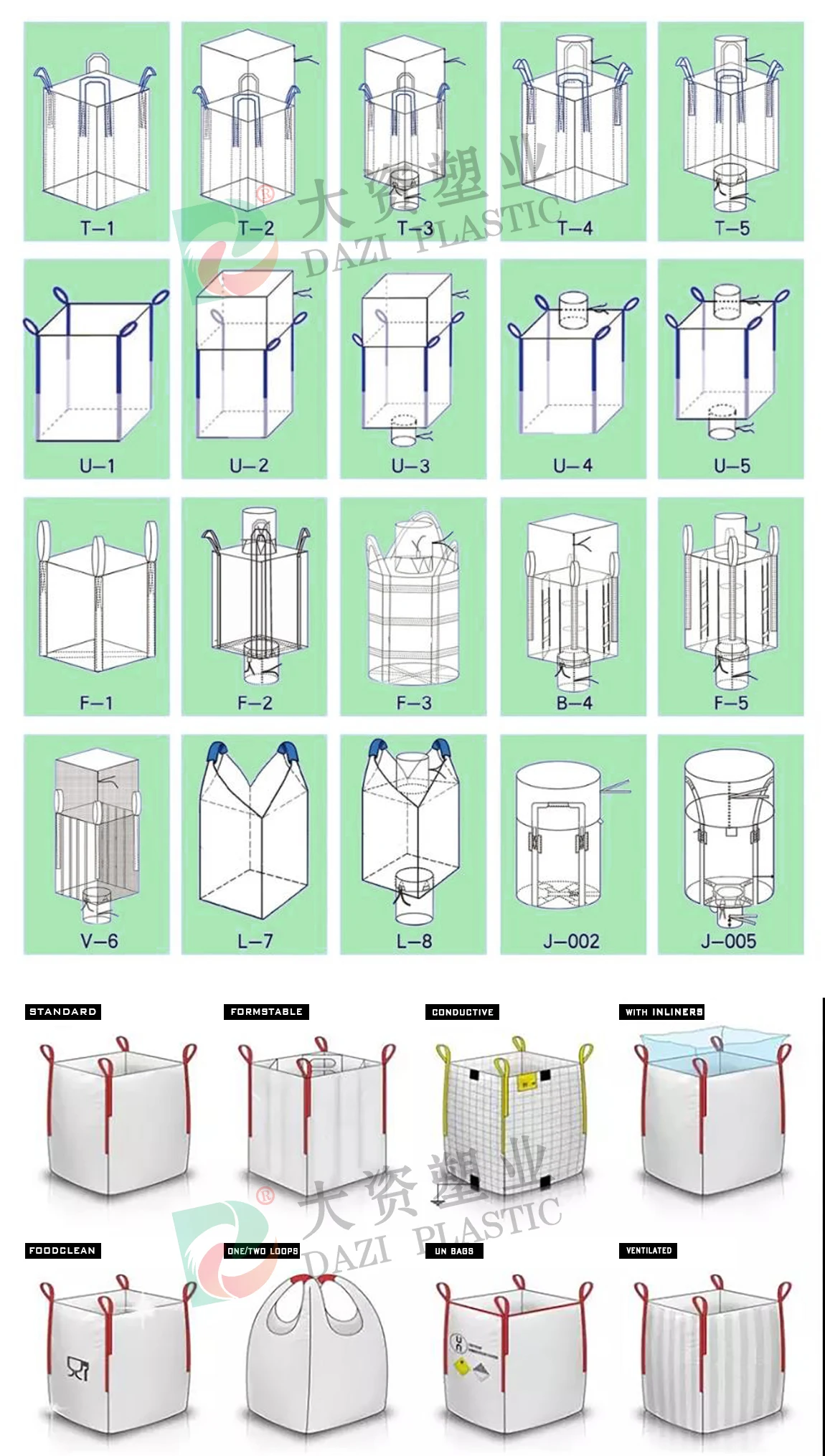
Bulk powder transportation is one of the most high-risk and error-prone links in industrial raw material logistics. Fine chemical powders, industrial additives, metal dust, polymer powders and pharmaceutical granular materials continuously generate static electricity through friction, suspension and flow during filling, stacking, vehicle vibration and discharging. Ordinary PP woven FIBCs and common anti-static bulk bags cannot eliminate static accumulation, easily triggering dust ignition, deflagration, operator electric shock and material contamination issues. In modern standardized industrial logistics,conductive FIBC has become the unanimously preferred packaging for powder transport, thanks to its reliable static dissipation performance and standardized industrial safety attributes. This article analyzes the core reasons for its industry popularity and sorts out practical key selection points for anti-static bulk bags, helping enterprises avoid safety risks and mismatched material losses.
The Root Causes of Static Hazards in Industrial Powder Transport
Different from coarse granular materials, fine powder has a large specific surface area and low gravity settlement speed. During the whole logistics process from factory feeding to terminal unloading, powder particles are always in a state of mutual friction and collision. Coupled with the friction between particles and the inner wall of the bulk bag, a large amount of static charge accumulates rapidly in a closed or semi-closed bag body.
In dry air environments, static potential rises exponentially. Ordinary insulating FIBCs lock charges on the fabric surface with no discharge channel, forming high-potential static electricity. Once the voltage exceeds the breakdown threshold of air gaps, electrostatic sparks will occur. For combustible, flammable and explosive powders with low minimum ignition energy, tiny sparks are enough to trigger dust explosion accidents. Meanwhile, static adsorption will cause a large amount of fine powder to adhere to the bag wall, resulting in incomplete discharging, material residue and secondary dust floating pollution, increasing production costs and environmental management pressure.
Core Reasons Why Conductive FIBC Becomes the First Choice for Powder Transport
1. Complete Static Elimination, Zero Hidden Explosion Risks
Conductive FIBC abandons the passive anti-static coating design of ordinary anti-static bags. It adopts embedded continuous conductive yarn grid weaving technology to build an all-round conductive network on the bag body surface and interior. For grounded Type C conductive FIBCs, all static charges generated by powder friction can be quickly exported to the ground to avoid charge aggregation. For ground-free Type D products, safe corona discharge technology is used to dissipate static energy in a low-energy and controllable manner.
This professional active static elimination mechanism fundamentally solves the static hazard pain point of powder transportation. It effectively prevents dust deflagration and ignition accidents, and is fully compliant with ATEX and IEC dust explosion-proof area standards, which is an essential safety guarantee for long-distance transportation and outdoor turnover of industrial powders.
2. Solve Powder Adsorption and Residue Problems
Static adsorption is a common but easily ignored problem in powder logistics. Static potential difference makes fine powder tightly attached to the inner wall of ordinary bulk bags, resulting in 2%–5% material residue after unloading. For high-value chemical powders, pharmaceutical raw materials and functional powders, long-term residue loss will cause huge economic waste.
Conductive FIBC can balance the internal and external potential of the bag body, eliminate static adsorption force, and make powder materials slide down smoothly during gravity discharging. It greatly improves discharging completeness, reduces material residual waste, and avoids secondary dust pollution caused by manual residual cleaning, optimizing the overall cleanliness and efficiency of powder logistics.
3. Stable and Durable Performance Without Attenuation
Most low-cost anti-static FIBCs on the market rely on surface chemical coating to achieve temporary anti-static effects. After rain washing, friction extrusion and repeated turnover, the coating will fall off and fail, resulting in sudden static safety hazards in the middle of transportation. In contrast, the conductive performance of conductive FIBC comes from the internal conductive grid structure of the fabric, which is integrated with the woven material and will not fail due to external friction and environmental changes.
It maintains stable anti-static and conductive effects in high-temperature, low-temperature, dry and humid environments, adapting to complex and changeable cross-regional transportation conditions, and realizing long-term reusable safe turnover, which is more in line with the durable and high-efficiency logistics needs of industrial enterprises.
4. Help Enterprises Pass Safety Audits and Customs Clearance
Practical Key Selection Points for Anti-static & Conductive Bulk Bags
1. Distinguish True Conductive Grid vs Surface Coating Anti-static
The first core selection principle is to identify the anti-static technology type. True conductive FIBCs have visible continuous conductive yarn grids inside the fabric, with stable and lasting performance. Coating-type anti-static bags only have a faint anti-static layer on the surface, which is invalid for long-distance powder transportation and repeated use. Enterprises must prioritize embedded grid conductive products to avoid disguised unqualified packaging.
2. Reasonably Match Type C and Type D According to Working Conditions
Type C conductive FIBCs rely on grounding wires for static derivation, suitable for fixed workshops, indoor filling and scenarios with complete grounding facilities, with high cost performance and stable effect. Type D static-dissipative FIBCs do not need grounding equipment, suitable for outdoor stacking, container transportation, mobile loading and ungrounded field operations. Blind selection will lead to insufficient safety or cost waste, and scenario matching is the key to efficient selection.
3. Check Conductive Continuity and Safety Factor Configuration
Qualified conductive FIBCs need to ensure the overall continuity of the conductive grid without broken wires and missing grids. At the same time, powder bulk materials are mostly high-density materials, so it is necessary to match a 6:1 high safety factor structure to avoid structural rupture caused by stacking and transportation vibration. Low-safety-factor conductive bags often have unqualified load-bearing performance, bringing dual hidden dangers of static safety and structural failure.
4. Focus on Weaving Density and Sealing Performance for Fine Powder
For ultra-fine powders prone to leakage and dust floating, in addition to conductive performance, it is necessary to select encrypted weaving conductive FIBCs with inner lining and tight sealing structure. Preventing micro-powder leakage while ensuring static safety avoids environmental dust pollution and material loss, realizing dual protection of safety and product quality.
5. Verify Complete Qualification Certification
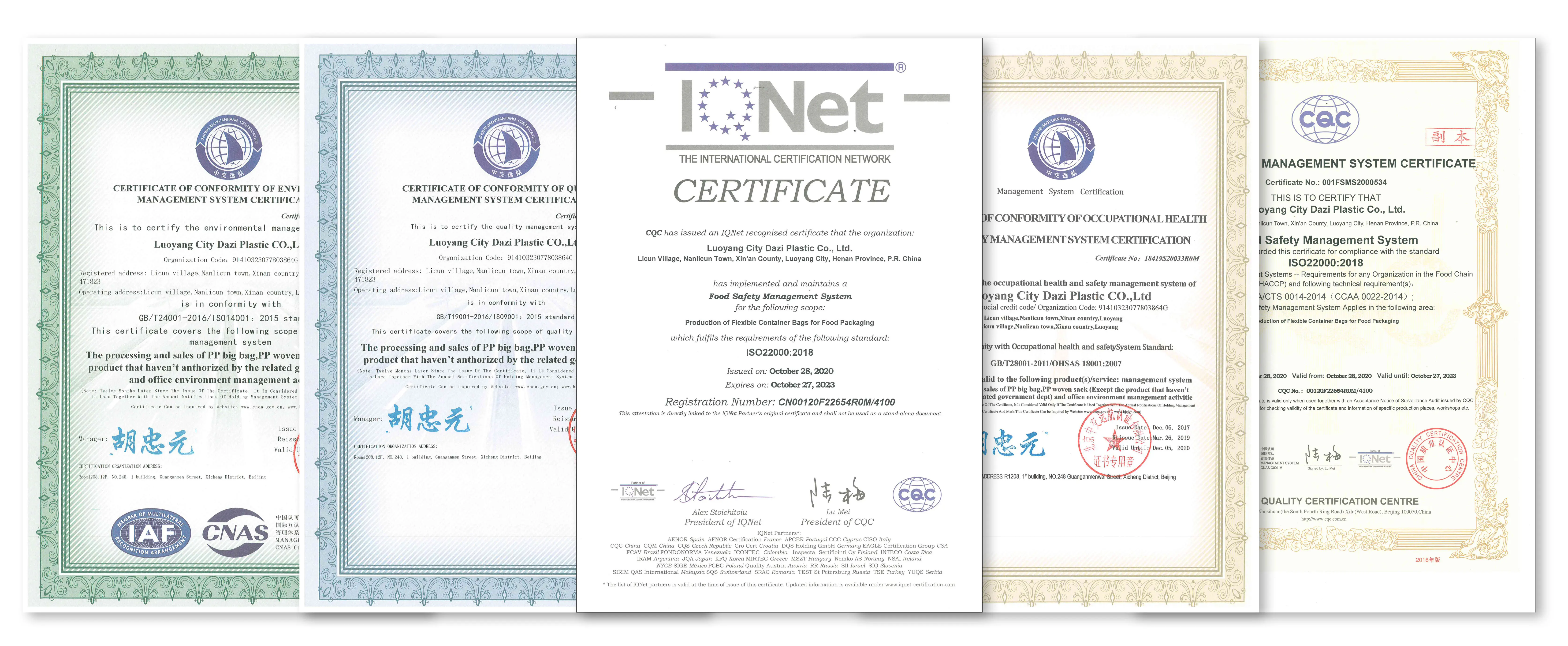
Formal conductive FIBCs for powder explosive environments must have ATEX, IEC and anti-static performance test reports. Purchasing uncertified low-cost products will lead to unguaranteed safety performance and inability to meet industrial safety standards, bringing potential legal and operational risks to enterprises.
Conclusion
Conductive FIBC is the most reliable and standardized anti-static packaging solution for industrial powder transportation. It fundamentally solves static explosion risks, powder residue loss and environmental dust hazards that cannot be avoided by ordinary bulk bags, and meets international explosion-proof safety and logistics compliance standards. Mastering the core selection points of distinguishing conductive technology, matching Type C/Type D models, verifying safety factors and checking certification qualifications can help industrial enterprises accurately select anti-static bulk bags, eliminate full-link powder logistics safety hazards, and realize safe, efficient and cost-controlled bulk powder transportation management.