For industrial manufacturers, mineral processors, agricultural enterprises and chemical suppliers, FIBC bulk bags (jumbo bags) are the most mainstream packaging solution for bulk material turnover, warehousing and cross-regional transportation. Unlike short-term temporary packaging, long-term bulk material storage and transportation places higher requirements on FIBC structural stability, weather resistance, sealing performance and safety redundancy. Many purchasers only focus on unit price while ignoring comprehensive durability, leading to bag aging, deformation, leakage and even safety accidents, which generates higher hidden costs. This article shares a complete guide on selectingcost-effective FIBC bulk bags tailored for long-term storage and transportation scenarios, helping enterprises balance safety, quality and long-term economic benefits.
Understand Core Differences: Short-Term Turnover vs Long-Term FIBC Application
Ordinary disposable FIBCs are designed for one-time loading and immediate delivery, without considering long-term stacking, outdoor aging and repeated handling fatigue. In long-term scenarios, bulk bags need to withstand continuous static stacking pressure, alternating temperature, ultraviolet radiation, rain erosion and multiple lifting and moving cycles. Low-cost standard FIBCs will gradually suffer from fabric brittleness, stitching loosening, loop fatigue failure and material leakage after long-term placement, resulting in material waste, warehouse sorting chaos and replacement losses. Therefore, cost-effective selection for long-term use must prioritize overall service life and stability rather than low unit price.
Key Parameters for Long-Term Storage & Transportation FIBC Selection
1. Reasonable Safety Factor for Long-Term Stacking Fatigue Resistance
Safety factor determines the structural safety margin of FIBC during long-term stacking and repeated transportation vibration. For short-term single-trip transportation, 5:1 safety factor is acceptable, but it is not suitable for long-term storage and multi-turn transportation. For long-cycle bulk material management, 6:1 heavy-duty safety factor is the most cost-effective choice.
FIBCs with 6:1 safety factor adopt thicker high-tenacity PP fabric, reinforced lifting loops and multi-layer overlapping stitching. They can resist long-term static stacking pressure, delayed load fatigue and bumpy transportation tension, effectively avoiding bag rupture and bulging deformation. Although the unit price is slightly higher than 5:1 disposable bags, it greatly reduces scrap rate and replacement frequency, achieving lower comprehensive cost.
2. UV Anti-Aging & Weather Resistance Design
Whether stored in outdoor yards or semi-open warehouses, long-term placed FIBCs are continuously exposed to sunlight, wind and temperature changes. Ordinary PP fabric ages rapidly, resulting in reduced tensile strength, surface cracking and brittle failure. Cost-effective long-term FIBCs must be added with UV stabilizer and anti-aging masterbatch during raw material weaving.
Integral UV modification ensures the bag maintains stable mechanical performance for 6–12 months or longer outdoor storage, effectively preventing aging damage caused by ultraviolet rays and seasonal temperature alternation. It avoids frequent bag replacement caused by natural aging and is the core configuration to reduce long-term operating costs.
3. Waterproof, Moisture-Proof and Dust-Proof Sealing Performance
Long-term storage is prone to moisture penetration, dew condensation and floating dust pollution, which cause bulk material caking, mildew and purity degradation. Cost-effective FIBC configuration should match material characteristics with professional sealing solutions.
For hygroscopic powder, chemical materials and grain products, adopt laminated waterproof fabric + sealed inner liner + drawstring sealed top and discharge spout structure to isolate rainwater and humid air. For dust-prone fine powder, encrypted stitching and fully enclosed anti-leakage design prevent tiny particle leakage. Reasonable waterproof and dust-proof configuration protects material quality and reduces material loss rate, bringing direct economic benefits.
4. Reinforced Structural Design for Multiple Handling Cycles
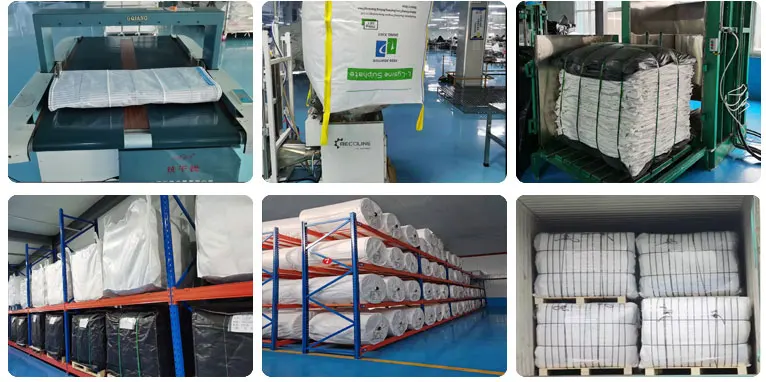
Long-term storage and transportation inevitably involve multiple forklift lifting, pallet moving, container loading and stacking operations. Ordinary FIBCs are easy to have loose threads, damaged loops and bottom wear after repeated handling. High-quality cost-effective FIBCs adopt reinforced lifting loop base, thickened wear-resistant bottom and anti-tear sewing technology.
The optimized structure improves the overall wear resistance and tear resistance, adapts to frequent mechanical handling, extends the service cycle, and supports repeated turnover use for internal warehouse materials, greatly saving long-term packaging procurement costs.
5. Appropriate Bag Shape Design to Improve Storage & Shipping Efficiency
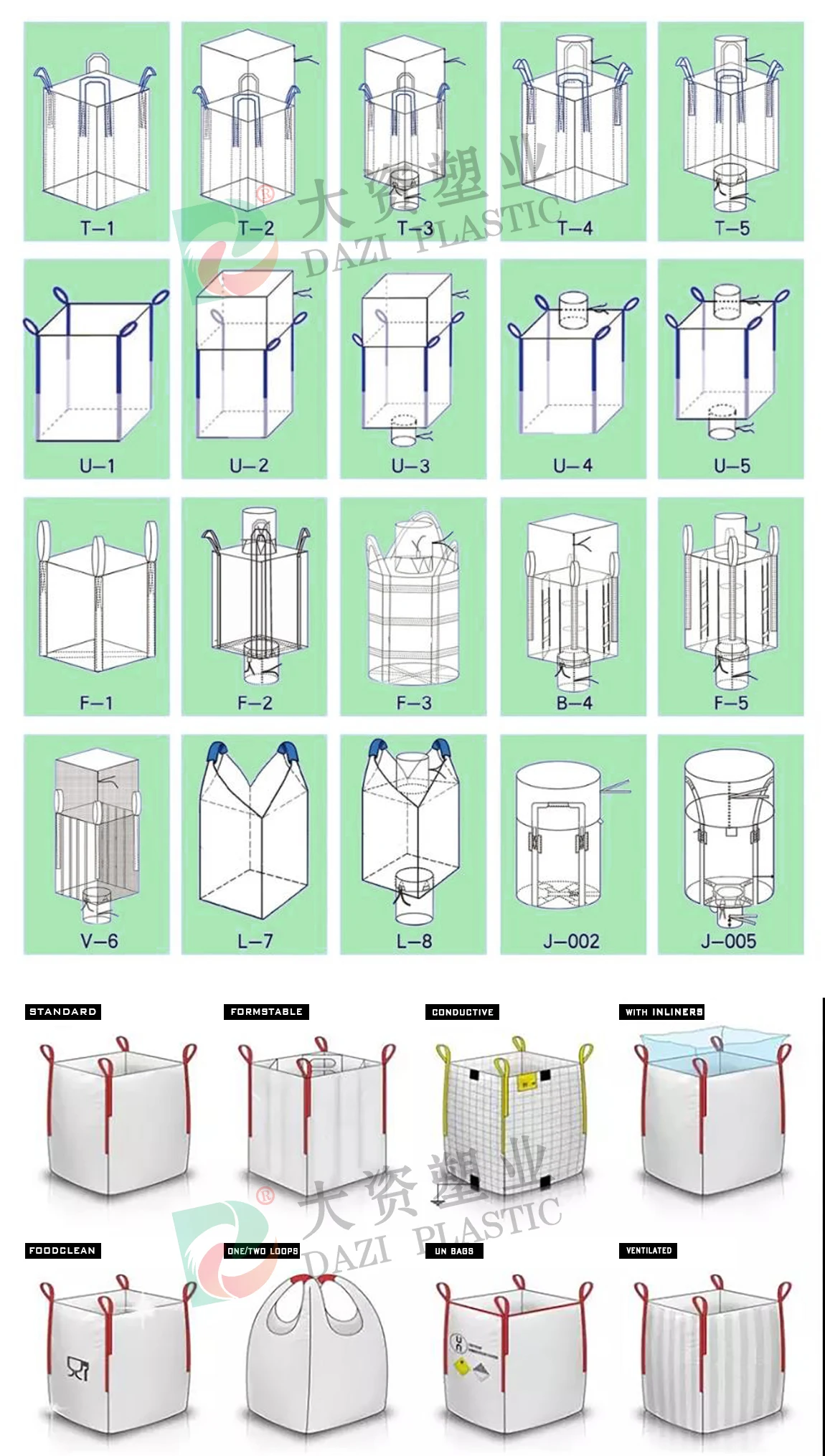
Logistics and warehousing cost savings are important parts of FIBC cost performance. For long-term standardized stacking and container transportation, U-panel cubic-shaped FIBCs are more suitable. They avoid irregular bulging of circular bags, realize neat stacking and high container loading rate, maximize warehouse space utilization and reduce unit storage and freight costs.
For heavy granular and high-friction materials, circular seamless FIBCs have better overall strength and anti-leakage performance, reducing long-term damage rate. Matching the right bag structure according to material properties is the key to scientific cost reduction.
Avoid Common Low-Cost FIBC Selection Traps
-
Blindly pursuing low unit price: Ultra-low-cost FIBCs use recycled materials, insufficient fabric grammage and simplified stitching, which age and break easily in long-term use, causing huge material loss and safety risks.
-
Ignoring UV and weather resistance: Non-UV FIBCs become brittle and cracked within several months of outdoor storage, forcing overall replacement.
-
Mismatched safety factor: Using 5:1 disposable bags for long-term stacking leads to deformation and bag bursting accidents.
-
Saving liner and sealing configuration: Simple structure causes material moisture and leakage, resulting in greater economic loss than packaging cost.
Scenario-Based Cost-Effective FIBC Matching Guide
-
Long-term outdoor storage + ordinary granular materials: 6:1 safety factor + UV anti-aging + wear-resistant bottom FIBC
-
Long-term warehouse stacking + fine powder materials: Sealed dust-proof structure + waterproof inner liner + reinforced stitching FIBC
-
Repeated internal turnover & multi-time transportation: Multi-trip heavy-duty reinforced FIBC
-
Export long-distance shipping + long-cycle storage: Weather-resistant + high-stability cubic U-panel FIBC