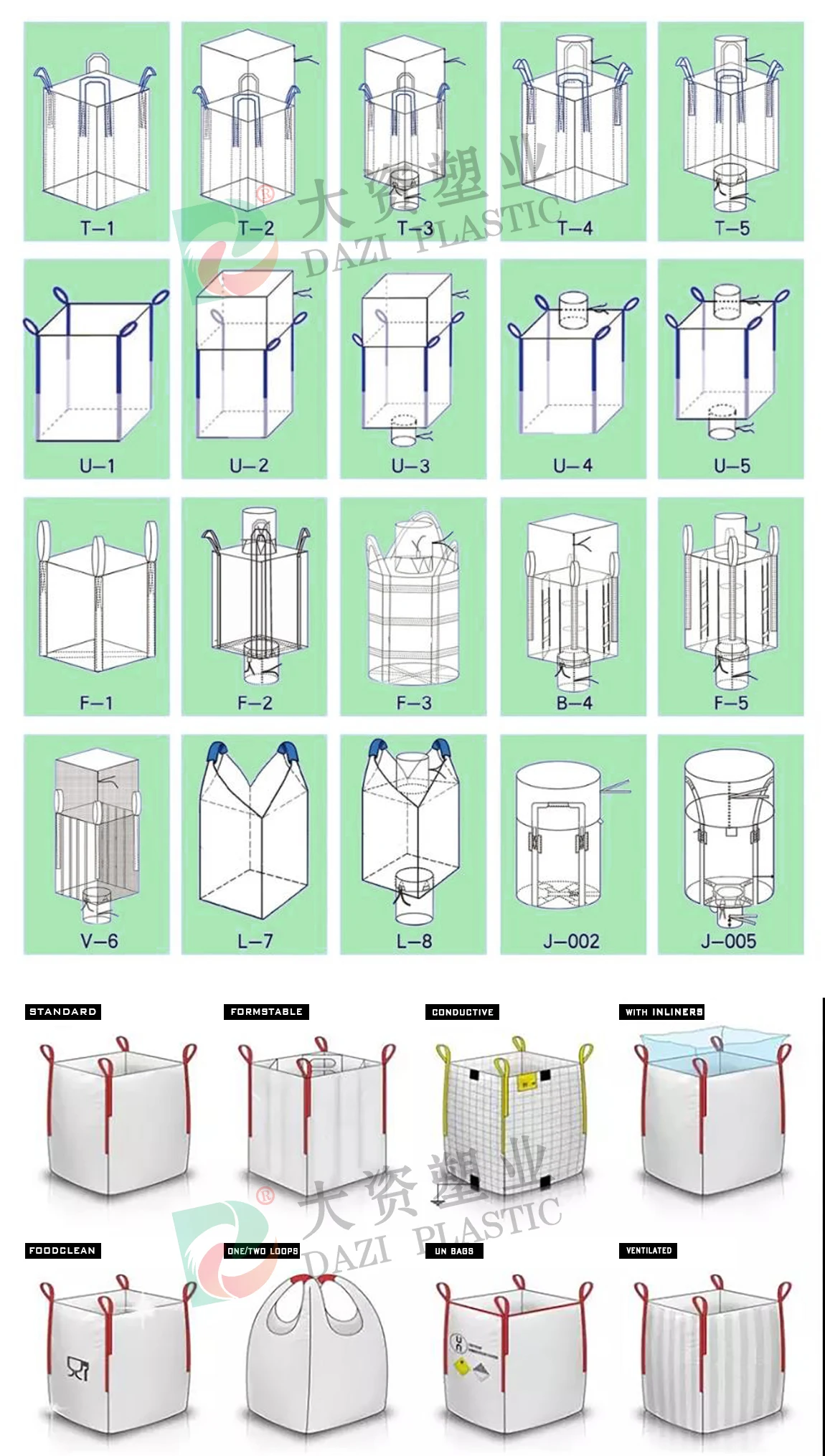
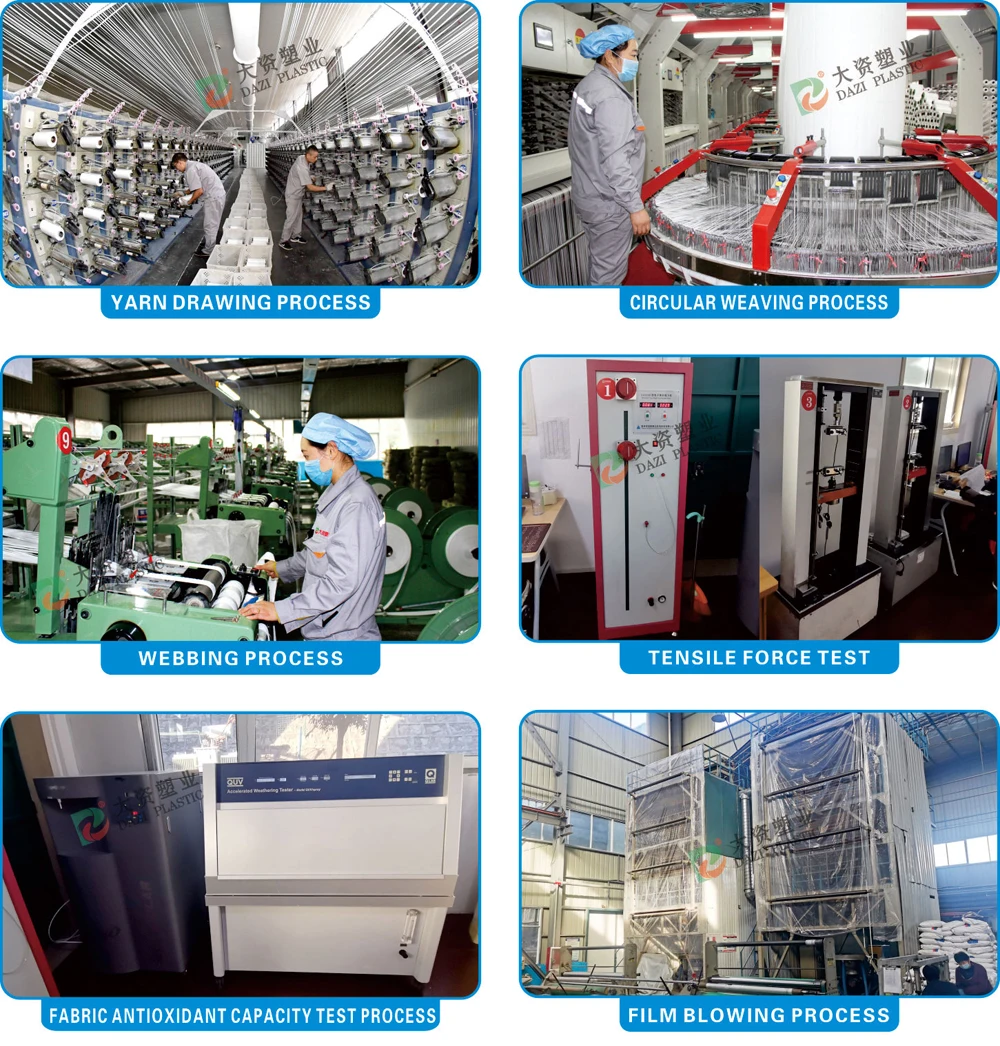
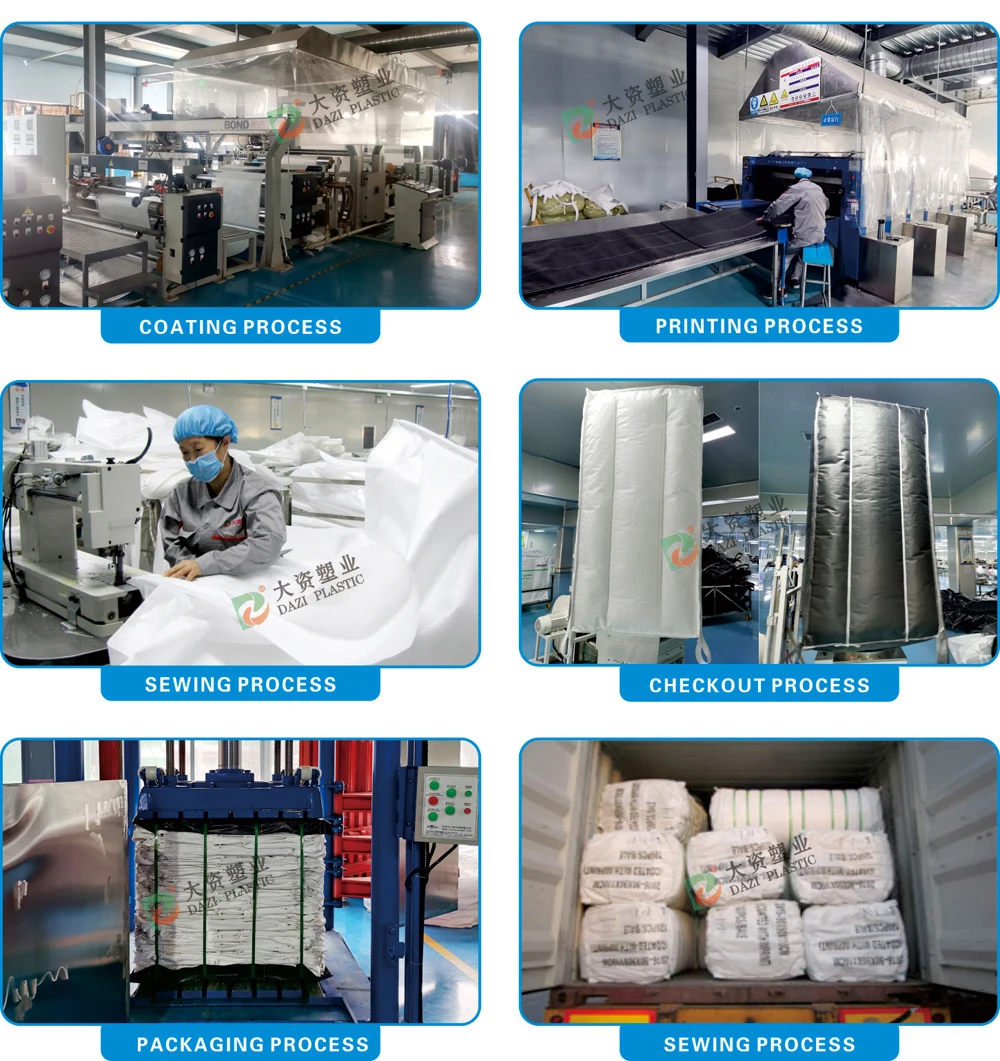
Industrial FIBC bulk bags (jumbo bags or ton bags) are essential packaging containers for storing, lifting, and transporting bulk powder, granular, and lump materials across chemical, food, agricultural, mining, and construction industries. In industrial procurement, many quality risks including bag rupture, material leakage, dust pollution, and cargo contamination are caused by unqualified FIBC products rather than improper usage. To help buyers, warehouse managers, and logistics teams accurately distinguish premium industrial FIBC bulk bags from inferior products, this complete quality selection guide systematically summarizes the core judging standards covering raw material quality, structural craftsmanship, load safety factors, functional performance, and industry certification compliance.
1. Raw Material Quality Standard: Virgin PP vs Recycled Material
The base material determines the fundamental performance and service life of industrial FIBC bulk bags. High-quality industrial FIBCs strictly adopt 100% virgin polypropylene (PP) resin with high tensile strength, uniform weaving stability, and strong aging resistance. Virgin PP material features bright surface color, tough texture, no peculiar odor, and stable molecular structure, ensuring no brittle failure or strength attenuation during long-term transportation and outdoor storage.
In contrast, low-quality FIBC bulk bags use mixed recycled PP materials with uneven thickness, poor toughness, and hidden impurities. Although the appearance looks similar, recycled materials have unstable tensile performance, are prone to aging and cracking, and cannot withstand dynamic lifting and repeated stacking. For food-grade, chemical-grade, and long-cycle reusable FIBCs, virgin raw material is the most basic and non-negotiable quality standard.
2. Weaving Density & Fabric Tensile Standard
Fabric weaving density and tensile strength are intuitive indicators to judge FIBC quality. Qualified industrial FIBC bulk bags adopt high-density uniform weaving technology with compact mesh structure, flat surface, no loose threads, broken wires, or thin spots. Standard industrial woven fabric maintains stable tension and anti-tear performance under heavy load and friction.
High-quality FIBC fabric has accurate weight per square meter, consistent thickness, and strong puncture resistance, effectively resisting friction and impact from abrasive bulk materials such as ore and gravel. Inferior products have sparse weaving, uneven mesh gaps, and low overall tension, easily causing local deformation, tearing, and powder leakage during usage.
3. Load Capacity & Industrial Safety Factor Standard
Safety factor is the core technical standard for judging whether FIBC bulk bags meet industrial logistics requirements. Regular industrial FIBCs are divided into two safety grades: 5:1 for single-time use and 6:1 for reusable heavy-duty use.
High-quality industrial FIBC bulk bags are clearly marked with rated load (500kg, 1000kg, 1500kg, 2000kg, 2500kg) and pass professional static and dynamic load tests. A qualified 6:1 safety factor means the bag can bear six times the rated load without breaking, fully adapting to forklift lifting, crane hoisting, high stacking, and long-distance bumpy transportation. Low-quality FIBCs often falsely mark load parameters with insufficient safety factors, leading to sudden rupture and cargo loss during dynamic operation.
4. Stitching & Structural Reinforcement Standard
Most FIBC bag failures occur at stitching joints and lifting loop connections, making structural craftsmanship a key quality inspection point. High-quality industrial FIBC bulk bags adopt multi-layer overlapping dense stitching, double-thread reinforced sewing, and edge banding reinforcement technology.
The connection between lifting loops and the bag body is fully reinforced with integrated weaving or multi-point force dispersion design to avoid off-line and falling off under heavy tension. The bottom and top sealing adopts thickened pressure sealing and encrypted stitching to prevent material leakage. In contrast, inferior FIBCs have sparse stitching, loose thread ends, and unreinforced stress points, which are extremely prone to cracking during lifting and stacking.
5. Inner Liner Quality & Sealing Performance Standard
For bulk materials that are dusty, hygroscopic, or hygienic-sensitive, the inner liner quality directly determines cargo protection effect. High-quality FIBC liners are made of pure HDPE material with uniform thickness, high barrier performance, no holes, and no impurities.
Qualified liners are classified into dust-proof, moisture-proof, waterproof, and food-grade hygienic types. They fit closely with the bag body without wrinkling, falling off, or breaking, effectively isolating external moisture, dust, and pollutants. Premium sealed liners can completely solve ultra-fine powder leakage and material deliquescence problems. Low-quality thin liners have uneven thickness, brittle texture, and tiny pinholes, resulting in poor sealing and failure to protect bulk materials.
6. Functional Treatment & Environmental Resistance Standard
High-quality industrial FIBC bulk bags support standardized functional treatment according to application scenarios, which is an important difference between industrial-grade and ordinary civilian-grade bags.
-
UV resistance: Qualified outdoor FIBCs undergo professional UV-stabilized treatment to prevent aging, brittleness, and strength decline under long-term sunlight exposure.
-
Anti-static performance: Chemical-grade FIBCs have stable static elimination function to avoid dust explosion risks for flammable powders.
-
Waterproof & moisture-proof performance: Industrial-grade barrier treatment ensures stable protection in humid warehousing and sea freight environments.
Low-quality FIBCs lack functional treatment and can only be used for simple indoor short-term storage, failing to adapt to complex industrial and cross-border logistics environments.
7. Industry Certification & Compliance Standard
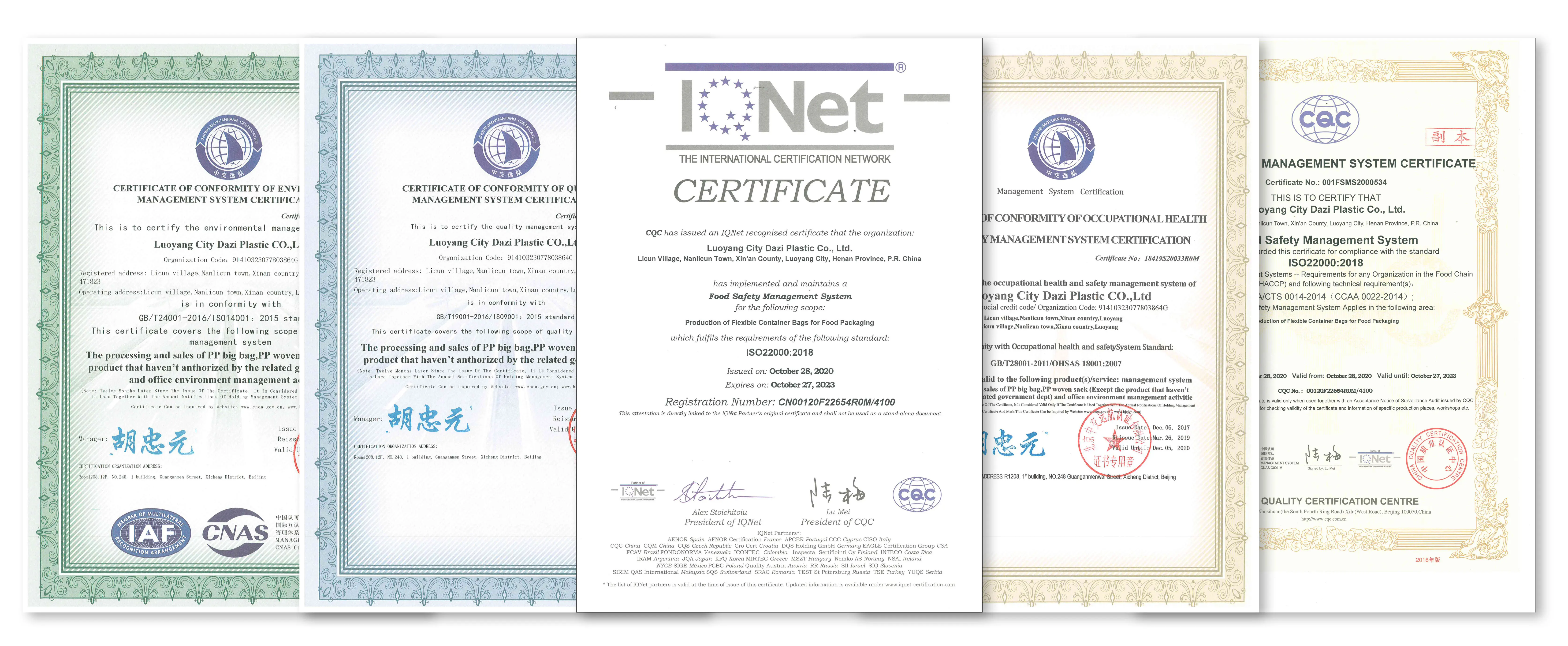
Formal high-quality industrial FIBC bulk bags have complete factory inspection reports and industry qualification certifications, which are the most credible basis for quality judgment.
-
General industrial standard: Pass tensile test, drop test, and stacking test.
-
Food-grade standard: Comply with FDA and EU food contact safety standards, non-toxic and pollution-free.
-
Hazardous chemical standard: Possess UN certification for dangerous goods packaging.
-
Environmental standard: Meet RoHS and REACH environmental protection requirements for global export.
Uncertified FIBCs cannot pass factory quality inspection, warehouse access, and cross-border customs clearance, bringing huge hidden risks to industrial logistics.
8. Batch Stability & Appearance Inspection Standard
High-quality industrial FIBC bulk bags maintain excellent batch consistency. The size, weight, color, stitching, and load performance of each batch of products are uniform without obvious deviation. The appearance is flat and clean with neat stitching, standard printing, and no defective products such as damage, dirt, and thread residue.
Inferior FIBC products have inconsistent batch quality, random size deviation, rough appearance, and unstable performance, which is not conducive to standardized industrial packaging and unified logistics management.
Common Low-Quality FIBC Identification Checklist
-
Blended recycled materials with dim color, poor toughness, and easy aging
-
Sparse weaving density and uneven fabric thickness
-
Insufficient safety factor and false load parameter marking
-
Sloppy stitching, loose thread ends, and unreinforced stress points
-
Thin and brittle inner liner with poor sealing performance
-
No functional treatment and no complete quality certification
Final Selection Principles for Industrial FIBC Bulk Bags
When purchasing industrial FIBC bulk bags, enterprises should not only compare unit prices but comprehensively judge quality based on raw materials, safety factor, structural craftsmanship, liner performance, functional configuration, and certification compliance. Select matched high-quality FIBC products according to material characteristics and usage environments to avoid safety risks and economic losses caused by unqualified packaging.
Conclusion
Judging the quality of industrial FIBC bulk bags requires systematic standards covering raw material quality, weaving craftsmanship, load safety factor, structural reinforcement, liner sealing, environmental resistance, and industry certification. Only FIBC products that meet all industrial quality standards can ensure safe, stable, and efficient bulk material storage and transportation. Mastering these core judging standards helps industrial buyers make scientific, cost-effective, and risk-free FIBC purchasing decisions.