Powder material transportation faces two major packaging failure pain points that granular logistics rarely encounters: progressive fabric abrasion caused by long-term powder friction and micro powder sifting through tiny stitching and weaving gaps. Most standard FIBCs are designed for general bulk materials, lacking targeted wear resistance and ultra-fine sealing structures. During repeated loading friction, bumpy road transit and multi-cycle turnover, ordinary bulk bags suffer from surface fiber peeling, local thinning, stitch gap expansion and invisible fine powder leakage. These issues lead to continuous material loss, workshop dust pollution, shortened bag service life and even sudden bag breakage risks. Therefore, selecting professional wear-resistant and leak-proof FIBC bulk bags tailored for powder characteristics is the key to standardized, low-loss and safe powder bulk logistics. This article shares targeted, practical and industry-verified selection standards to help enterprises match high-matching powder-grade bulk bags.
Unique Packaging Failure Mechanisms of Industrial Powder Transportation
Different from bulky and low-friction granular materials, fine chemical powder, mineral powder, food powder and battery functional powder have large specific surface area and strong fluidity. During filling, lifting and vehicle vibration, powder particles continuously rub against the inner wall of the FIBC in all directions, forming persistent uniform abrasion on the fabric. Ordinary low-GSM woven fabrics will gradually wear thin, resulting in fiber breakage and local hole formation after multiple turnovers.
In terms of leakage risks, powder particles can penetrate micro gaps that coarse particles cannot pass through, including weaving tiny pores, needle holes from stitching gaps and loose sealing positions of filling and discharging spouts. Most conventional FIBCs only achieve macroscopic anti-leakage effect, unable to block micron-level powder penetration. Long-distance transportation will cause invisible dust overflow, resulting in 2%-6% material loss per shipment and hidden environmental safety hazards, which is the core reason why ordinary bags are not suitable for high-standard powder logistics.
Core Wear-resistant Selection Indicators for Powder-grade FIBCs
1. Virgin High-GSM Fabric with Uniform Weaving Density
The foundation of wear resistance lies in raw material purity and fabric gram weight. Professional powder wear-resistant FIBCs adopt 100% virgin PP resin with strong molecular toughness and anti-aging performance, avoiding the brittle and easy-to-wear defects of recycled material fabrics mixed with impurities. In terms of gram weight matching, light fine powder such as flour and talcum powder requires 120–140 GSM fabric, while high-density abrasive powder such as mineral powder and metal powder needs heavy-duty fabric above 160 GSM to resist continuous friction loss.
Uniform weaving density is more critical than simple thickening. High-quality wear-resistant FIBCs adopt precise industrial weaving technology with consistent warp and weft tension, no sparse weaving areas and no local weak points. It ensures overall uniform wear resistance of the bag body, preventing partial thinning and damage caused by uneven friction during powder flow, and greatly extending the reusable turnover life of bulk bags.
2. Inner Anti-wear Coating & Reinforced Wall Structure
For highly abrasive industrial powder, single-layer thickened fabric is still insufficient to resist long-term cyclic friction. Premium wear-resistant FIBCs are equipped with inner smooth anti-wear coating or integrated laminated structure. The smooth inner surface reduces friction coefficient between powder and fabric, avoids fiber scraping and peeling, and effectively resists continuous scouring wear during powder filling and discharging.
Different from ordinary surface spraying that is easy to fall off, integrated lamination wear-resistant layer and the base fabric are tightly fused as a whole, not peeling or failing after repeated cleaning and friction. It maintains stable wear resistance in high-frequency turnover scenarios, solving the problem of rapid performance attenuation of ordinary FIBCs after multiple uses.
3. Key Stress Point Reinforcement Design
The bottom of the bag, corner joints and spout connection are the most severely worn areas in powder transportation. Powder accumulation and long-term gravity friction lead to priority wear and damage at these positions. Qualified wear-resistant FIBCs adopt targeted thickening and multi-layer reinforcement for vulnerable parts, with additional wear-resistant cloth lining at the bottom and corners to disperse friction pressure.
The lifting loop connection area is integrated with reinforced weaving to avoid tearing and wear failure caused by repeated lifting tension and vibration friction, ensuring that the whole bag structure maintains complete wear resistance consistency in full-cycle logistics.
Professional Leak-proof Structural Selection Standards for Fine Powder
1. Sift-proof Seam Technology Eliminates Needle Hole Leakage
The main leakage source of fine powder is the stitching needle gap. Ordinary single-layer linear stitching leaves dense tiny needle holes, which cannot block ultra-fine powder penetration. High-quality leak-proof FIBCs adopt professional sift-proof rolling seam, triple dense stitching and filler cord sealing technology. The multi-layer overlapping sewing structure completely covers needle gaps, realizing zero micro-powder sifting at stitching positions.
This dedicated sift-proof process is the core difference between powder special FIBCs and ordinary granular bags, thoroughly solving the problem of persistent dust overflow from seams that plagues traditional bulk packaging.
2. Fully Sealed Spout & Discharge Port Structure
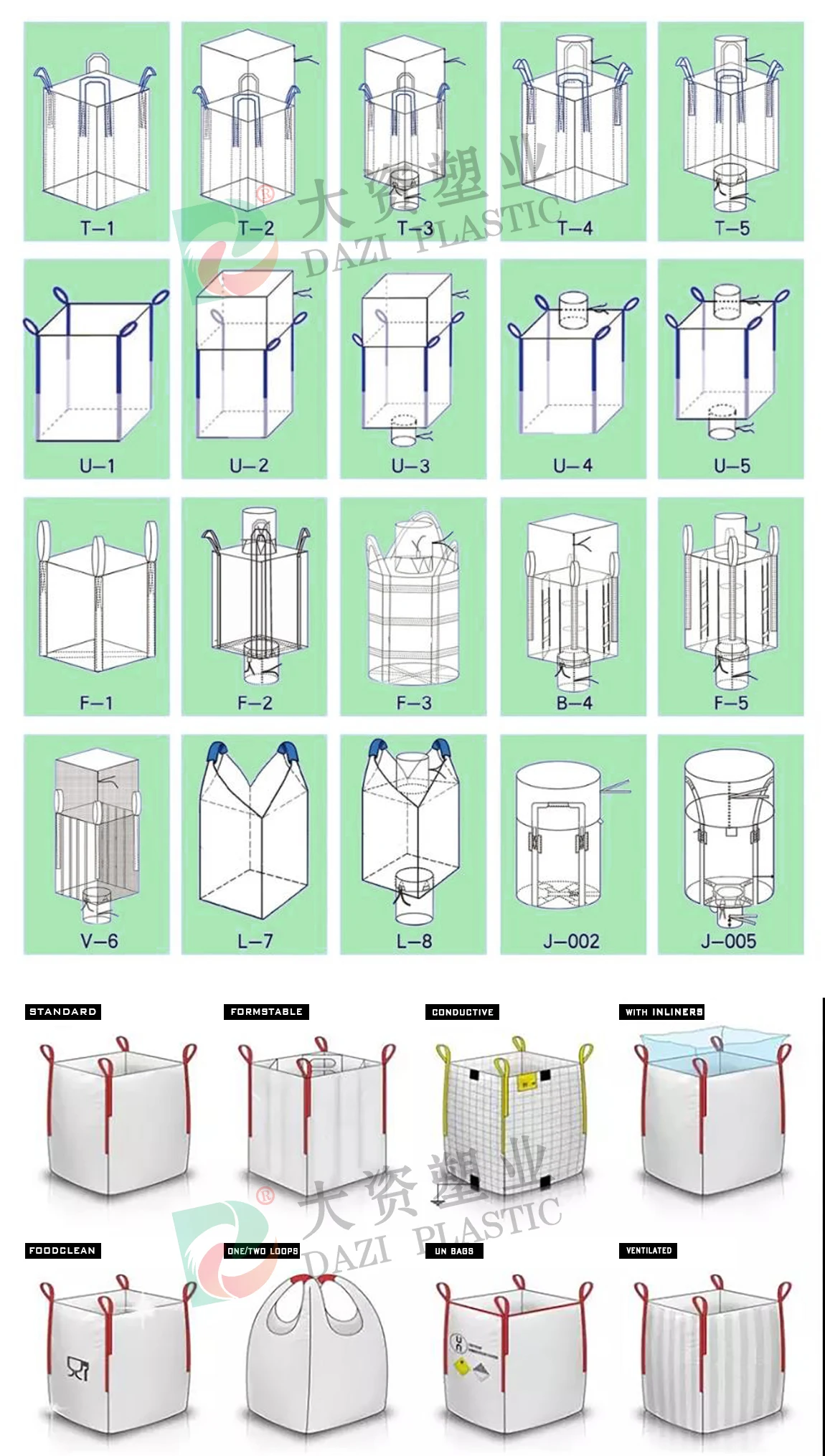
Loose filling spout and open discharge port are important leakage hidden dangers in powder logistics. Professional leak-proof FIBCs are equipped with customized closed spout design, with multi-layer tightening belts and overlapping sealing skirts. After filling, the spout can be completely sealed without gaps, preventing powder dust from overflowing during transportation vibration.
For fully automatic discharging production lines, the optimized nested discharge port structure is adopted to avoid residual gap leakage during unloading, realizing full-link sealing protection from warehousing, transportation to discharging.
3. Customized Dust-proof Inner Liner Matching
For ultra-fine powder (particle size less than 10μm) and high-value easy-dust materials, single-layer sift-proof stitching cannot meet zero-leakage requirements. It is necessary to select FIBCs with integrated PE dust-proof liners or aluminum foil barrier liners. The integral inner liner completely isolates powder from the outer woven fabric, blocking all possible leakage gaps of weaving pores and stitching needle holes.
Meanwhile, the smooth inner liner avoids powder adhesion and residual waste, improves discharging cleanliness, and solves the secondary dust pollution problem caused by residual powder in ordinary bags.
Scenario-based Accurate Selection Rules
-
Ordinary fine powder (talc powder, lime powder): Select 120–140 GSM encrypted woven FIBC with sift-proof seams and common dust-proof liner, balancing wear resistance and cost performance
-
Abrasive mineral powder & high-density chemical powder: Choose 160GSM+ heavy-duty laminated wear-resistant FIBC with corner thickening and full sealed spout structure
-
Ultra-fine high-value powder & easily floating dust materials: Adopt fully lined integral leak-proof FIBC with triple sift-proof seams to achieve zero leakage and zero residual
-
Repeated turnover powder logistics: Prioritize full wear-resistant reinforced FIBCs to reduce replacement frequency and long-term comprehensive costs
Common Selection Mistakes to Avoid
Many purchasers confuse thick fabric with wear-resistant fabric. Simply increasing fabric gram weight without uniform weaving and anti-friction coating will still cause rapid fiber wear and powder leakage. Another common mistake is only paying attention to outer sealing and ignoring stitching sift-proof performance, resulting in invisible fine powder loss from needle holes. In addition, mismatching ordinary granular FIBCs for long-distance powder transportation will lead to accelerated wear and sudden leakage failure, bringing greater economic losses.
Conclusion
Selecting qualified wear-resistant and leak-proof FIBC bulk bags for powder material transportation requires professional matching based on powder abrasiveness, fineness and logistics turnover mode. Taking high-purity high-density wear-resistant fabric, anti-friction reinforced structure, sift-proof seamless stitching and fully sealed lining system as the core selection standards can completely solve the two major industrial pain points of fabric wear and fine powder leakage in powder logistics. Scientific selection of powder-specific FIBCs helps industrial enterprises eliminate material loss, reduce environmental dust hazards, extend packaging service life and realize efficient and safe standardized bulk powder transportation management.