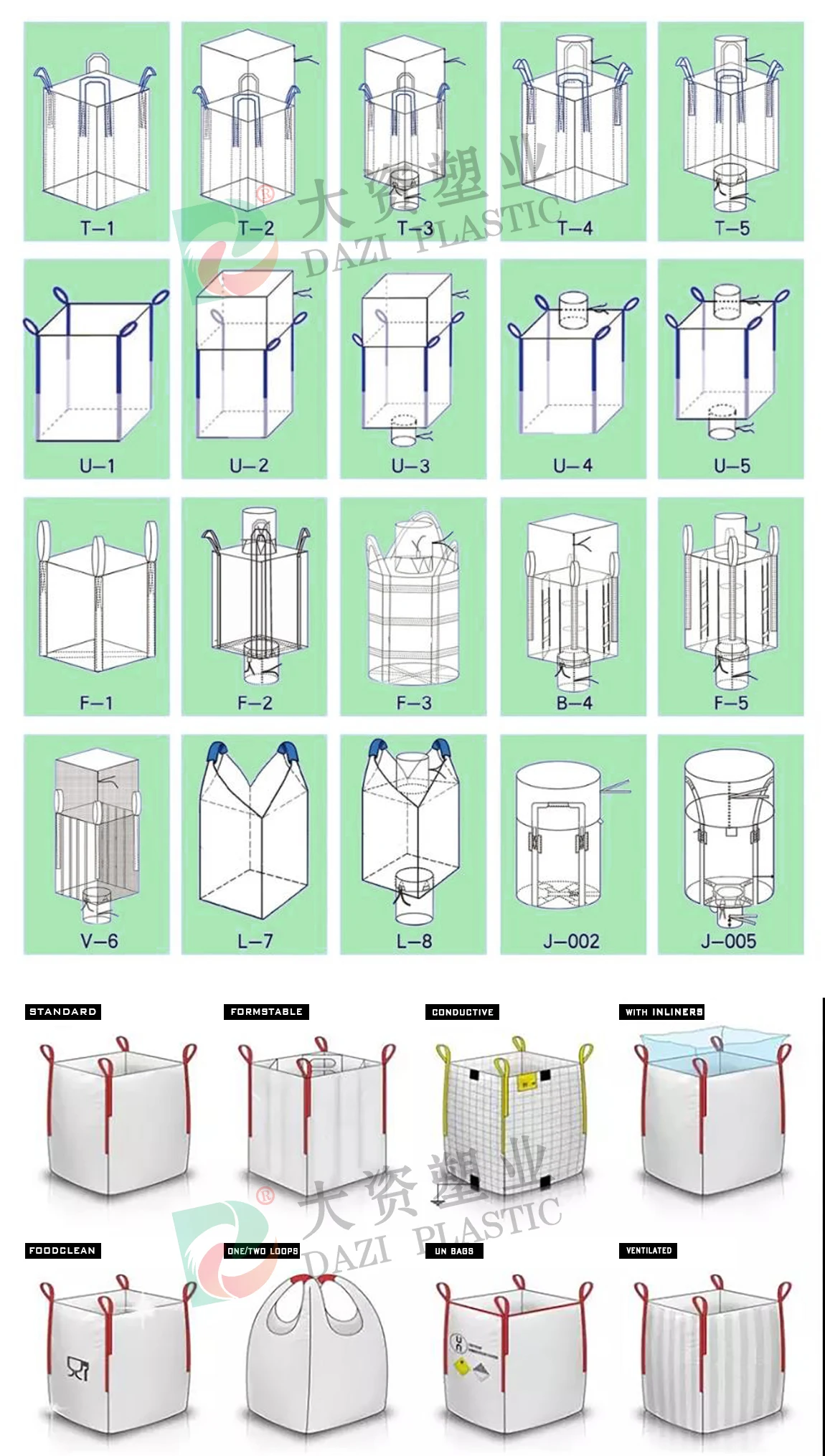
Heavy-duty granule transportation dominates bulk logistics across mineral processing, plastic manufacturing, agricultural processing and chemical granular material industries. High-density granular materials such as ore particles, resin pellets, fertilizer granules and building aggregates impose continuous heavy static pressure and cyclic friction stress on packaging carriers during transit and stacking. Most logistics providers conventionally adopt multi-panel U-type FIBCs for general bulk transport, yet frequently encounter seam tearing, local stress rupture, residual material waste and excessive packaging cost redundancy. Circular FIBC bulk bags, manufactured with seamless tubular weaving technology, feature integrated structural integrity and uniform pressure dispersion, perfectly matching the mechanical characteristics of heavy granular cargoes. As a low-redundancy, high-durability and budget-friendly packaging option, circular FIBCs deliver unique cost advantages and operational stability for long-term heavy-duty granule logistics.
Structural Uniqueness of Circular FIBCs for Heavy Granular Loads
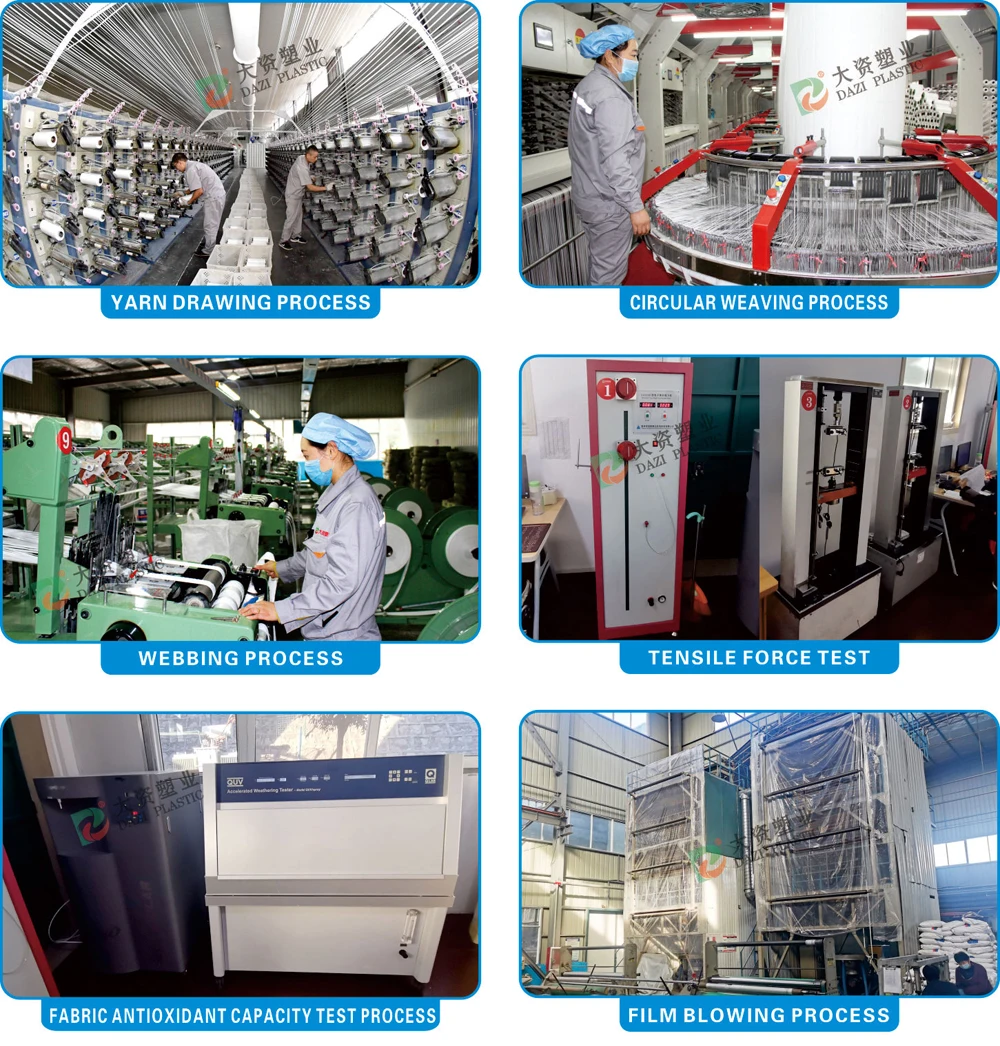
Different from traditional multi-panel FIBCs assembled with multiple fabric pieces and overlapping side seams, circular FIBCs adopt one-piece circular loom weaving to form a complete tubular bag body without vertical side seams. This seamless structure eliminates the weakest failure points that plague stitched multi-panel bags, where seam splitting and thread loosening commonly occur under heavy load tension and long-term stacking pressure. For high-density granular materials weighing 800kg to 2000kg per bag, uniform stress distribution across the entire circular fabric body avoids local overloading and structural fatigue, ensuring stable bearing capacity throughout transportation and storage cycles.
In addition, the smooth inner tubular wall of circular FIBCs removes corner gaps and concave dead zones existing in square multi-panel bags. This structural feature enables granular materials to slide freely during discharging, drastically reducing material residue and bridging issues unique to heavy granule packaging. The integrated body design also simplifies overall bag structure with fewer auxiliary stitching parts, realizing streamlined production and lower raw material consumption compared with conventional panel-type FIBCs.
Core Cost-Saving Mechanisms in Heavy-Duty Granule Logistics
1. Lower Unit Procurement Cost with Streamlined Structure
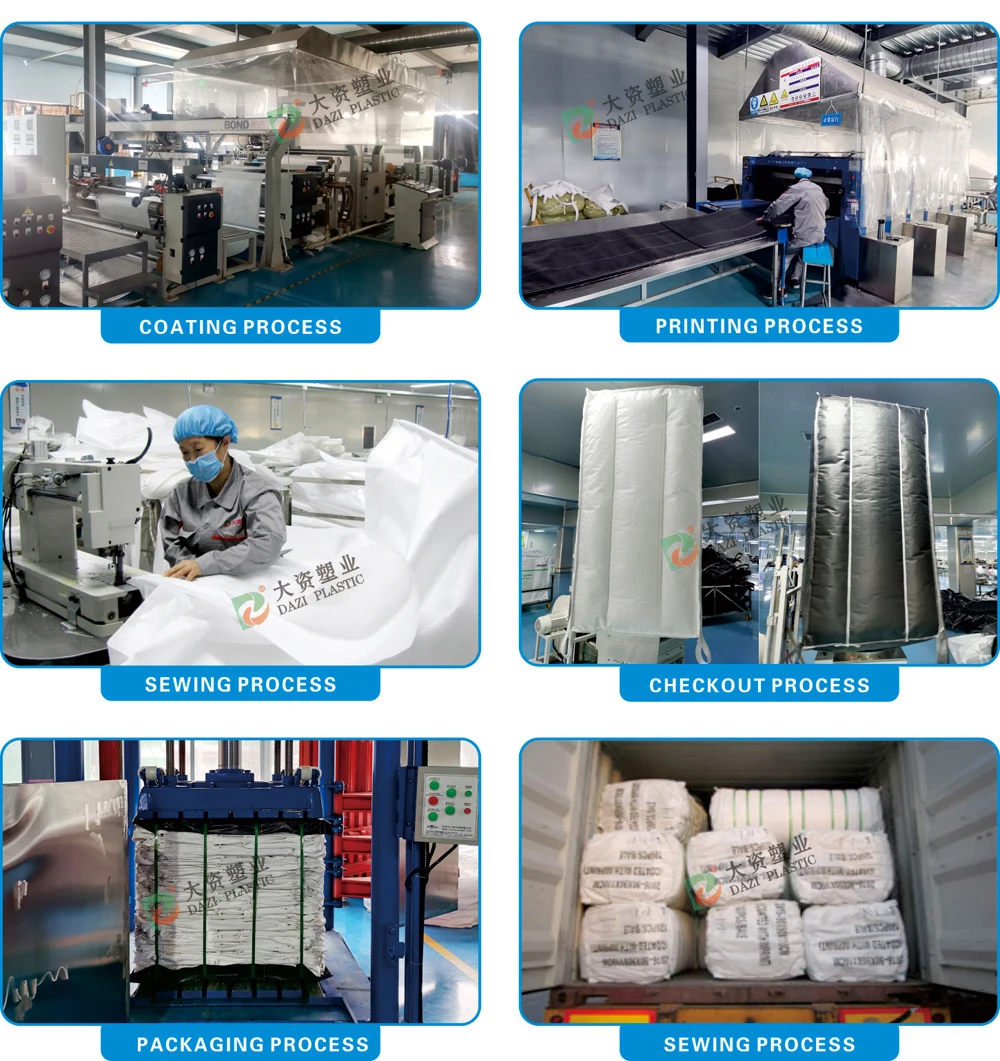
Multi-panel FIBCs require additional fabric cutting, multi-direction stitching and edge reinforcement processes, resulting in higher manufacturing material waste and labor costs. Circular FIBCs adopt continuous tubular weaving with optimized material utilization and simplified processing procedures, effectively reducing unit bag pricing without sacrificing heavy-load performance. For enterprises with large-volume and long-term heavy granule transportation demands, the scalable cost advantage of circular FIBCs brings substantial cumulative procurement savings, avoiding redundant structural costs of over-engineered multi-panel bags for conventional granular scenarios.
2. Minimize Cargo Loss and Residual Waste
Heavy granular materials often leave significant residual waste in multi-panel FIBCs due to corner accumulation and uneven inner wall friction. The seamless smooth interior of circular FIBCs ensures thorough and complete discharging of resin particles, mineral granules and agricultural pellets, reducing material residual loss to nearly zero. For high-value industrial granules, this zero-residue feature greatly improves material utilization rate and eliminates repeated cleaning and material recovery labor costs. Meanwhile, the seamless structure completely prevents fine granular leakage from stitch gaps, avoiding cargo shortage claims and environmental cleanup expenses in bulk logistics.
3. Reduce Field Failure Rate and Replacement Costs
Seam failure is the primary cause of FIBC scrapping in heavy-load scenarios. Under continuous vibration during truck transportation and multi-layer stacking pressure, multi-panel bags easily split from stitching seams, leading to sudden cargo leakage and packaging abandonment. Circular FIBCs eliminate seam failure risks fundamentally, maintaining intact structural stability under rated heavy load conditions. The lower field failure rate reduces emergency bag replacement frequency, cuts on-site operational risks and avoids shipment delays caused by packaging damage, optimizing overall supply chain operational costs.
4. Optimize Loading Efficiency and Logistics Space Utilization
Although circular FIBCs do not form rigid square shapes like U-panel bags, their natural uniform expansion after filling creates rounded and regular profiles with no irregular bulging or corner deformation. This consistent shaping effect standardizes single-bag volume, making container and truck loading arrangement more orderly and predictable. Compared with irregularly deformed multi-panel bags that waste cargo space, circular FIBCs improve overall vehicle loading rate and reduce unit freight cost per ton of granular materials. Their lightweight foldable structure also saves warehouse space for empty bag storage, lowering auxiliary logistics overheads.
Adaptability Advantages for Different Heavy Granule Scenarios
Circular FIBCs deliver targeted performance advantages for segmented heavy-duty granule transportation needs. For mineral and construction granules with high abrasiveness and high density, the seamless tubular structure resists concentrated friction wear and avoids corner fabric thinning, extending service life effectively. For plastic and chemical resin pellets requiring zero cross-contamination, the smooth seamless interior prevents residual impurity accumulation, ensuring batch material purity.
For bulk agricultural fertilizer and grain granules, circular FIBCs’ uniform pressure-bearing structure adapts to long-term outdoor stacking, reducing bag deformation and material caking caused by uneven stress. For short-distance factory turnover and fixed-line heavy granule transportation, standard circular FIBCs provide sufficient load stability with the most economical configuration, achieving perfect balance between safety performance and cost control.
Reasonable Limitation Matching to Avoid Over-Investment
While circular FIBCs excel in heavy granule cost performance, they have reasonable structural limitations that guide scientific scenario matching. Circular FIBCs are not designed for ultra-high stacking stability requirements of long-term fixed warehousing compared with baffle square bags. However, for mainstream heavy-duty granule transportation, short-to-medium term yard storage and frequent turnover logistics, circular FIBCs fully meet operational standards. Enterprises can avoid purchasing expensive baffle and reinforced square FIBCs for conventional granular scenarios, eliminating excessive functional redundancy and realizing refined cost control.
Key Selection Tips for High-Cost-Performance Circular FIBCs
To maximize economic benefits, users should select circular FIBCs based on granule density and transportation conditions. For conventional heavy granules below 1500kg load, standard seamless circular weaving with basic bottom reinforcement is sufficient to control costs. For high-density super-heavy granules, choose circular FIBCs with integrated lifting loop reinforcement and high safety factor design to ensure load stability. For outdoor transportation and storage, add UV-stabilized treatment to prevent tubular fabric aging and maintain long-term structural durability.
Conclusion
Circular FIBC bulk bags stand out as the most cost-effective packaging solution for heavy-duty granule transportation by virtue of seamless tubular structure, uniform pressure dispersion, zero material residue and low failure rate. Compared with traditional multi-panel FIBCs, they reduce procurement costs, eliminate cargo waste, cut field failure losses and optimize logistics efficiency without compromising heavy-load safety performance. For industrial and agricultural enterprises focusing on refined bulk logistics cost management, circular FIBCs provide a low-redundancy, high-stability and economically efficient packaging choice, perfectly matching the operational characteristics of heavy granular material transportation and storage.