Bulk solid transportation remains one of the most cost-intensive segments in industrial supply chains, covering mineral aggregates, chemical powders, plastic granules, agricultural bulk materials and building raw materials. Most logistics operators traditionally focus on cutting freight and warehousing fees while overlooking the massive hidden losses caused by ordinary low-spec FIBC bags. Conventional generic bulk bags feature unstable structural strength, poor environmental adaptability and single functional design, easily triggering cargo leakage, bag rupture, container space waste and frequent replacement costs. In contrast, high-performance FIBC bulk bags adopt upgraded fabric formulas, optimized structural mechanics and scenario-oriented functional customization. They deliver full-cycle cost optimization rather than simple packaging replacement, effectively reducing comprehensive logistics expenditures for bulk solid storage, transit and cross-border transportation. This article analyzes the unique cost-saving mechanisms of high-performance FIBCs in modern bulk solid logistics.
The Hidden Logistics Cost Pain Points of Ordinary Standard FIBCs
Low-cost standard FIBCs can only meet basic short-distance and indoor turnover demands, and their performance limitations generate a series of uncontrollable logistics expenses in large-scale bulk transportation. First, insufficient fabric tensile strength and unstable stitching lead to frequent bag breakage during stacking, lifting and bumpy transportation, causing bulk solid leakage, cargo loss and environmental cleanup costs. Second, irregular bag shaping after filling results in low container and truck loading efficiency, wasting valuable freight space and raising unit transportation costs.
In addition, ordinary FIBCs lack anti-aging, waterproof and dustproof properties. Long-term yard storage and cross-border sea freight lead to material damp deterioration, dust pollution and bag aging failure, resulting in product scrapping and return logistics. These hidden costs far exceed the price difference between standard bags and high-performance FIBCs, becoming a key burden for bulk logistics enterprises.
Optimize Loading Efficiency to Cut Unit Freight Costs
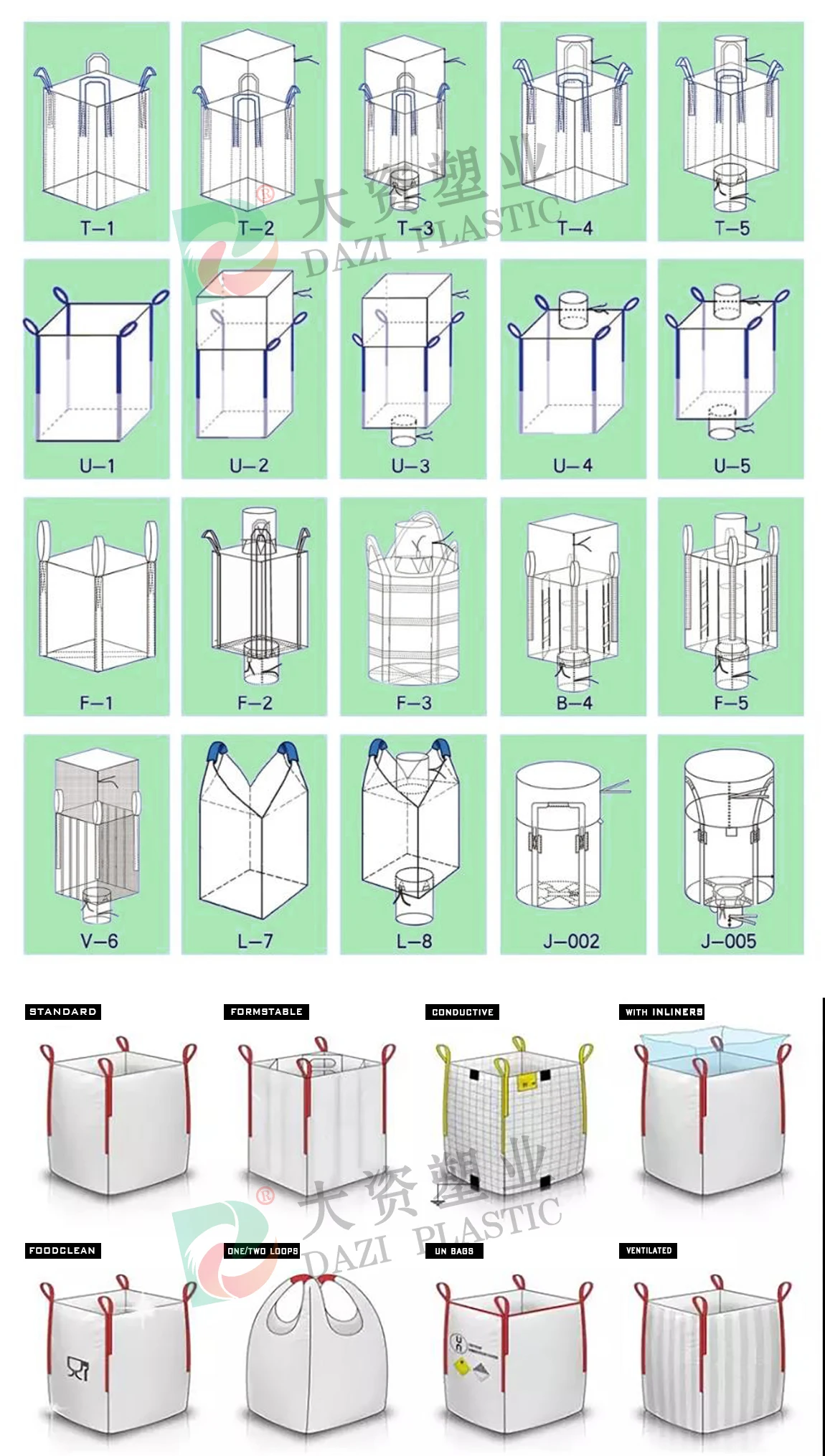
One of the core advantages of high-performance FIBCs is standardized cubic shaping and stable structural tension. Unlike ordinary FIBCs that bulge randomly after being filled with bulk solids, upgraded high-performance models adopt optimized U-panel and integral shaping structures. The reinforced sidewall tension limits irregular expansion of fluid granular and powder materials, ensuring each filled bag maintains a neat and uniform cubic specification.
This standardized shaping greatly improves the space utilization rate of 20ft/40ft containers and cargo trucks. Compared with ordinary bags, high-performance FIBCs increase single-container loading volume by 10%–15%, effectively diluting fixed sea and road freight costs. For enterprises with long-term and large-volume bulk export business, the improved loading efficiency creates substantial cumulative freight savings without increasing transportation frequency or labor input.
Reduce Cargo Damage and Leakage-Related Secondary Logistics Costs
Bulk solid leakage and damage are the most prominent hidden losses in traditional logistics. High-performance FIBCs adopt high-density thickened woven fabrics, multi-layer overlapping stitching and reinforced stress points, completely solving the structural defects of ordinary bags. For abrasive mineral solids and fine chemical powders, customized anti-wear inner layers and encrypted sealing structures prevent particle penetration and fabric abrasion rupture.
Meanwhile, upgraded top and bottom sealing spouts eliminate fine powder leakage during pneumatic filling and rapid discharging. Stable and sealed packaging protects bulk solids from external dust, moisture and impurity contamination during long-distance transportation. It drastically reduces defective goods rate, cargo compensation fees, material waste and secondary sorting and re-transport costs, realizing zero-loss logistics turnover of bulk materials.
Improve Stacking Stability to Save Warehousing and Yard Occupancy Costs
Modern bulk solid logistics includes not only transportation links but also long-term yard stacking and warehouse storage. Ordinary FIBCs are prone to tilting, collapsing and bottom deformation after stacking, which limits stacking height and wastes storage space. High-performance FIBCs are designed with mechanical structural optimization, featuring strong vertical compression resistance and anti-deformation capability.
With a stable 6:1 industrial safety factor and reinforced bearing bottom structure, high-performance FIBCs support multi-layer high stacking without collapse or deformation. This improves vertical space utilization of warehouses and open yards, effectively reducing unit storage occupancy costs. In addition, anti-slip base design avoids stacking collapse accidents caused by wind vibration and ground inclination, eliminating safety management costs and cargo rearrangement labor losses caused by unstable stockpiles.
Enhance Environmental Adaptability to Avoid Cross-Border Logistics Failure Costs
Cross-border bulk transportation faces complex and variable environmental tests, including ultraviolet radiation during maritime transportation, high humidity and salt fog erosion, and extreme temperature alternation. Ordinary FIBCs rapidly age, become brittle and fail under harsh marine environments, leading to cargo damage and customs clearance failures.
High-performance FIBCs integrate UV-stabilized anti-aging formulas, waterproof coating and salt-fog resistant fabric treatment. They maintain stable structural performance throughout long-term sea freight and outdoor temporary storage, avoiding material deterioration and bag aging damage. For hazardous and high-purity bulk solids, certified high-performance FIBCs also support complete safety compliance, eliminating customs detention, shipment return and fine costs caused by non-compliant packaging specifications.
Realize Reusable Cycle Utilization to Reduce Long-Term Procurement Costs
Most ordinary FIBCs are disposable and easily damaged after single use, requiring continuous repeated procurement and resulting in high long-term packaging costs. High-performance FIBCs feature excellent fatigue resistance, structural toughness and anti-aging durability. After professional reinforcement and formula upgrading, they can withstand multiple lifting, stacking and transportation cycles, supporting reusable turnover for factory internal logistics and fixed-line bulk transportation.
Although the unit procurement cost of high-performance FIBCs is slightly higher, the average single-use cost is significantly lower than disposable standard bags through multiple cycle utilization. This reusable value greatly reduces annual packaging procurement expenditure and waste disposal costs, forming a sustainable low-cost logistics packaging cycle.
Cut Labor and Auxiliary Packaging Operating Costs
Ordinary FIBCs require additional auxiliary materials such as waterproof films, binding belts and anti-leakage gaskets to meet logistics requirements, increasing auxiliary material costs and manual operating time. High-performance FIBCs integrate waterproof, dustproof, anti-leakage and fixed structures in one piece, eliminating the need for redundant auxiliary packaging accessories.
Standardized bag bodies and stable lifting loop structures simplify manual and mechanical handling processes, improve loading and unloading efficiency, and reduce labor time costs per ton of bulk materials. Optimized structural design also reduces bag arrangement and fixing work during container loading, further lowering overall labor logistics costs.
Conclusion
High-performance FIBC bulk bags optimize bulk solid logistics costs in a systematic and all-round manner, covering freight efficiency, cargo loss control, storage space utilization, cross-border compliance, reusable cycle value and labor cost saving. Different from ordinary standard FIBCs that only provide basic packaging functions, upgraded high-performance FIBCs eliminate various hidden logistics losses caused by packaging performance defects. For bulk solid manufacturing and logistics enterprises, replacing traditional low-spec packaging with high-performance FIBCs is a low-investment and high-return optimization strategy, which effectively reduces comprehensive supply chain costs and improves the stability and efficiency of bulk material transportation and storage.