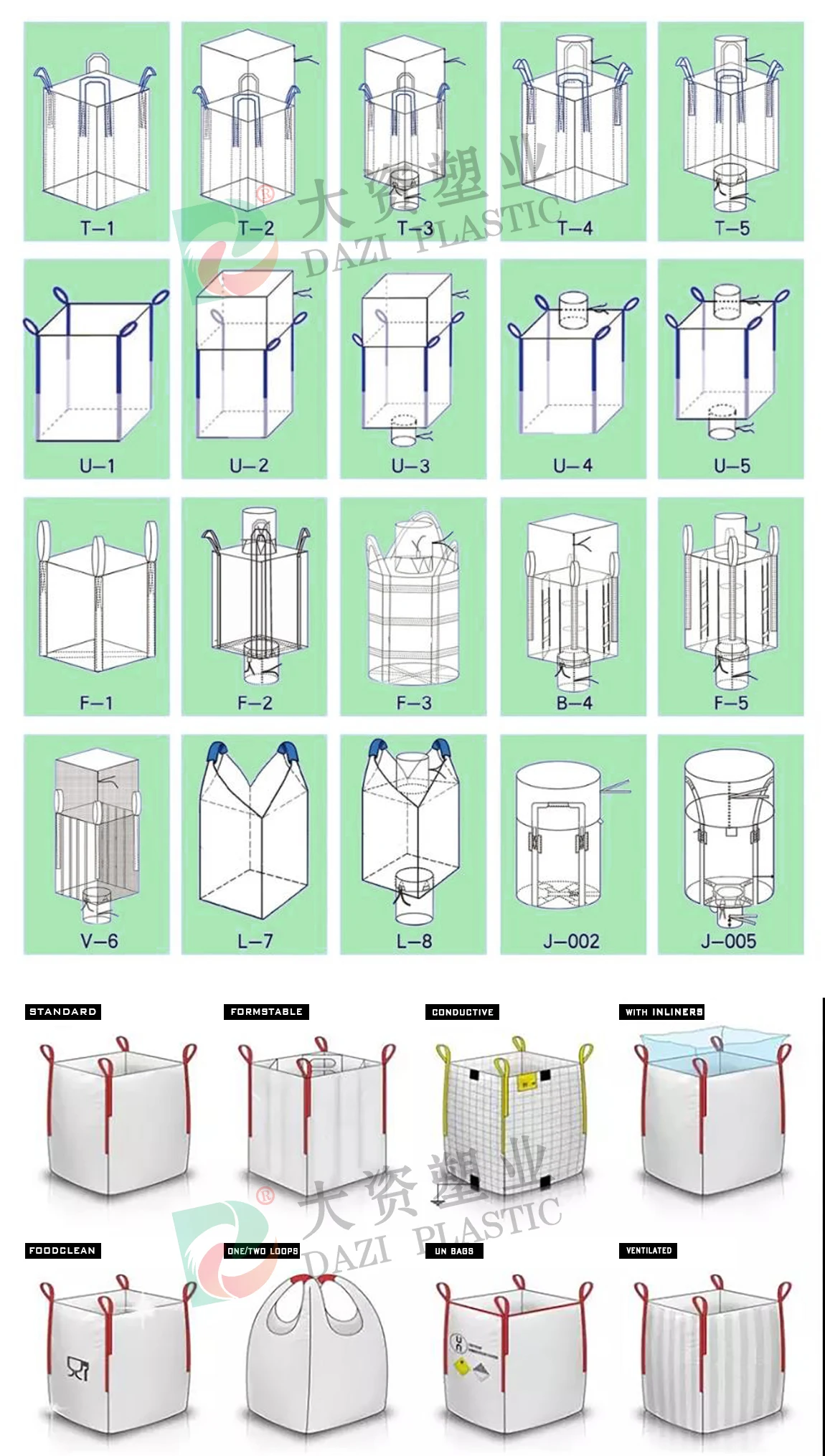
FIBC bulk bags (Flexible Intermediate Bulk Containers) are essential packaging solutions for bulk powder, granular, and flake materials in chemical, mineral, agricultural, food, and construction industries. Designed for heavy-load storage, stacking, lifting, and long-distance transportation, high-quality FIBCs can serve multiple turnover cycles with proper care. However, improper operation, harsh working environments, irregular stacking, and neglect of daily maintenance often lead to premature FIBC damage, including fabric abrasion, stitching breakage, lifting loop failure, liner leakage, and bag deformation. Early damage causes material waste, safety risks, and frequent replacement costs. This article systematically summarizes the most common FIBC damage causes and shares practical, industry-proven maintenance tips to maximize FIBC service life and improve overall packaging cost-effectiveness.
Common Causes of FIBC Bulk Bag Damage
1. Mechanical Abrasion and Puncture Damage
Mechanical friction and sharp object piercing are the leading causes of FIBC failure during handling and transportation. Coarse granular materials, mineral aggregates, and sharp-edged industrial solids continuously rub against the inner woven fabric during loading and vibration, gradually thinning the PP material and causing wear holes. During forklift lifting, container loading, and workshop transferring, sharp forklift corners, rough pallet edges, protruding steel frames, and ground gravel easily scratch or puncture the outer bag body. Unlike visible large cracks, tiny abrasions are often ignored, developing into leakage and tearing damage during long-term stacking and transportation.
2. Overloading and Unbalanced Force Bearing
Excessive overloading far beyond the rated capacity is one of the most destructive improper operations. Many factories pursue single-bag loading volume and ignore standard load limits, resulting in excessive tension on the woven fabric, stitching seams, and lifting loops. Long-term overloaded bearing causes permanent deformation, fabric fatigue, and loose stitching. In addition, unbalanced material filling, eccentric stacking, and single-side lifting lead to uneven force distribution, making local parts of the FIBC bear excessive tension and triggering partial tearing or loop detachment.
3. Improper Lifting and Handling Operations
Non-standard manual and mechanical handling greatly shortens FIBC service life. Common wrong operations include dragging FIBCs directly on the ground, oblique pulling during lifting, sudden quick lifting and emergency stop, and violent collision during stacking. These behaviors generate instantaneous impact force, causing invisible fatigue damage to stitching positions and lifting loops. Repeated irregular handling accumulates structural damage, leading to sudden bag rupture during subsequent turnover use.
4. Natural Aging Under Outdoor and Harsh Environments
FIBCs stored or transported outdoors face continuous ultraviolet radiation, high-temperature exposure, rain erosion, and cold weather alternation. Ordinary non-UV-stabilized PP woven fabric undergoes molecular chain aging under sunlight, gradually becoming brittle, fading, and losing tensile toughness. Long-term rain and humid air penetration causes thread mildew and stitching strength attenuation. In low-temperature winter environments, the fabric becomes stiff and fragile, prone to cracking under slight impact. Chemical dust and corrosive particle adhesion also accelerate local material aging and damage.
5. Improper Stacking and Storage Methods
Unregulated stacking is a hidden cause of long-term FIBC damage. Excessively high stacking leads to super-long static pressure on the bottom-layer FIBCs, causing permanent bulging deformation, fabric fatigue, and bottom cracking. Stacking on uneven ground, inclined surfaces, or sharp gravel grounds results in local stress concentration and bottom wear. Besides, storing FIBCs in humid, dusty, and chemically polluted workshops without protection causes secondary contamination and material performance degradation.
6. Secondary Damage During Cleaning and Reuse
For reusable multi-trip FIBCs, unreasonable cleaning methods also cause damage. High-pressure direct water flushing, violent rubbing, and chemical solvent cleaning destroy fabric toughness and stitching firmness. Improper drying with high-temperature equipment leads to thermal deformation and aging. Unprofessional folding and extrusion after cleaning cause crease fatigue, affecting subsequent structural stability.
Practical Maintenance Tips to Extend FIBC Service Life
1. Standardize Loading and Weight Control
Always load materials strictly according to the FIBC rated load and safety factor. Avoid overloading and overfilling to prevent excessive tension on the bag body and lifting structures. During filling, keep material distribution uniform to avoid eccentric deviation and unbalanced force. For sharp and abrasive materials, equip inner liners or choose thickened wear-resistant FIBCs to isolate friction damage and protect the outer woven fabric.
2. Adopt Gentle and Standard Handling Operations
Train operators to standardize lifting and transferring behaviors. Prohibit dragging FIBCs on the ground or pulling lifting loops obliquely. During forklift operation, ensure the fork arms are completely flat and centered to avoid scratching the bag bottom and sides. Keep stable lifting speed and avoid sudden acceleration, stop, and violent collision. For suspended lifting, prevent long-time empty suspension and swing friction to reduce structural fatigue loss.
3. Implement Scientific Stacking Rules
Control reasonable stacking height according to FIBC safety standards to avoid long-term excessive static pressure on bottom bags. Keep the stacking ground flat, clean, and free of sharp gravel and hard protrusions. Place flat pallets under FIBCs to isolate ground friction and moisture. Keep stacked rows neat and stable to prevent tilting, extrusion and partial stress concentration.
4. Classified Storage and Anti-Aging Protection
For long-term storage, prioritize dry, clean, ventilated indoor warehouses, avoiding long-term direct sunlight and rain exposure. If outdoor temporary storage is unavoidable, cover FIBCs completely with waterproof and UV-protective tarpaulins. Isolate FIBCs from corrosive chemicals, oily pollutants, and humid dust environments. Classify and store new bags and reusable bags separately to avoid cross-contamination and secondary damage.
5. Professional Cleaning and Reasonable Reuse Maintenance
For reusable FIBCs, adopt low-pressure water cleaning and natural air drying instead of high-temperature baking and strong solvent cleaning. Remove surface dust and residual materials gently to protect fabric toughness and stitching. After drying, fold and store regularly to avoid random extrusion and sharp creases. Inspect stitching, loops, and liners before each reuse; repair minor loose threads and tiny damage in time to prevent further expansion of defects.
6. Regular Inspection and Elimination of Potential Risks
Establish regular FIBC inspection mechanisms. Focus on checking fabric wear, stitching tightness, lifting loop firmness, liner integrity, and surface aging degree. Eliminate severely aged, deformed, and damaged FIBCs in time to avoid safety accidents during use. Record reuse times and aging status of each batch of reusable bags to realize standardized life cycle management.
Key Benefits of Standard FIBC Maintenance
Scientific maintenance and standardized operation effectively reduce premature FIBC damage, significantly extending the service cycle of reusable bulk bags. It greatly cuts repeated procurement costs, reduces material leakage waste and safety accident risks, and ensures stable quality of bulk material storage and transportation. Standardized FIBC management also improves workshop operating efficiency and achieves greener and more economical industrial packaging circulation.