

Most FIBC inquiries go wrong before the order is even placed. Buyers focus on price per unit and miss the three or four specs that actually determine whether the bag does its job — or fails mid-lift.
This guide covers what those specs are, how they interact, and how to ask the right questions before you commit to a production run.
Before anything else, answer these four questions about what goes inside:
Your answers determine bag type, safety factor, liner requirement, and discharge configuration. Skipping this step and going straight to dimensions wastes time for both sides.
Type A, B, C, and D are not marketing categories. They define how a bag handles electrostatic discharge — which is safety-critical when handling flammable powders or gases.
Type A is plain woven polypropylene with no static protection. Use it for non-flammable materials in non-flammable environments. It's the lowest cost option and fine for sand, gravel, or non-reactive minerals.
Type B is similar to Type A but made from fabrics with a low breakdown voltage. It prevents sparks from propagating through the fabric wall, but it does not dissipate static from the outer surface. Still not suitable for flammable atmospheres.
Type C includes conductive threads woven into the fabric in a grid pattern. These threads must be grounded during filling and discharge. It handles flammable powders safely, but only when the grounding connection is actually made — which relies on your operator doing it every single time.
Type D uses static dissipative yarns that don't require grounding. It's the safest option for flammable environments and the one to specify when you can't guarantee grounding discipline in the field.
The price difference between Type A and Type D is real but not the point. Specifying the wrong type for your application is an avoidable liability.
SWL (Safe Working Load) is the maximum weight the bag is rated to carry per lift. A standard 1-tonne FIBC has an SWL of 1,000 kg.
Safety Factor (SF) is the ratio of the bag's tested breaking strength to its SWL. The two common ratings are:
A 6:1 SF on a 1,000 kg SWL bag means the bag was tested to 6,000 kg before failure. This matters in two situations: when the bag will be lifted more than once, and when regulations require it (UN certification for hazardous materials mandates 6:1).
Buyers sometimes request 6:1 SF on single-use bags "for extra safety." There's no harm in it, but the cost goes up. If reuse is not part of your workflow, 5:1 is the standard and sufficient.
"Food grade" is not a single standard. What it means in practice depends on the level you need:
Industrial food grade means the inner fabric is clean enough for incidental contact with non-sensitive bulk food commodities like grains or sugar. It typically involves a clean manufacturing environment and virgin PP.
Food contact grade meets stricter regulatory requirements — FDA in the US, EC 10/2011 in the EU. Materials and manufacturing processes are documented and traceable. This is the level required for most food ingredient imports into Western markets.
Pharma grade applies to products that require near-cleanroom manufacturing conditions, full documentation, and batch certification. The bags cost significantly more and lead times are longer.
When a supplier quotes "food grade," confirm which level. The gap between industrial and pharma grade in terms of cost and documentation is large.
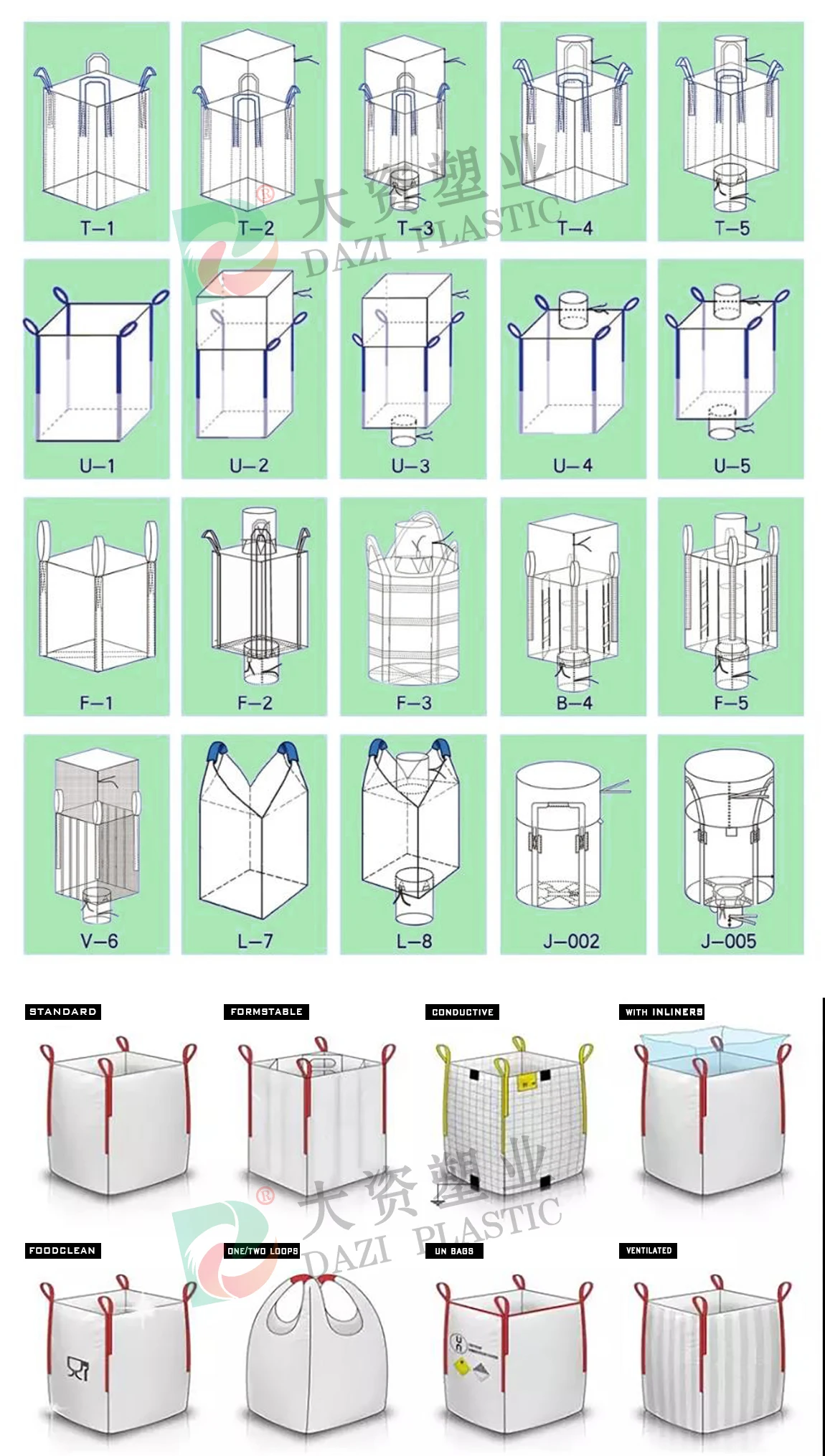
The lifting loops on an FIBC are not interchangeable. The four main configurations are:
Baffle bags cost more to manufacture but can save space in your warehouse or container. If your bulk material is fine powder that flows outward and collapses the bag shape, baffles are worth it.
Liners protect moisture-sensitive or contamination-sensitive products. The main choices:
Specify the liner based on your product's needs, not cost alone. A collapsed or migrated liner during transit creates contamination problems that are far more expensive than the liner upgrade.
You can learn a lot from how a supplier responds to specific questions:
Suppliers who can answer these quickly and specifically are generally more reliable than those who redirect to brochures.
If you are shipping hazardous materials in FIBC bags, UN certification is not optional. Bags must meet the requirements of the UN Recommendations on the Transport of Dangerous Goods and carry the appropriate UN mark.
UN-certified FIBCs require 6:1 SF, specific construction standards, and testing by an accredited body. Not every FIBC manufacturer is set up to produce them. Confirm certification status and request the certificate number before purchase.
The right FIBC for your application comes down to five decisions:
Get these five right first. Then talk price.
Looking for a supplier who can quote custom FIBC specs with full certification documentation? Contact us to discuss your requirements.
|
Description
|
FIBC/Jumbo bag/bulk bag/ pp big bag/Flexible container bag professional manufacturer
|
|
Type of bag
|
Tubular/Circular/U-panel shape//Rectangular
|
|
Material
|
100% Virgin PP
|
|
Fabric
|
Laminated/Plain/Vent/Conductive
|
|
Size
|
Customized
|
|
GSM
|
110gsm-230gsm
|
|
Color
|
Customized
|
|
Printing
|
Customized
|
|
Top
|
Full open/Filling spout/Top skirt/Duffle
|
|
Bottom
|
Flat/plain/with discharge spout
|
|
Liner
|
Liner(HDPE, LDPE) or Customized
|
|
Lifting loop
|
Cross-corner loops/4 Point 2 Strap lifting loop/Double Stevedore Strap/with belt/Fully belt loop/Loop in loop
|
|
Sewing
|
Plain/chain/chain lock with optional soft-proof
|
|
Ropes
|
1 or 2 around the bag body/customized
|
|
SWL
|
500-2000KG
|
|
SF
|
5:1/6:1/or as customer's requirement
|
|
Treatment
|
UV treated or not UV treated
|
|
Surface Dealing
|
Coated or plain,printing or no printing
|
|
Usage
|
Storage and packing
Mine,ore,fertilizer,chemical,onion,potato,grain,wheat,maize,rice,peanut,sugar,salt,agriculture,building material,powder,cement,etc. |
|
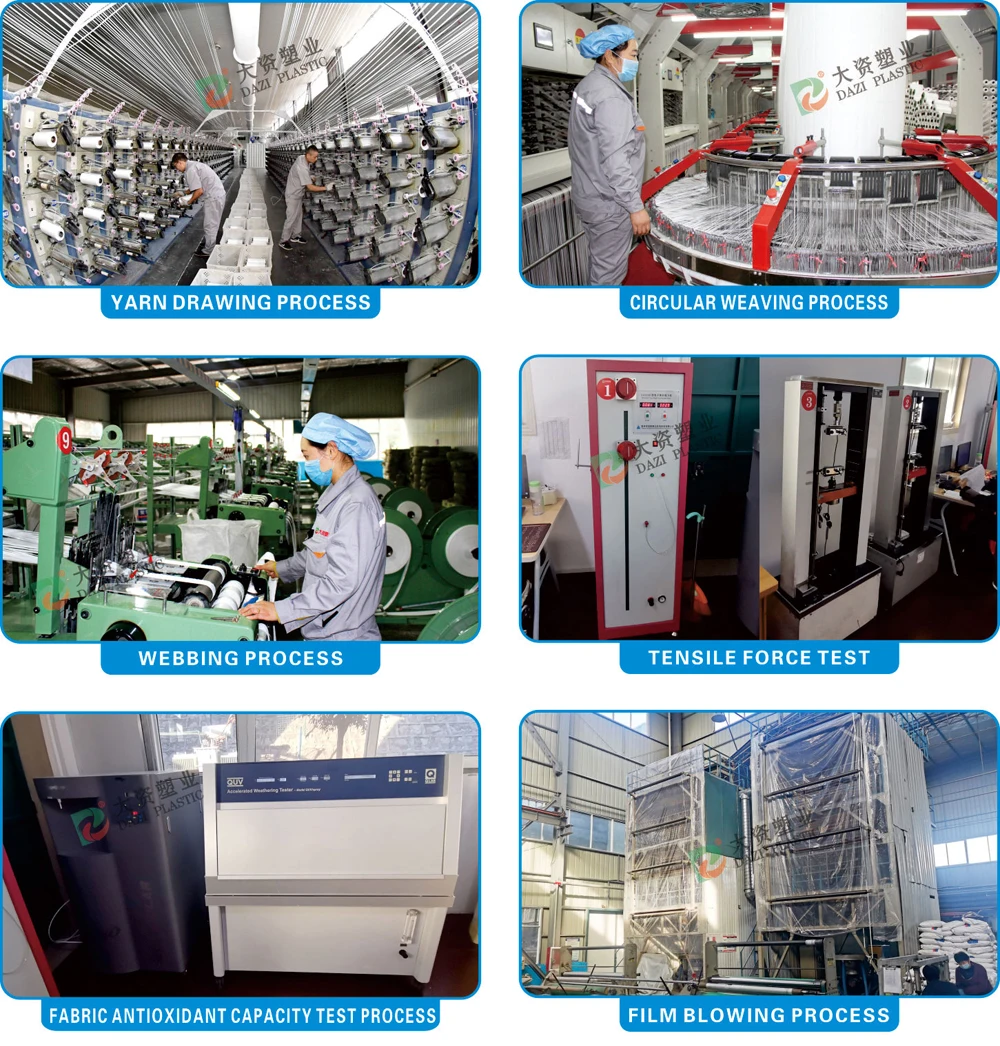
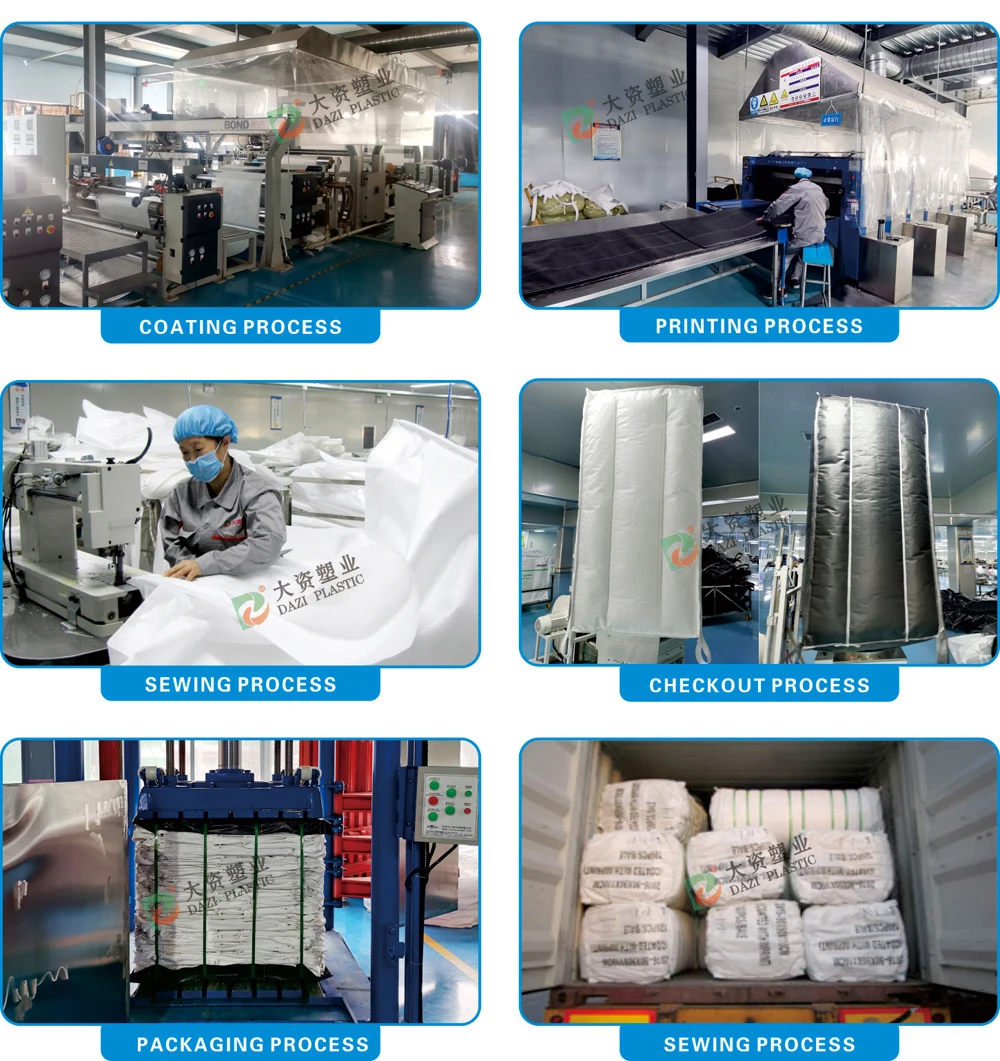
Processing
|
Yarn drawing-Circular weaving/Webbing-Quality inspection-Coating-Film
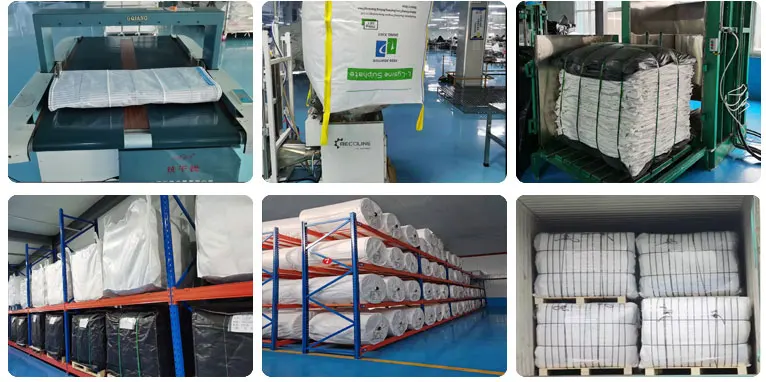
blowing-Cutting-Printing-Sewing-Checkout-Packaging-Transportation |
|
Delivery time
|
15-30 days
|
|
Certification
|
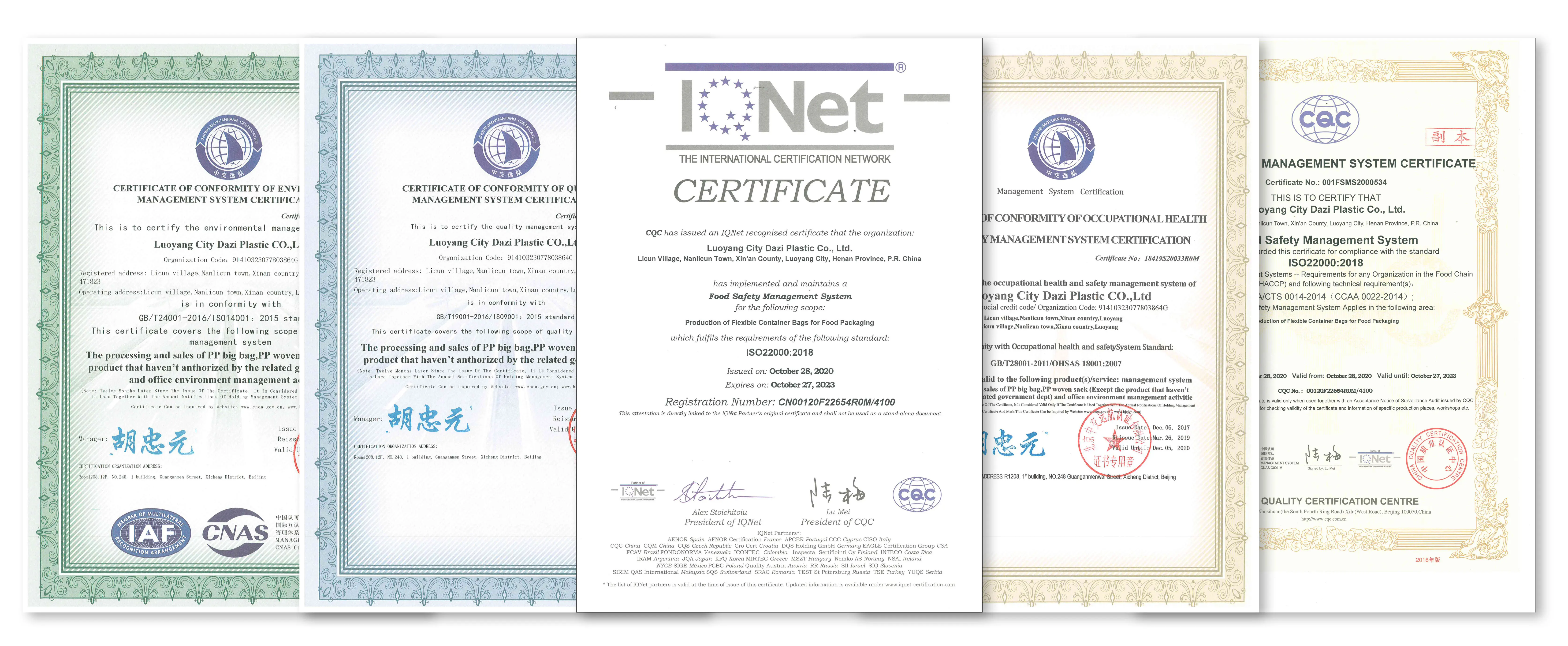
ISO22000, ISO9001, ISO14001, LABORDATA, etc.
|
|
Remark
|
Please let us know your specific requirements
|






Copyright © Luoyang Dazi Plastic Industry Co., Ltd.