Industrial FIBC bulk bags (also known as jumbo bags or flexible intermediate bulk containers) are the most widely used packaging solution for bulk powder, granuar
, and lump materials across mining, chemical, food, agricultural, and construction industries. For industrial procurement and logistics teams, selecting suitable FIBC bulk bags is critical to ensuring safe storage, stable transit, standardized cargo management, and long-term cost control. Many packaging failures, including bag rupture, material leakage, moisture contamination, and safety hazards, are caused by incorrect model selection rather than poor product quality. This
complete FIBC bulk bag selection guide focuses on three core determinants: load capacity configuration, inner liner matching, and industrial safety standards, helping enterprises accurately select qualified, scenario-matched, and cost-effective industrial FIBC bulk bags.
Why Scientific FIBC Selection Is Essential for Industrial Logistics
Industrial bulk cargo features diverse characteristics, variable storage environments, and complex transportation conditions. A one-size-fits-all FIBC selection method cannot meet differentiated industrial demands. Under-matched load capacity leads to bag breakage during lifting and stacking; improper liner configuration causes material moisture absorption, dust leakage, and pollution; non-compliant safety standards trigger hidden dangers in chemical transportation and outdoor storage.
Scientific selection based on load parameters, liner functions, and safety certifications can effectively reduce cargo damage rate, extend bag service life, comply with international shipping specifications, and optimize comprehensive packaging costs. It is an essential standard process for modern industrial bulk supply chain management.
1. FIBC Load Capacity Selection: Match Weight, Structure and Safety Factor
Load capacity is the primary basis for FIBC bulk bag selection. Industrial FIBC load selection includes three key indicators: rated load, safety factor, and structural load-bearing design, which together determine the overall stability of bulk bags during lifting, stacking, and long-distance transportation.
Rated Load Matching by Cargo Density
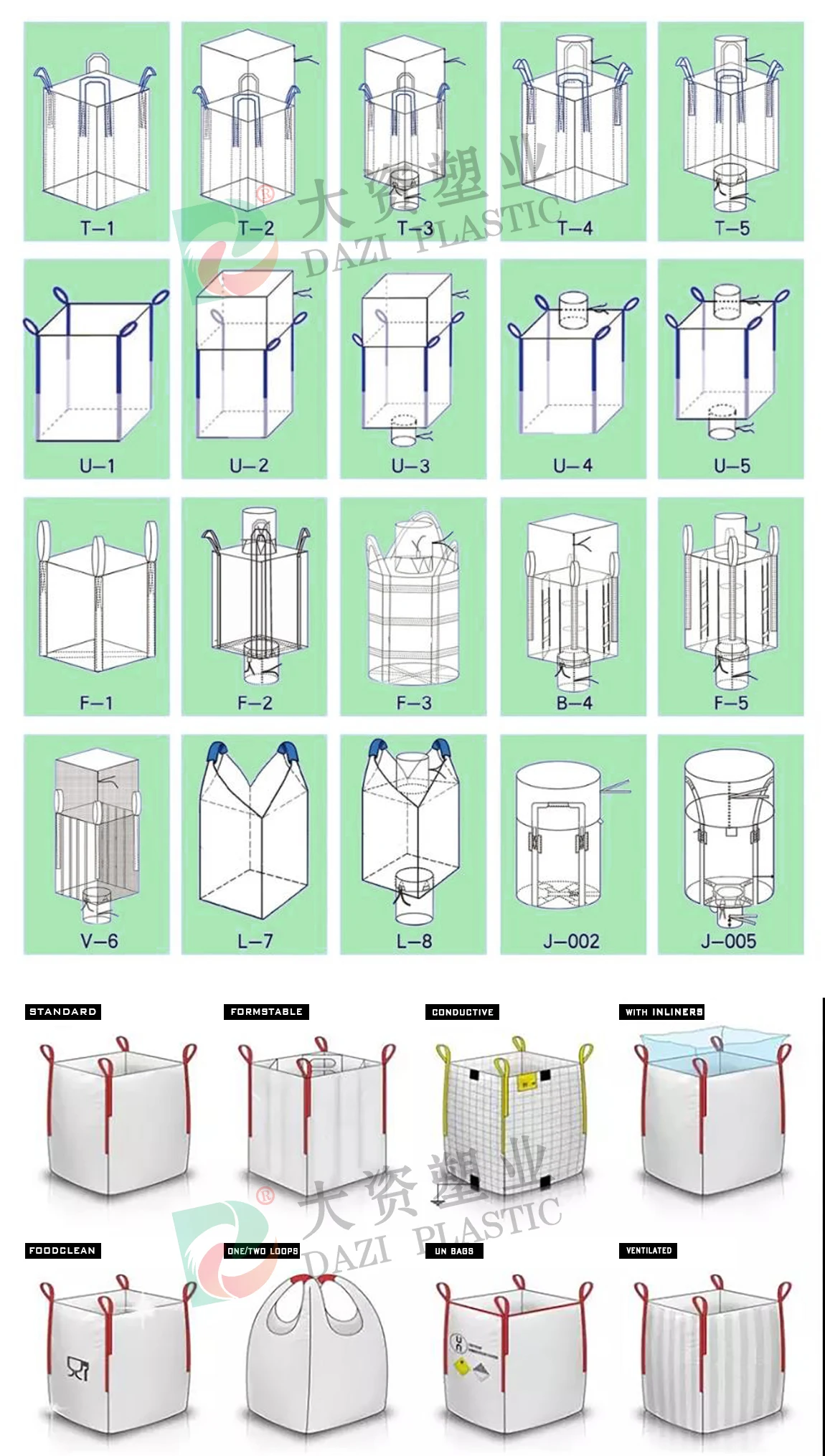
Standard industrial FIBC bulk bags cover mainstream load specifications of 500kg, 1000kg, 1500kg, 2000kg, and 2500kg. Users need to select the corresponding load grade according to material density and filling volume, rather than blindly pursuing large load capacity. For low-density materials such as plastic powder, starch, and feed, medium-load FIBCs are sufficient to avoid material waste. For high-density heavy materials such as ore, gravel, and metal powder, heavy-duty high-load FIBC bulk bags must be selected to ensure safe bearing.
Industrial Safety Factor Standard
The safety factor reflects the ultimate bearing capacity and anti-failure capability of FIBC bags. Ordinary disposable industrial FIBCs adopt a 5:1 safety factor, which meets the basic requirements of single-use storage and transportation. For reusable, frequently turned-over, and long-distance cross-border logistics scenarios, high-quality FIBC bulk bags with a 6:1 safety factor are strongly recommended to resist dynamic pressure, bumpy vibration, and repeated lifting fatigue.
Load-Bearing Structure Selection
Different lifting structures correspond to different load stability. Four-loop reinforced FIBCs are suitable for most heavy-load industrial scenarios with uniform stress and strong stability. Single-loop and cross-loop structures are suitable for lightweight bulk materials and convenient manual mechanical coordination. All heavy-load FIBC products must adopt thickened fabric, multi-layer stitching, and reinforced bottom sealing to avoid local stress fracture.
2. FIBC Inner Liner Selection: Targeted Matching by Material Characteristics
The inner liner is the core functional component of FIBC bulk bags, directly determining the dust-proof, moisture-proof, waterproof, and hygienic protection effect of bulk materials. Different industrial materials require completely different liner configurations; reasonable liner selection can fundamentally avoid material deterioration, pollution, and leakage problems.
Food-Grade PE Liner for Food & Agricultural Materials
For grains, wheat, corn, starch, sugar, food additives, and feed, food-grade non-toxic PE inner liners are mandatory. This type of liner features zero harmful precipitation, no peculiar smell, dust-free and sterile performance, fully complying with food contact safety standards. It effectively isolates external dust, bacteria, and pollutants to ensure food and agricultural product hygiene and quality stability during storage and transit.
Thickened Moisture-Proof Liner for Hygroscopic Chemicals & Fertilizers
Chemical powders, compound fertilizers, and industrial granular materials are prone to moisture absorption, deliquescence, and caking. Thickened high-barrier moisture-proof inner liners can block water vapor and humid air penetration, maintaining the dry state of bulk materials. For chemical materials requiring long-term warehouse storage, double-layer sealed liners are recommended to enhance anti-moisture and anti-corrosion effects.
Ultra-Fine Dust-Proof Liner for Superfine Powder Materials
Superfine industrial powder such as talc powder, calcium powder, and chemical toner is easy to leak through fabric gaps. Special ultra-fine dust-proof liners with high-density sealing performance can completely solve dust leakage problems, avoid material loss and workshop dust pollution, and meet clean industrial production standards.
Breathable & Mildew-Proof Liner for Organic Bulk Materials
For fresh agricultural products, organic fertilizers, and moist bulk materials, customized breathable liners are required to eliminate internal heat and prevent mildew and deterioration, balancing ventilation and anti-pollution performance.
3. FIBC Safety Standard Selection: Comply with Industry & Shipping Specifications
Different industrial scenarios and transportation modes have strict mandatory safety standards for FIBC bulk bags. Standard-compliant selection is the premise to ensure passable inspection, safe transportation, and standardized industrial use.
Ordinary Industrial General-Purpose Standards
For common non-hazardous bulk materials such as construction sand, ordinary plastic particles, and industrial auxiliary materials, standard industrial FIBCs that pass conventional tensile testing, load testing, and sewing strength testing are sufficient, meeting daily storage and land transportation requirements.
UN Certification for Hazardous Chemical Materials
Flammable, corrosive, and static-sensitive chemical bulk materials must use UN-certified FIBC bulk bags. Certified chemical-grade FIBCs pass strict dangerous goods packaging tests, with anti-static, flame-retardant, and anti-corrosion functions, compliant with international dangerous goods transportation standards, and suitable for sea freight and cross-border chemical logistics.
Anti-Static & Conductive Safety Standards
Dust-prone and flammable powder materials are prone to static electricity accumulation and dust explosion risks during filling and transportation. Anti-static FIBC bulk bags can quickly release static charges, eliminate spark hazards, and meet explosion-proof safety standards for chemical workshops and special industrial scenarios.
UV Resistance Standard for Outdoor Storage
Bulk materials stacked outdoors for a long time must select UV-stabilized FIBC bulk bags. Professional anti-UV treatment prevents fabric aging, brittleness, and strength attenuation under long-term sunlight and wind erosion, ensuring packaging stability for outdoor long-cycle storage and open-air transportation.
Food Safety Compliance Standard
Food industry FIBCs must comply with FDA and EU food contact standards, with non-toxic raw materials, no heavy metal precipitation, and dust-free production process, ensuring zero pollution of food raw materials.
Scenario-Based Quick Selection Checklist
-
Mining & Construction: Heavy load + anti-wear thickened fabric + UV stabilization + dust-proof structure
-
Chemical & Fertilizer Industry: Medium and heavy load + moisture-proof liner + UN certification + anti-static function
-
Food & Agriculture Industry: Medium load + food-grade liner + hygienic and non-toxic standard + dust-proof sealing
-
Outdoor Long-Term Storage: UV-resistant treatment + high safety factor + thickened durable structure
-
Cross-Border Shipping: Full standard certification + stable load performance + sealed moisture-proof system
Common Selection Mistakes to Avoid
-
Only focusing on unit price while ignoring safety factor and structural reinforcement, leading to high risk of bag rupture
-
Using universal ordinary liners for hygroscopic and dusty materials, causing material quality deterioration
-
Ignoring industry certification standards, resulting in unqualified goods during transportation and inspection
-
Mismatched load capacity with material density, causing wasted space or overloading hazards