For industrial procurement, logistics management, and bulk material processing enterprises, selecting high-quality FIBC bulk bags is critical to avoiding cargo leakage, packaging rupture, safety accidents, and unnecessary economic losses. Low-quality FIBC jumbo bags with substandard load capacity, poor sealing performance, and unqualified safety standards often lead to frequent failures in industrial storage and transit. To help buyers and manufacturers accurately distinguish reliable industrial-grade FIBC products, this professional guide focuses on three core identification dimensions: load capacity performance, inner liner configuration, and international safety standards, explaining how to screen qualified, durable, and industry-compliant FIBC bulk bags for different bulk cargo scenarios.
Why It Matters to Identify High-Quality FIBC Bulk Bags
FIBC bulk bags are the mainstream bulk packaging solution for mining, chemical, food, agricultural, and construction materials. A low-quality FIBC bag may appear identical to premium products in appearance, but it hides huge risks during lifting, stacking, and long-distance transportation. Insufficient load-bearing strength causes bag cracking and cargo falling; inferior liners lead to moisture intrusion and material contamination; non-standard structural design triggers safety hazards during mechanical handling.
Learning to identify high-quality FIBC bulk bags allows enterprises to eliminate unqualified packaging products at the source, stabilize bulk cargo logistics safety, reduce product damage rates, and optimize long-term packaging and logistics costs. It is also an essential skill for standardized industrial procurement and supply chain quality control.
Guide 1: Identify Qualified Load Capacity & Structural Durability
Load capacity is the most fundamental indicator to judge FIBC bulk bag quality. High-quality industrial FIBC bags must achieve accurate rated load matching and excellent structural durability to adapt to mechanical lifting, high stacking, and long-distance bumpy transit.
Check Rated Load and Safety Factor
Formal high-quality FIBC bulk bags have clear load specifications, including 500kg, 1000kg, 1500kg, 2000kg, and 2500kg grades. The core identification standard is the safety factor. Qualified ordinary industrial FIBCs reach a 5:1 safety factor, while heavy-duty and reusable high-quality FIBC bags adopt a 6:1 safety factor. This means the bag can withstand 5 to 6 times the rated load without breaking during dynamic lifting, effectively preventing sudden rupture during actual use.
Inferior FIBC bags often falsely mark load parameters with insufficient safety factors, which can only bear static load and easily fail during dynamic forklift and crane operation.
Evaluate Fabric Density and Tensile Strength
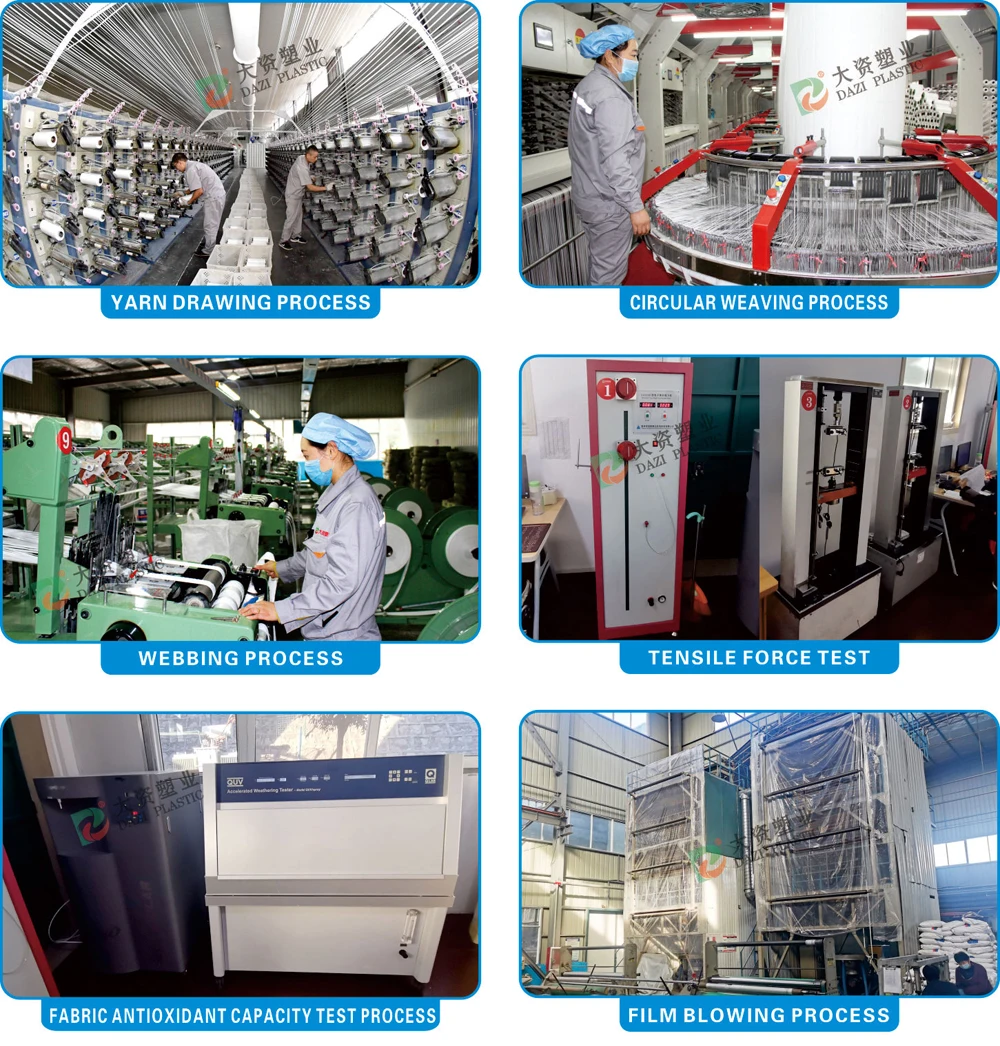
High-quality FIBC bulk bags are woven from high-tenacity pure PP raw materials, featuring tight weaving, uniform density, thick fabric texture, and strong tensile resistance. The surface is flat without loose threads, broken wires, or thin spots. In contrast, low-quality FIBCs often mix recycled materials with uneven weaving density, poor toughness, and obvious creases or thin areas, resulting in poor tear and puncture resistance.
Inspect Reinforced Structure and Stitching Craft
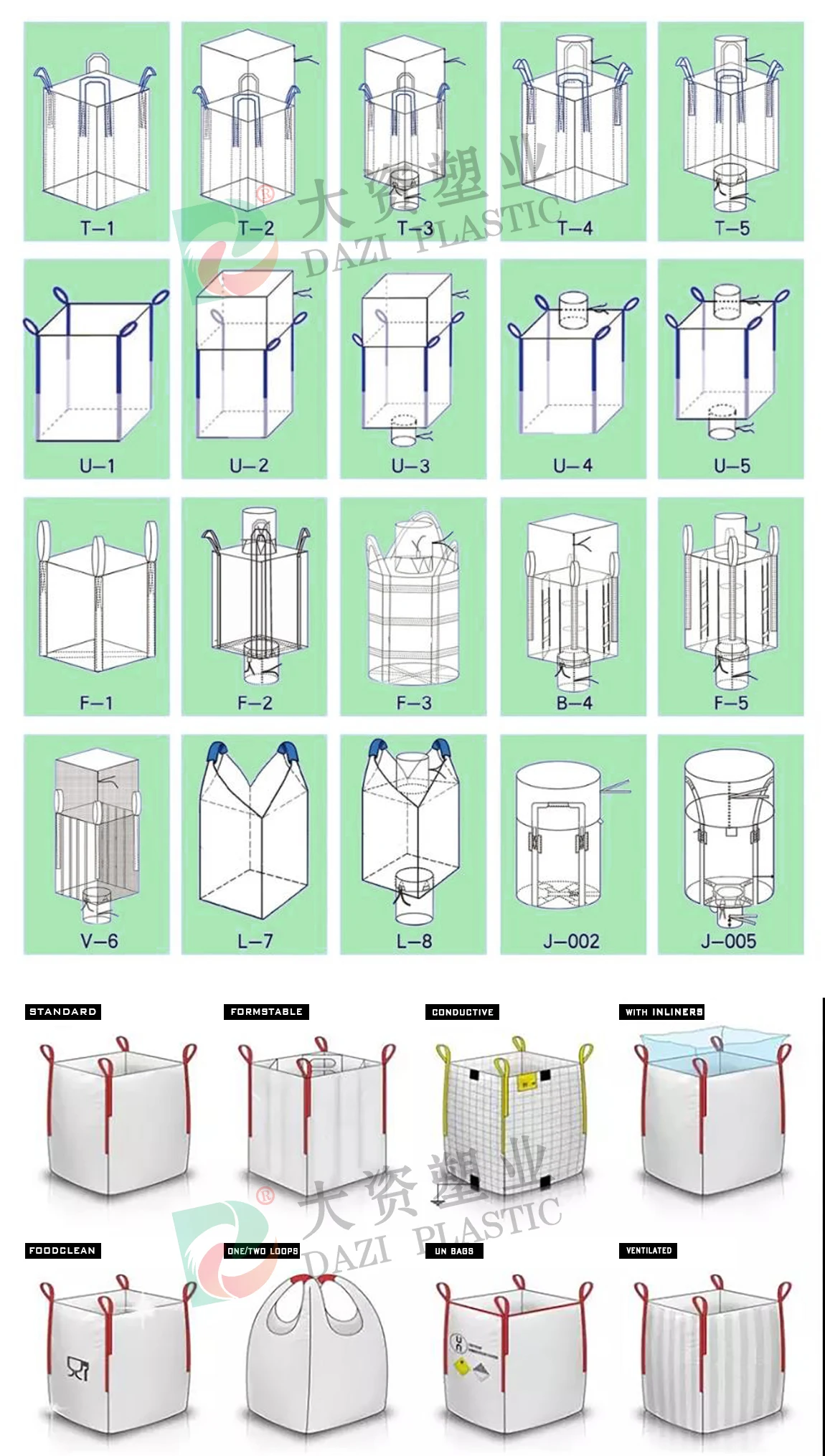
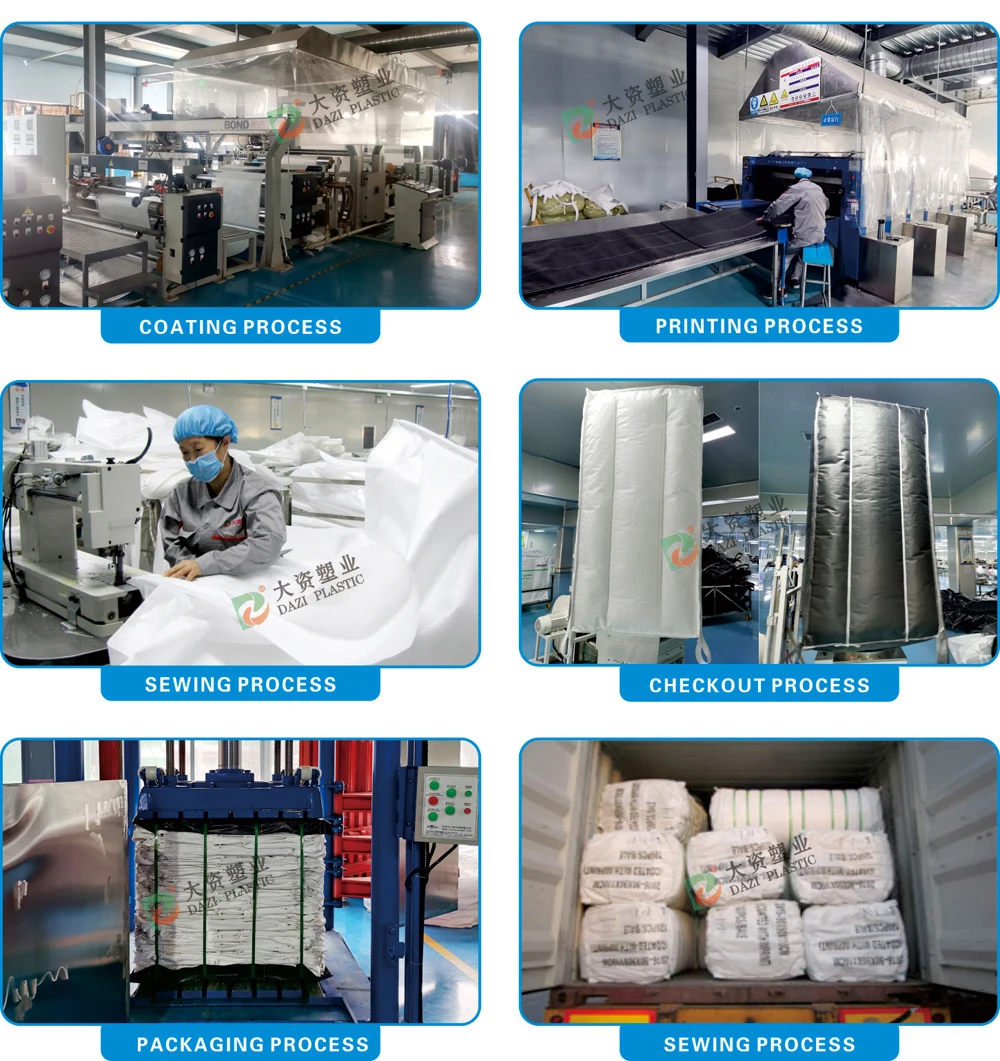
Stable load capacity depends on structural reinforcement. Premium FIBC bags adopt fully reinforced lifting loops, multi-layer overlapping stitching, edge banding reinforcement, and thickened bottom sealing. The connection between lifting belts and the bag body is the key stress point; high-quality products use integrated weaving or multi-thread dense stitching without thread shedding or off-line risks. Inferior products have sparse stitching, weak loop connection, and no reinforcement treatment, prone to belt falling and local cracking under heavy load.
Guide 2: Distinguish Liner Quality for Different Cargo Protection Needs
The inner liner directly determines the sealing, moisture-proof, dust-proof, and pollution-proof performance of FIBC bulk bags, which is the core accessory to protect bulk material quality. High-quality FIBC liners are classified into different grades to match food, chemical, and ordinary industrial scenarios.
Material Purity of PE Inner Liner
High-quality FIBC liners are made of pure new high-density polyethylene (HDPE) materials, featuring smooth surface, uniform thickness, no impurities, no peculiar smell, and excellent toughness. They are not easy to crack or leak during filling and stacking. Low-quality liners use recycled plastic materials with uneven thickness, tiny holes, and brittle texture, which are easy to break and cause material leakage and moisture penetration.
Liner Functional Classification and Adaptability
High-quality FIBC bulk bags support targeted liner configuration according to cargo characteristics:
-
Food-grade liners: Non-toxic, sterile, and compliant with food contact standards, suitable for grains, starch, sugar, and food additives, preventing microbial contamination.
-
Thickened waterproof liners: High barrier performance against water vapor and humidity, ideal for fertilizers, chemical granules, and hygroscopic powders to avoid caking and deterioration.
-
Dust-proof sealed liners: Ultra-fine sealing design for fine powder materials, completely solving dust leakage problems during transit and stacking.
High-quality customized liners fit the bag body closely without wrinkling or falling off, while inferior liners have poor matching and fail to achieve effective protection.
Guide 3: Verify Safety Standards and Industrial Certification
Safety certification and standard compliance are the most intuitive basis for identifying high-quality FIBC bulk bags. Qualified industrial FIBCs must pass standardized quality inspections and meet industry-specific safety specifications.
Basic Industrial Quality Standards
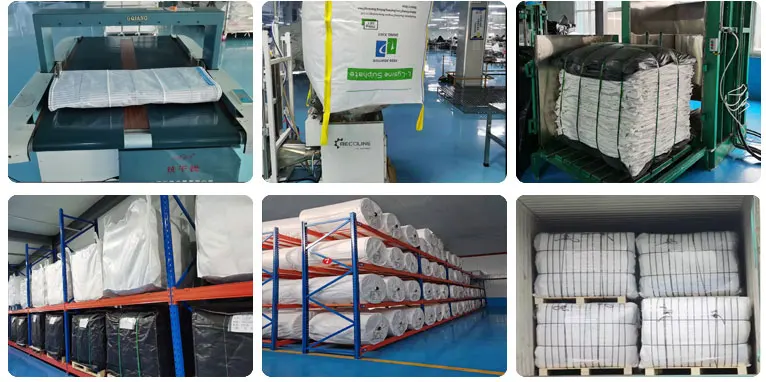
High-quality FIBC bulk bags strictly comply with international industrial packaging standards, with complete production inspection reports, stable size tolerance, and standardized structural design. All finished products undergo strict tensile testing, load-bearing testing, and aging testing before delivery to ensure consistent batch quality.
Special Industry Certification Compliance
For scenario-specific high-quality FIBC products, targeted certifications are indispensable:
-
Food-grade FIBC: Must pass food safety testing, free of harmful additives and heavy metal precipitation.
-
Chemical-grade FIBC: Equipped with UN certification, anti-static, and flame-retardant qualifications, suitable for dangerous goods transportation.
-
Outdoor-grade FIBC: With UV stabilization treatment and aging resistance test reports, adapting to long-term open-air storage.
Anti-Static and Fire Safety Performance
High-quality FIBC bulk bags used for flammable and static-sensitive materials adopt professional anti-static and conductive designs, which can quickly release static electricity, avoid spark generation, and prevent dust explosion risks. Inferior products lack static elimination functions and do not meet chemical industry safety standards, with extremely high usage risks.
Common Low-Quality FIBC Identification Checklist
-
Falsified load parameters and insufficient safety factor, unable to bear dynamic lifting load
-
Mixed recycled materials with rough weaving, low tensile strength, and easy tearing
-
Inferior thin liners with impurities, easy breakage, and poor moisture-proof sealing
-
Sparse stitching, unreinforced lifting loops, and easy structural failure
-
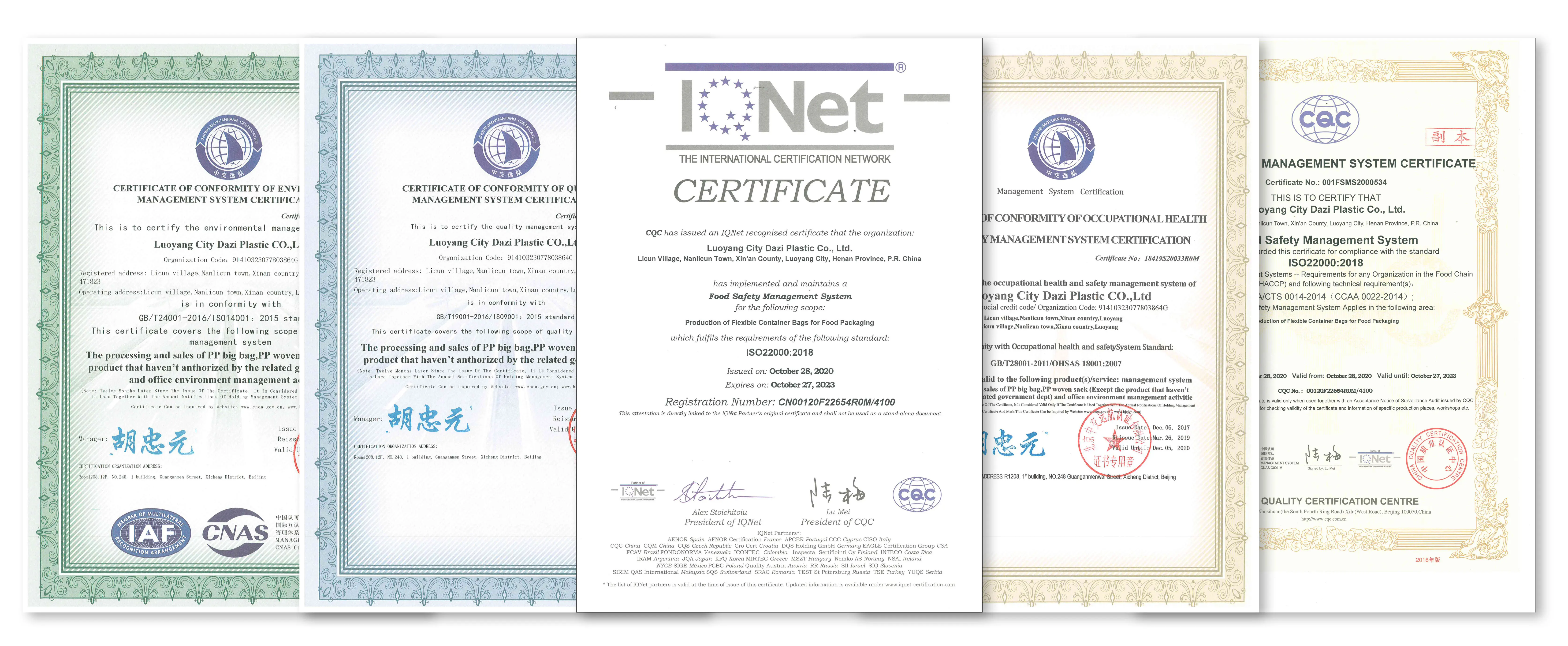
No complete quality inspection reports and industry safety certifications
Final Tips for Selecting High-Quality FIBC Bulk Bags
To purchase reliable high-quality FIBC bulk bags, enterprises should not only focus on unit price but comprehensively inspect load capacity parameters, structural reinforcement technology, inner liner quality, and safety certification qualifications. Select matched functional configurations according to cargo characteristics: choose heavy-duty high-safety-factor bags for heavy abrasive materials, food-grade sealed liner bags for food bulk materials, and UN-certified anti-static FIBCs for chemical hazardous materials.