Fine explosive powders and ultra-fine chemical particles represent one of the highest-risk bulk material categories in industrial handling. Unlike conventional coarse granules with low ignition sensitivity, micro-sized combustible particles such as metal powder, carbon black, pharmaceutical fine dust and chemical explosive intermediates easily form suspended dust clouds during filling, discharging and transportation. Even minimal static spark discharge can trigger severe dust deflagration and explosion accidents. Ordinary insulating FIBCs and basic anti-static bags cannot eliminate static accumulation on ultra-fine powder surfaces, resulting in invisible safety hazards throughout storage and transit. Conductive FIBC bulk bags are professionally certified electrostatic-safe packaging solutions engineered per IEC 61340-4-4 international standards, providing reliable static dissipation and explosion-proof protection exclusively for explosive powder and fine particle logistics.
Unique Explosion Risks of Fine Explosive Powders That Ordinary FIBCs Cannot Solve
Ultra-fine explosive particles have distinct hazard characteristics compared with common bulk materials. Their tiny particle size and large specific surface area lead to extremely low minimum ignition energy (MIE), making them highly susceptible to combustion and explosion in regular operating environments. During pneumatic filling, gravity discharging and vehicle vibration, continuous friction between fine particles and bag inner walls generates massive static charges. Standard polypropylene FIBCs are inherently insulating, locking static electricity on the fabric surface without any discharge channel.
Basic anti-static FIBCs relying solely on surface coating also fail in fine powder scenarios. Their thin anti-static layer wears off quickly after friction and cleaning, with unstable charge dissipation capacity unable to cope with continuous static accumulation from dense fine particles. The accumulated static potential easily breaks down air insulation, producing ignition sparks that trigger dust cloud explosions. Additionally, static adsorption causes fine explosive powder to adhere tightly to bag walls, forming residual dust layers that raise secondary explosion risks during bag turnover and cleaning.
Professional Structural Design and Explosion-Proof Mechanism of Conductive FIBCs
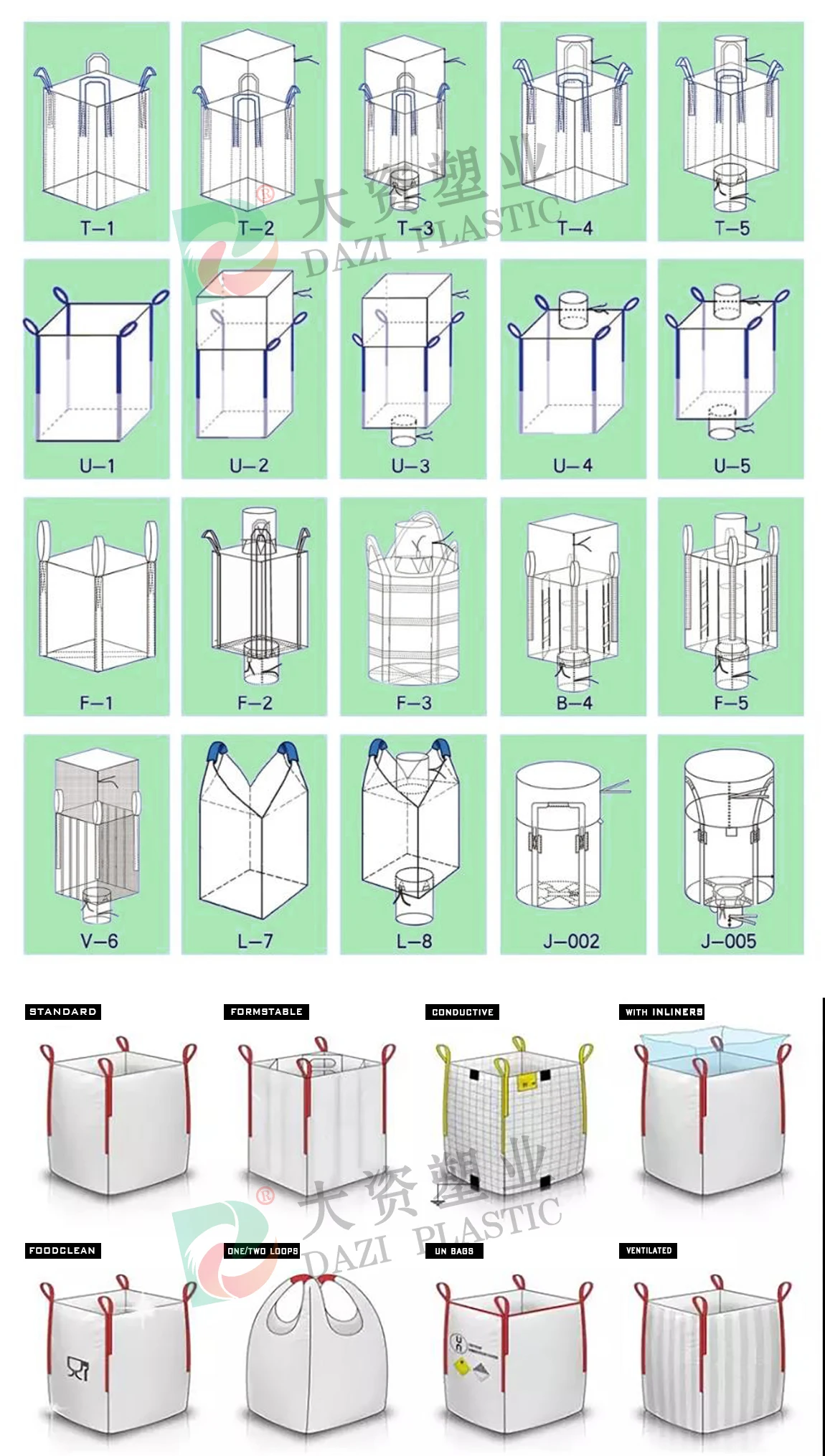
Conductive FIBCs adopt embedded conductive grid weaving technology, fundamentally different from superficial anti-static treatment. High-precision carbon or silver conductive yarns are interwoven into the polypropylene fabric in a uniform grid pattern, forming a complete and continuous conductive network across the entire bag body. All conductive threads are interconnected and fixed with dedicated grounding lugs, ensuring zero-break electrical continuity.
For explosive fine powder operation scenarios, qualified Type C conductive FIBCs achieve thorough static elimination through reliable grounding connection. All static charges generated by particle friction are quickly collected by the internal conductive grid and safely diverted to the ground, completely avoiding surface charge accumulation and high-potential spark discharge. This active static derivation mechanism strictly limits surface electrostatic potential below the safe threshold for combustible dust, thoroughly cutting off the core trigger source of fine powder explosion accidents.
Different from generic anti-static products, industrial-grade conductive FIBCs maintain permanent conductive performance. The internal conductive grid will not fall off or fail due to friction, rain washing or long-term storage, ensuring stable explosion-proof capability for repeated cyclic use and long-distance hazardous material transportation.
Core Safety Advantages for Explosive Powder & Fine Particle Handling
1. Eliminate Primary and Secondary Dust Explosion Risks
Conductive FIBCs effectively prevent primary explosion caused by static sparks during material filling and discharging. More importantly, they solve the secondary explosion hazard easily ignored in fine powder logistics. By eliminating static adsorption, they greatly reduce residual fine dust adhesion on the bag inner wall, avoiding floating dust clouds generated during bag flipping, cleaning and secondary handling. This dual-protection mechanism comprehensively controls explosion risks in the full operational cycle of explosive fine particles.
2. Adapt to Hazardous Zone Classification Requirements
Explosive powder processing workshops and storage yards are classified as Zone 1 and Zone 2 hazardous explosive atmospheres with strict packaging safety thresholds. Certified conductive FIBCs fully comply with ATEX 2014/34/EU and IEC industrial hazardous area standards, being the only compliant packaging for open operations in explosive dust environments. They avoid safety rectification, production suspension and customs clearance detention caused by non-compliant packaging, supporting standardized safety production and cross-border transportation of explosive fine particles.
3. Prevent Fine Particle Leakage and Dust Diffusion
Matching with fine particle characteristics, conductive FIBCs adopt encrypted weaving and reinforced sealing technology. The compact fabric structure prevents ultra-fine powder leakage from fabric gaps, effectively controlling dust diffusion in working environments. While ensuring static safety, it maintains a clean and standardized workshop environment, reducing equipment dust accumulation and environmental pollution risks caused by fine particle leakage.
4. Stable Performance in Complex Variable Environments
Dry air, temperature changes and long-distance bumpy transportation will intensify static generation of explosive fine powders. Conductive FIBCs feature temperature and humidity resistance, with conductive performance not attenuated by dry seasons, high-temperature workshops or low-temperature transportation environments. They maintain continuous and effective static dissipation capability throughout factory filling, warehouse storage and container transportation, achieving full-link safety protection for explosive powder logistics.
Typical Application Scenarios for Explosive Fine Particle Packaging
Conductive FIBCs are exclusively applicable to high-risk fine powder and micro-particle industries with explosion hazards, covering mainstream hazardous material processing fields:
-
Metal fine powder industry: Aluminum powder, magnesium powder, iron powder and other combustible metal micro-particles prone to dust explosion
-
New energy materials: Lithium battery raw material powder, conductive powder and energy storage chemical fine particles
-
Chemical explosive materials: Fine chemical intermediates, combustible toner, sulfur powder and organic explosive dust
-
Pharmaceutical and fine chemical industry: Drug fine powder and biochemical combustible particles with low ignition energy
Critical Usage and Compliance Tips
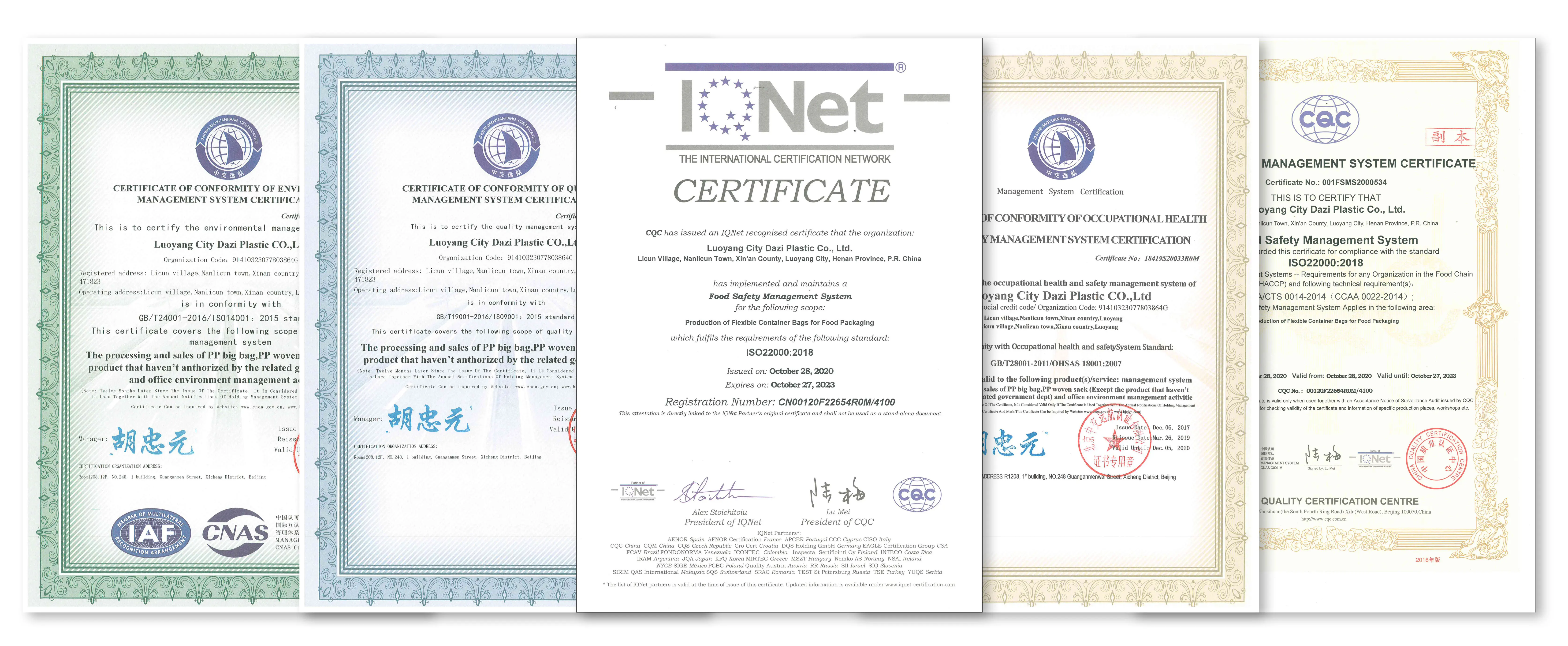
To maximize the explosion-proof value of conductive FIBCs, standardized operation is essential. Type C conductive FIBCs must be reliably grounded before filling and discharging; ungrounded use will completely fail the static-proof function and bring greater safety risks. Enterprises should select products with complete IEC certification and test reports, avoiding unqualified low-grade conductive bags with discontinuous conductive grids and unstable performance. Regularly check the integrity of grounding lugs and conductive threads to eliminate potential safety hazards caused by local structural damage.
Conclusion
Conductive FIBC bulk bags are indispensable safety packaging for explosive powder and fine particle storage and transportation. Relying on embedded grid conductive technology and professional static derivation mechanism, they fundamentally solve the static accumulation and explosion risks that cannot be avoided by ordinary bulk bags. By meeting international hazardous environment safety standards, controlling primary and secondary dust explosion hazards, and adapting to complex hazardous working conditions, conductive FIBCs provide solid safety guarantees for standardized production and compliant logistics of explosive fine particle industries, becoming the core safety barrier for industrial hazardous material management.