Hazardous powder materials, including fine chemical powders, pharmaceutical intermediates, pesticide dust, toner powder, metal powder and combustible organic dust, present unique safety challenges during industrial packaging, filling, discharging and transportation. Unlike granular bulk solids with low specific surface area, fine powder materials are prone to floating dust clouds during material turnover. Slight friction between powder particles and FIBC fabric can generate continuous static charge accumulation. In flammable, explosive or dust-sensitive working environments, ordinary PP woven FIBCs become potential ignition sources. This explains why anti-static FIBC bulk bags have become mandatory safety packaging rather than optional upgrades for modern hazardous powder handling processes.
Unique Static Generation Mechanism of Fine Powder Handling
Static electricity is unavoidable in powder packaging operations. When fine hazardous powders flow rapidly into FIBCs during pneumatic filling, or slide out during quick discharging, massive particle friction occurs between powder layers and the insulating polypropylene fabric surface. Standard FIBC woven material is highly insulating, meaning static charges cannot dissipate naturally and will accumulate rapidly on the bag surface.
For coarse granular materials, static accumulation is weak and poses negligible risks. However, fine hazardous powders feature tiny particle size, large specific surface area and low minimum ignition energy (MIE). Even a small static spark with energy below 10mJ can trigger dust explosion, flash combustion or gas-phase reaction in confined workshops, closed containers and enclosed warehouse spaces. This inherent operational risk makes ordinary non-static FIBCs completely unqualified for powder-grade hazardous material processing.
Hidden Risks of Using Ordinary FIBCs for Hazardous Powder
Many production accidents in powder processing factories stem from underestimated static hazards caused by standard bulk bags. Beyond the well-known explosion risk, mismatched packaging also brings multiple invisible operational and quality risks specific to powder materials.
First, static adsorption causes severe powder residue and floating dust pollution. Statically charged bag walls tightly adsorb fine powder particles, resulting in incomplete discharging, material waste and cross-contamination during batch switching. For high-purity chemical powders and pharmaceutical raw materials, electrostatic adhesion directly affects product purity and batch stability.
Second, static-induced dust agglomeration affects material performance. Static accumulation changes powder fluidity, causing local caking and uneven particle distribution, which compromises downstream mixing, granulation and reaction processes.
Third, ungrounded static charges increase workplace safety hazards. Operators may experience static electric shocks during bag handling, and accumulated static sparks can ignite flammable solvent vapor mixed with dust in semi-enclosed production lines.
Working Principle of Professional Anti-Static FIBCs
Anti-static FIBCs are specially engineered to eliminate static accumulation during powder friction and flow. Different from ordinary coated anti-static fabrics with short-term validity, industrial-grade anti-static bulk bags adopt embedded conductive filament weaving or static-dissipative polymer technology, achieving permanent and stable static control performance.
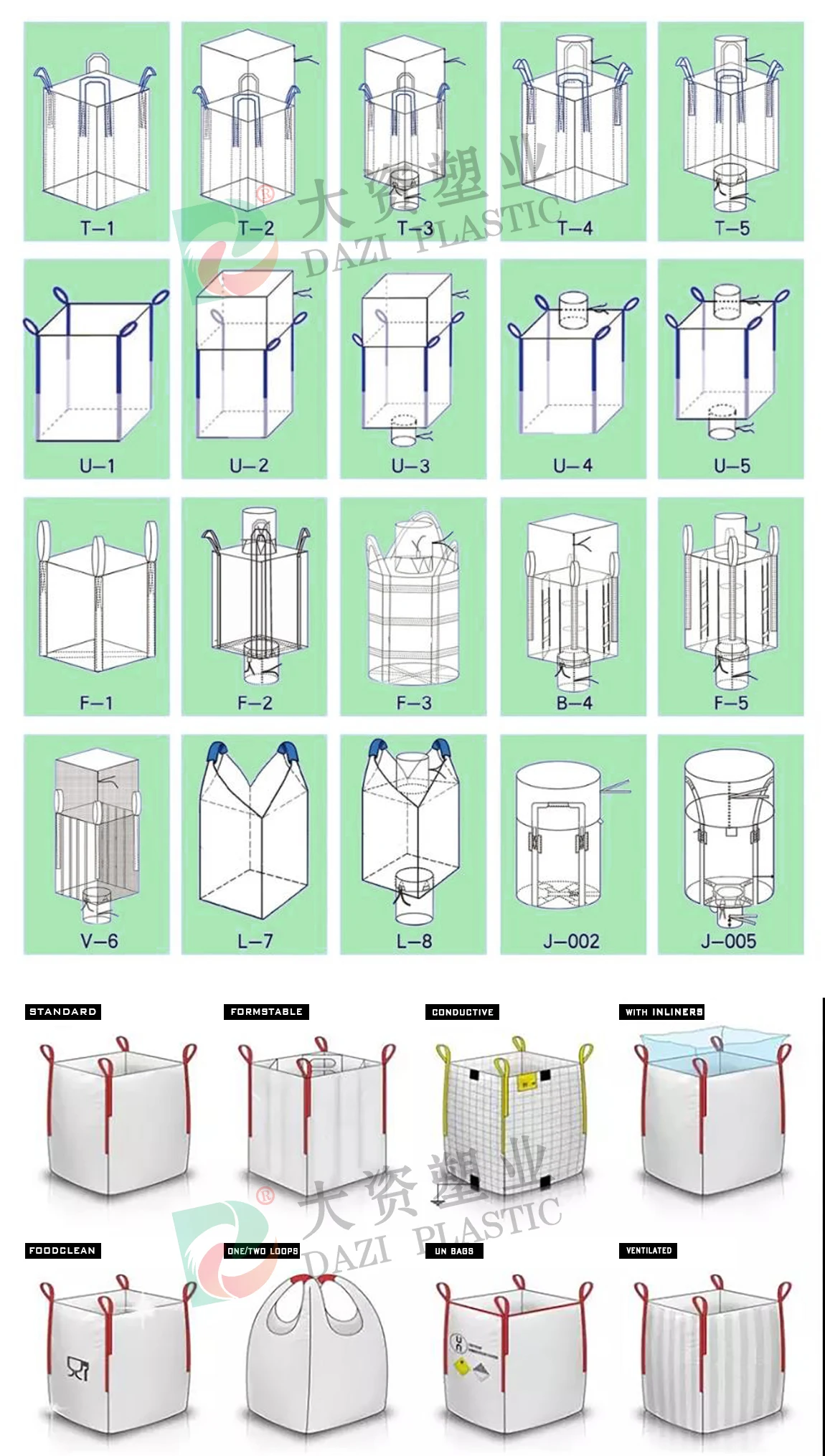
The core mechanism is balanced charge dissipation. During powder filling and vibration, micro-static generated by friction is quickly dispersed through the conductive network on the bag surface, avoiding charge concentration and spark discharge. Professional anti-static FIBCs are strictly classified into Type C (grounding-dependent) and Type D (ground-free static dissipative), adapting to different powder production and logistics environments.
Type C anti-static FIBCs rely on conductive threads and reliable grounding to release static charges, suitable for fixed workshop filling stations with stable grounding facilities. Type D FIBCs adopt advanced static-dissipative fabric, safely eliminating static risks without grounding connection, ideal for mobile handling, outdoor temporary turnover and container loading scenarios where grounding conditions are unavailable.
Core Reasons Why Anti-Static FIBCs Are Indispensable for Powder Processing
1. Eliminate Dust Explosion and Combustion Risks
Dust explosion is the most fatal risk in hazardous powder industries. Fine combustible powders form explosive dust clouds during feeding, discharging and bag replacement. Anti-static FIBCs effectively suppress static spark generation, cutting off the core ignition source of dust explosion. For metal powder, carbon powder, resin powder and chemical combustible dust production lines, anti-static packaging is the most basic and critical safety barrier in system-level explosion-proof design.
2. Improve Powder Discharging Efficiency and Reduce Material Waste
Static adsorption is the main cause of residual powder inside bulk bags. Anti-static fabric keeps the bag surface in a neutral charge state, ensuring smooth and thorough powder sliding during discharging. It drastically reduces wall adhesion residue, improves material utilization rate and avoids batch mixing pollution caused by residual powder. For high-value fine chemical and pharmaceutical powders, this advantage brings significant economic benefits while ensuring production cleanliness.
3. Stabilize Powder Physical Properties and Product Quality
Static electricity changes powder fluidity, bulk density and dispersion uniformity, leading to inconsistent feeding volume and unstable product quality in continuous automated production. Anti-static FIBCs maintain stable electrostatic environment during material turnover, ensuring consistent powder flow performance, precise feeding measurement and stable downstream product quality. It is an essential packaging condition for automated batching and continuous powder processing lines.
4. Meet Industrial Safety Compliance and Audit Standards
International safety specifications such as IEC 61340 and industrial dust explosion prevention regulations clearly mandate anti-static packaging for combustible and hazardous powder handling. Many factory safety audits, customer factory inspections and cross-border dangerous goods customs inspections require complete anti-static configuration and test reports. Using qualified anti-static FIBCs helps enterprises pass safety audits, avoid production suspension penalties and ensure compliant shipment of hazardous powder products.
5. Adapt to Complex Mobile Logistics Scenarios
Hazardous powder management covers not only fixed workshop production but also outdoor stacking, container transportation and multi-link turnover. Ordinary FIBCs cannot adapt to variable environmental static risks. High-performance Type D anti-static FIBCs realize ground-free static protection, providing all-round safety guarantees for mobile handling, long-distance transportation and open-space temporary storage, filling the safety loopholes of traditional grounding-dependent anti-static solutions.
Typical Application Scenarios That Require Anti-Static FIBCs
-
Chemical industry: Organic synthetic powder, chemical additives, flammable resin powder and fine chemical intermediates
-
New energy industry: Battery positive and negative electrode powder, graphite powder and conductive powder materials
-
Metallurgical and metal powder processing: Aluminum powder, magnesium powder and various combustible metal micro-powders
-
Pharmaceutical and pesticide industry: Drug raw powder, pesticide dust and fine biochemical powder materials
-
Plastic and coating industry: Toner powder, pigment dust and ultra-fine plastic modifier powder
Common Misunderstandings in Anti-Static FIBC Selection
Many safety accidents are caused by incorrect anti-static bag selection. Some manufacturers mistakenly believe that common printed conductive bags or spray-coated anti-static bags can meet hazardous powder standards. In fact, surface coating anti-static treatment fails after friction and cleaning, with poor durability and unstable performance. Only woven-in permanent anti-static FIBCs with complete IEC test certification can be used for long-term hazardous powder operation.
In addition, using Type C bags without effective grounding is completely invalid. For ungroundable mobile logistics scenarios, Type D ground-free anti-static FIBCs must be deployed to avoid virtual safety protection.
Conclusion
Anti-static FIBC bulk bags are not an optional upgraded accessory, but an indispensable safety facility for hazardous powder material handling. They fundamentally solve static spark risks, dust adsorption residue, powder performance instability and non-compliance problems caused by ordinary insulating FIBCs. For powder processing enterprises involving flammable, explosive and high-purity hazardous materials, standardized permanent anti-static FIBC configuration is the core guarantee for workshop safety, stable product quality and compliant industrial operation.