Food‑grade FIBC bulk bags are critical packaging solutions for grains, flour, sugar, milk powder, food additives and other dry bulk food materials. Unlike ordinary industrial FIBCs, food‑grade FIBCs face strict hygiene requirements to avoid cross‑contamination, chemical migration, foreign‑object pollution and odor transfer to food products. Many buyers confuse “food‑safe liner only” with real food‑grade FIBC standards. Understanding complete food‑grade FIBC production standards helps purchasers verify supplier qualifications, avoid compliance risks for domestic sales and export shipments, and protect food product safety.
Raw Material Requirements: The Foundation of Food‑Grade FIBC
Raw material selection is the first barrier for qualified food‑grade FIBC production. Recycled polypropylene is strictly forbidden for direct food‑contact FIBC fabric, because recycled materials carry hidden risks of heavy‑metal residues, unknown additives and cross‑contamination.
-
100% virgin food‑contact polypropylene resin
All woven PP fabric must adopt virgin PP pellets approved for food contact. No recycled or mixed waste plastic is allowed. Auxiliary additives including UV stabilizers, antistatic agents and color masterbatch must also satisfy food‑contact regulations, limiting heavy metal content and prohibited plasticizers.
-
Food‑grade inner liner specification
Most food‑grade FIBCs are equipped with LDPE or LLDPE food‑safe liners as the core isolation layer. Liners shall pass migration testing, without peculiar smell, precipitation or color bleeding. For high‑sensitivity food powder, form‑fit liners are recommended to reduce residual dead corners and dust accumulation inside the bag.
-
Strict prohibition of polluting accessories
Sewing threads, labels and printing ink shall be food‑contact compatible. Printing is generally arranged on the outer surface only; inner‑side printing is forbidden to prevent ink transfer to food goods.
Controlled Production Environment & Hygiene Management
Even qualified raw materials may get contaminated during manufacturing. Real food‑grade FIBCs cannot be produced on ordinary industrial‑grade production lines.
- Production workshops follow GMP hygiene rules. Some high‑specification products are manufactured in clean‑room environments, with dust, particle and humidity control for air quality.
- Production equipment, cutting and sewing stations need regular cleaning. Workers follow standardized hygiene operating procedures to reduce foreign‑body pollution risk from human factors.
- Separate production lines or time‑segment isolation shall be adopted. Food‑grade FIBC production cannot mix with chemical‑grade or mining‑grade bag production to avoid cross‑pollution by industrial dust and chemical residues.
Mandatory In‑Process Inspection & Post‑Production Cleaning
Food‑grade FIBC requires extra cleaning and inspection procedures that ordinary bulk bags do not need. These steps remove loose threads, fabric debris, tiny particles and metal fragments inside bags.
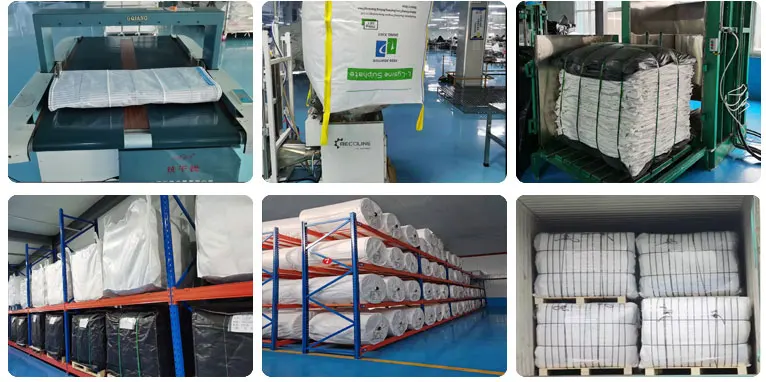
- Physical cleaning treatment: Air blowing, vacuum cleaning and light‑table inspection remove floating dust and loose yarn inside finished bags. All cutting edges and thread ends are arranged outside the bag cavity to prevent yarn fragments falling into food materials.
- Metal detection: Every finished bag passes metal detector screening to eliminate metal fragment risks brought by sewing or equipment wear, which is a non‑negotiable requirement for food‑grade FIBCs.
- Batch‑by‑batch laboratory testing: Key test items include total migration volume, heavy‑metal migration, sensory evaluation (odor, color, impurity), microbial test and evaporation residue test, ensuring no harmful substances transfer to food products.
- Batch traceability system: Each batch keeps complete records of raw material batches, production date, test reports and inspection logs. Buyers can trace back to raw material sources when quality problems occur.
Independent Sealed Packaging & Storage‑Transport Rules
After inspection, food‑grade FIBCs cannot be exposed to ordinary warehouses. Finished products shall be individually sealed with food‑safe plastic bags, then packed into outer cartons or protective film.
Warehouses must keep dry, clean and odor‑free. During transportation, food‑grade FIBC finished goods cannot be mixed with chemicals, waste materials or odorous goods, to prevent secondary pollution before customer use.
Core Global Certification & Regional Compliance Standards
Different export markets have different regulatory requirements for food‑grade FIBCs. Qualified suppliers should provide corresponding compliance documents and test reports according to target markets.
- EU market: Follow EC 1935/2004 and EU 10/2011 for plastic food‑contact materials. Manufacturers provide Declaration of Conformity (DoC) and migration test reports; BRCGS packaging certification is widely recognized by European food enterprises.
- United States market: Comply with FDA 21 CFR 177.1520 regulations for polypropylene food‑contact materials. Manufacturers conduct self‑testing and issue compliance statements.
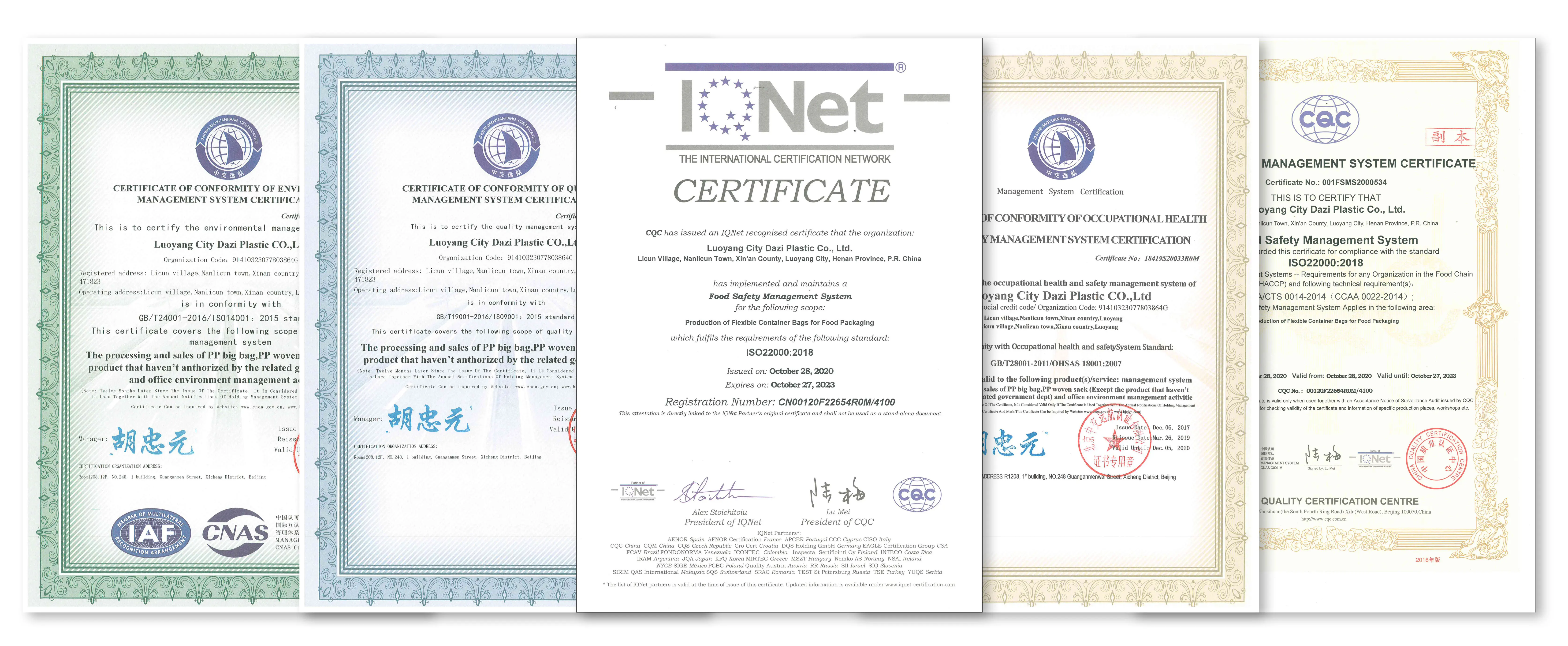
- Global food‑safety system: ISO 22000, HACCP and BRCGS are mainstream system certifications for FIBC factories, proving standardized hygiene management in whole production processes.
- Physical performance baseline: Food‑grade FIBC also needs to meet ISO 21898 mechanical indexes including lifting strength, stacking resistance and safety factor, balancing food‑safety hygiene and bulk‑logistics mechanical reliability.
Common Misunderstandings for Food‑Grade FIBC Procurement
- “Adding a food‑grade liner to ordinary FIBC equals food‑grade FIBC”: Wrong. Outer fabric produced on polluted industrial lines may shed fiber or carry residual contaminants. Only the whole‑process food‑grade production meets requirements.
- “White color means food‑grade”: Wrong. White fabric does not represent raw‑material purity. The key is virgin‑material proof, production‑environment control and lab test reports.
- Ignoring batch traceability: Suppliers claiming “food‑grade” without batch records and test reports cannot be trusted. Always ask for raw‑material certificates and third‑party test data.
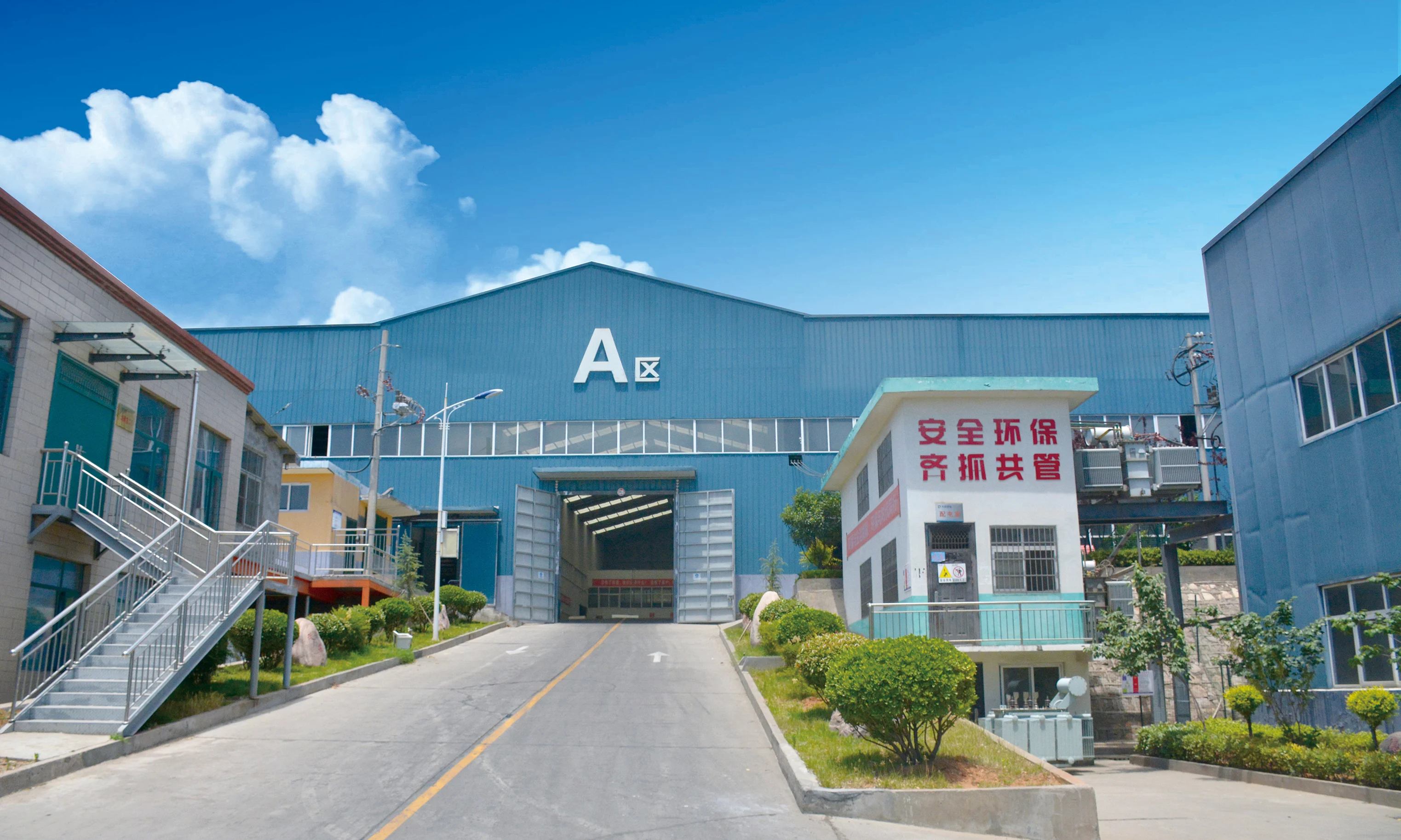
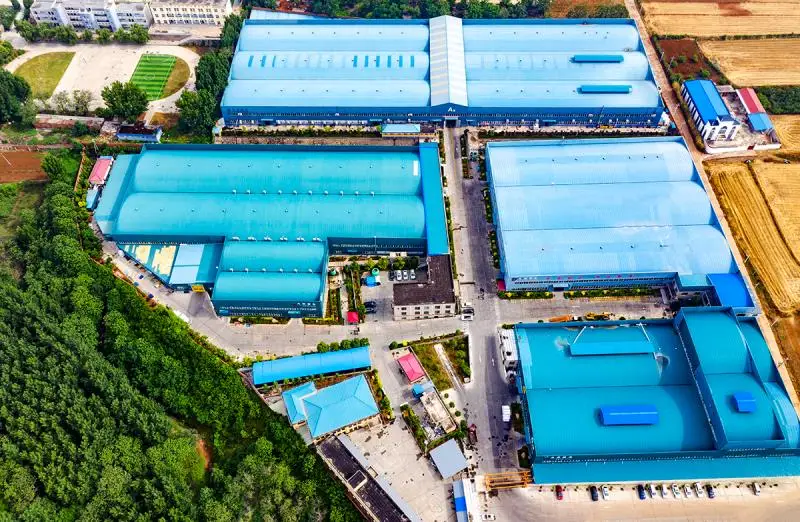
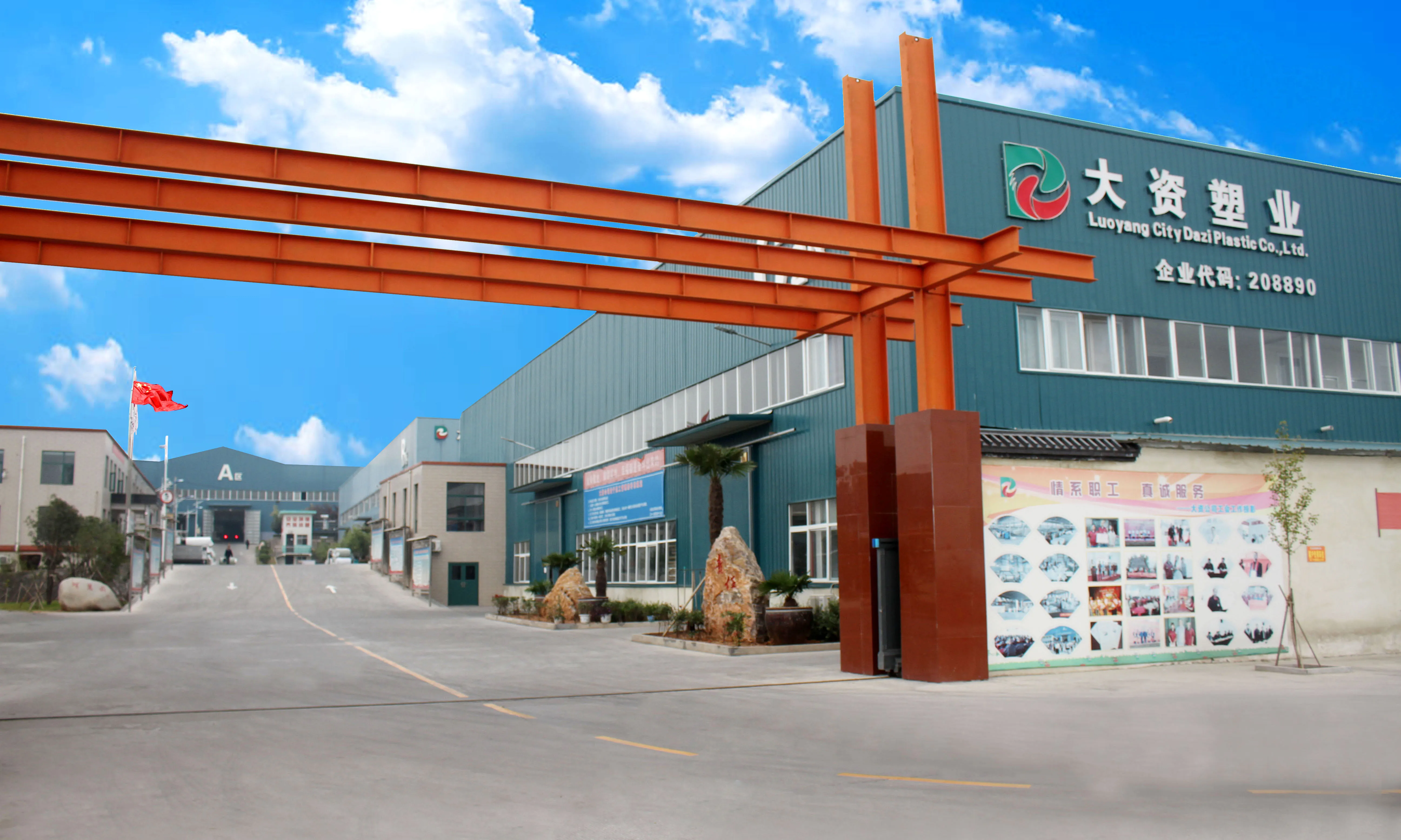
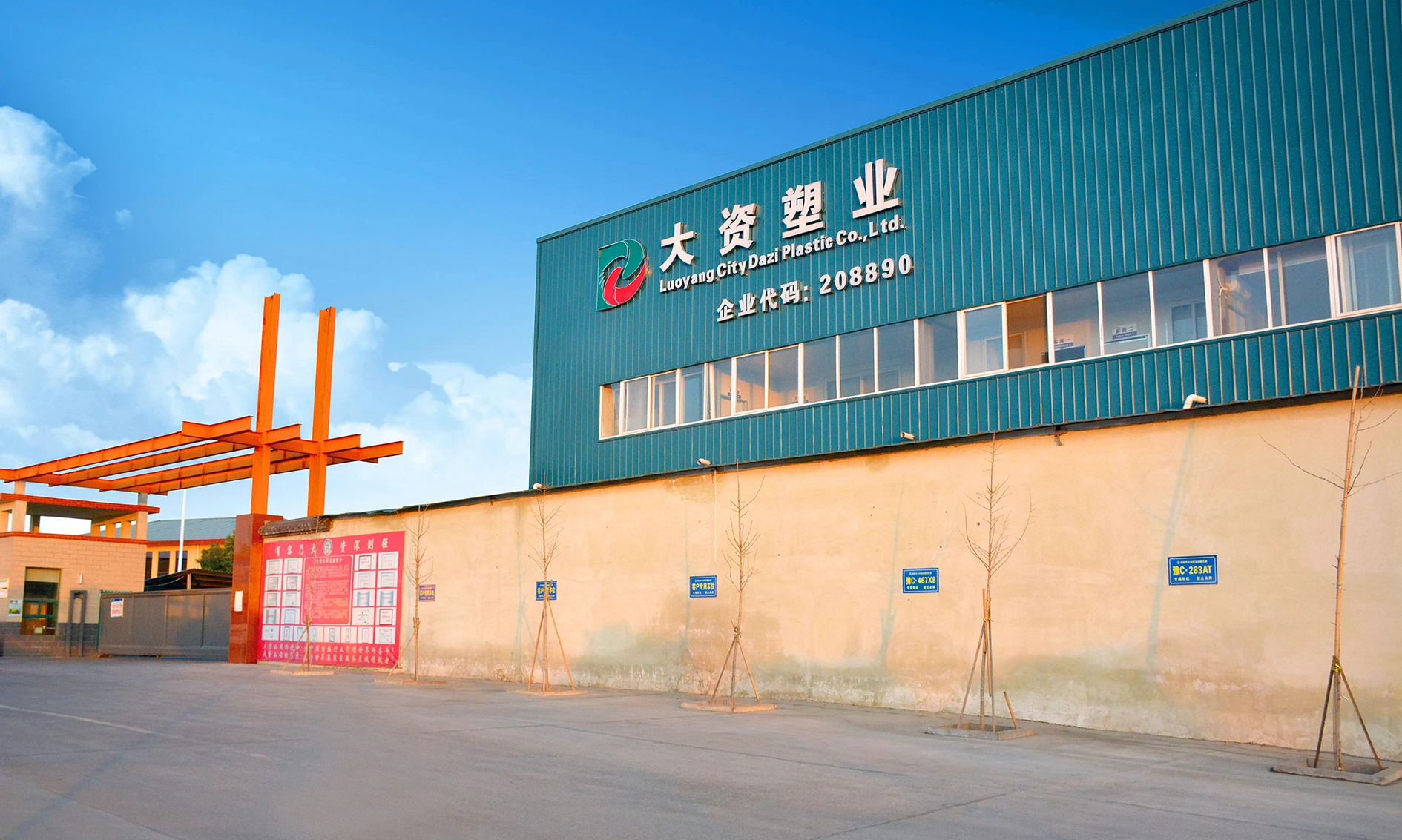
Luoyang City Dazi plastic Co., Ltd. is a comprehensive integrated enterprise with the production of yarn drawing, circular weaving, webbing, coating, film blowing, sewing and accessories material (sewing thread, polyester filler cord, etc.). Our company has a staff of over 458 people, covers an area of about 59,000 square meters, including a building area of about 49,000 square meters, and owns 4 modern plants which include the project of one hundred thousand level dust-free workshop for flexible container bags, the finished product out put of this project is about 80000 pcs / month. This project is equipped with complete physical and chemical indicators testing equipment, and all the equipment of this project adopt the advanced equipment at home and abroad, featuring advanced performance, convenient operation, stable operation, safety and reliability. Together with excellent polypropylene raw materials, stable auxiliary materials and advanced production technology, we can provide various products to customers and friends. Besides, We possess National industrial product production license and Informatization integration management system assessment certificate, and have passed I S O 9 0 0 1, I S O 1 4 0 0 1, O H S A S 1 8 0 0 1, and I S O 2 2 0 0 0. The advanced production equipment,professional production technology, scientific management system and complete detection means has guaranteed our products reach the international standard and sell well in over 10 countries and regions, especially in southeast Asia, Europe, United states.
Title goes here.
Semi-Automatic PET Bottle Blowing Machine Bottle Making Machine Bottle Moulding Machine PET Bottle Making Machine is suitable for producing PET plastic containers and bottles in all shapes.
|
Description
|
FIBC/Jumbo bag/bulk bag/ pp big bag/Flexible container bag professional manufacturer
|
|
Type of bag
|
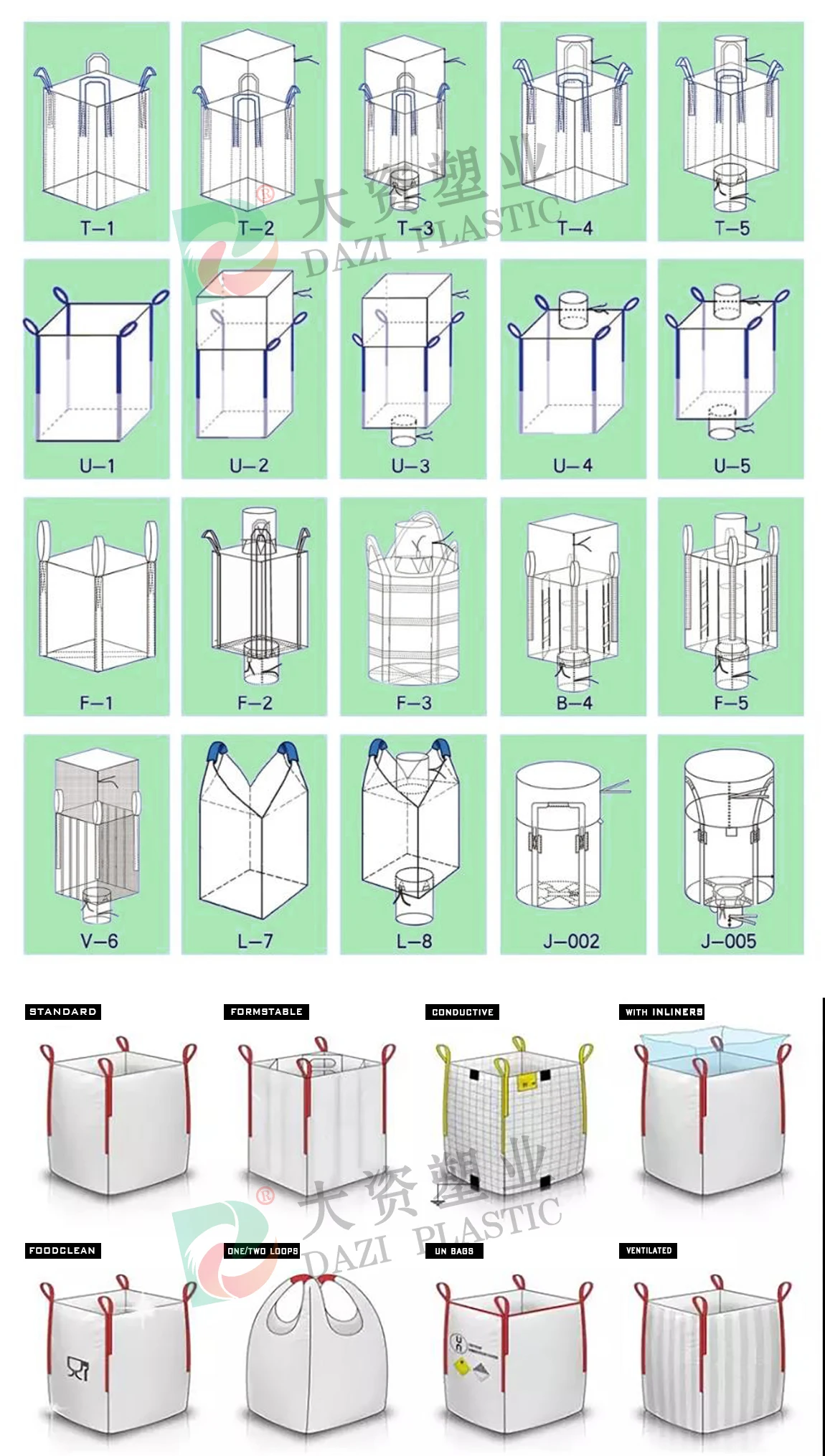
Tubular/Circular/U-panel shape//Rectangular
|
|
Material
|
100% Virgin PP
|
|
Fabric
|
Laminated/Plain/Vent/Conductive
|
|
Size
|
Customized
|
|
GSM
|
110gsm-230gsm
|
|
Color
|
Customized
|
|
Printing
|
Customized
|
|
Top
|
Full open/Filling spout/Top skirt/Duffle
|
|
Bottom
|
Flat/plain/with discharge spout
|
|
Liner
|
Liner(HDPE, LDPE) or Customized
|
|
Lifting loop
|
Cross-corner loops/4 Point 2 Strap lifting loop/Double Stevedore Strap/with belt/Fully belt loop/Loop in loop
|
|
Sewing
|
Plain/chain/chain lock with optional soft-proof
|
|
Ropes
|
1 or 2 around the bag body/customized
|
|
SWL
|
500-2000KG
|
|
SF
|
5:1/6:1/or as customer's requirement
|
|
Treatment
|
UV treated or not UV treated
|
|
Surface Dealing
|
Coated or plain,printing or no printing
|
|
Usage
|
Storage and packing
Mine,ore,fertilizer,chemical,onion,potato,grain,wheat,maize,rice,peanut,sugar,salt,agriculture,building
material,powder,cement,etc.
|
|
Processing
|
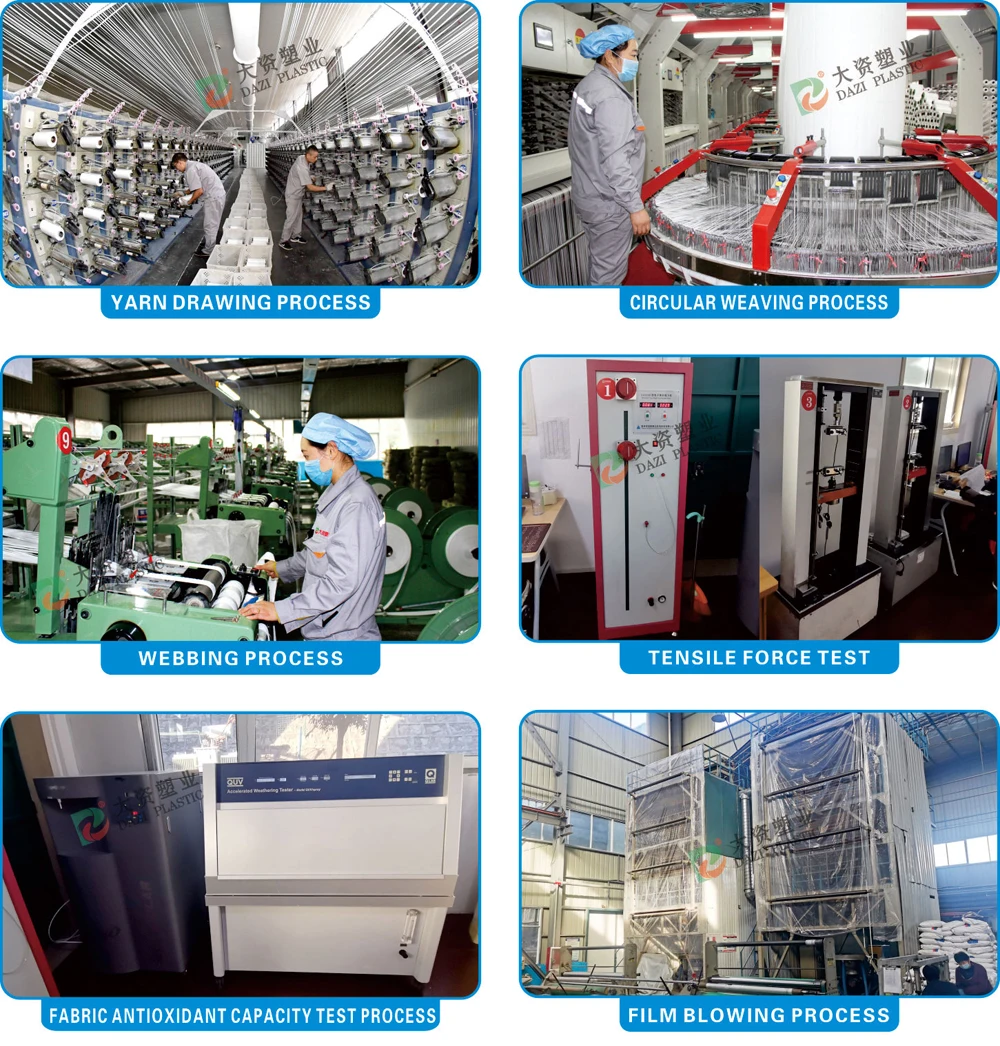
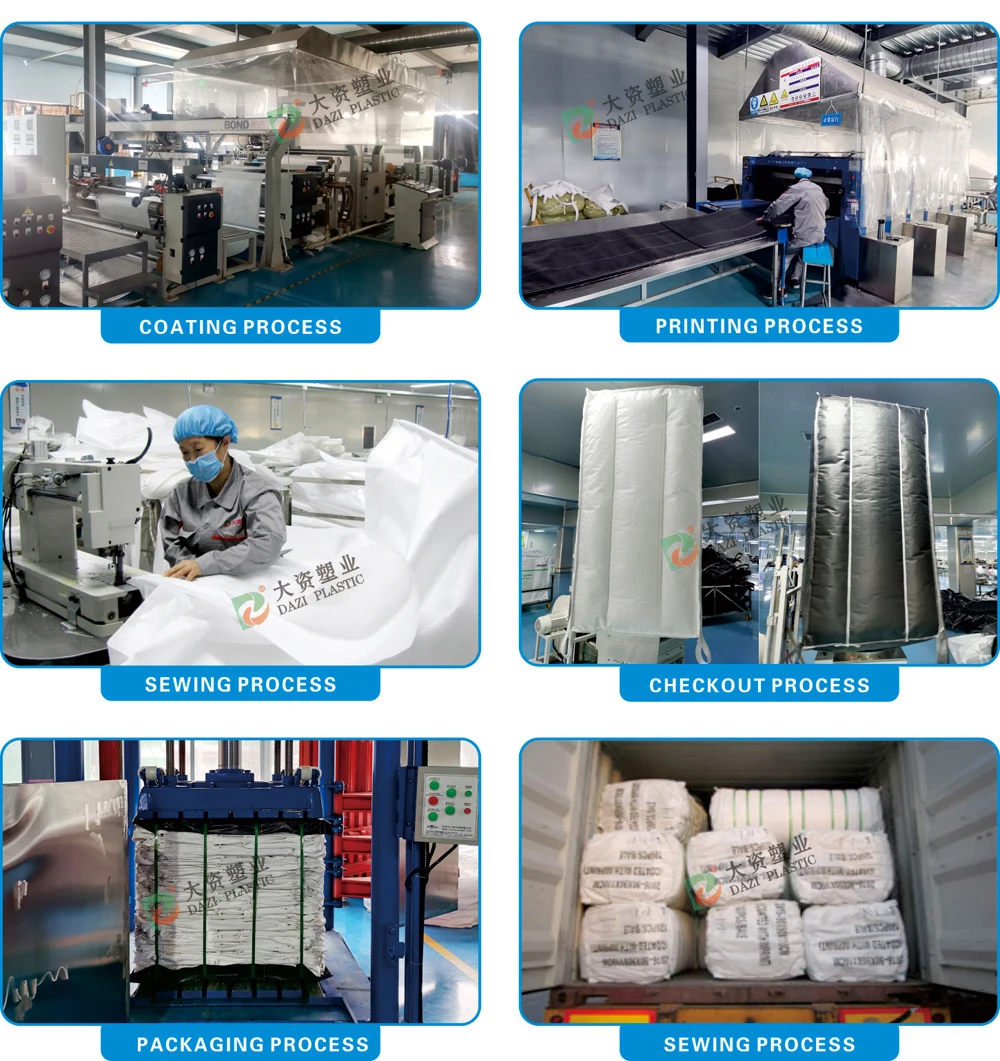
Yarn drawing-Circular weaving/Webbing-Quality inspection-Coating-Film
blowing-Cutting-Printing-Sewing-Checkout-Packaging-Transportation
|
|
Delivery time
|
15-30 days
|
|
Certification
|
ISO22000, ISO9001, ISO14001, LABORDATA, etc.
|
|
Remark
|
Please let us know your specific requirements
|
|
|
|
We can design and produce various kinds of products according to customer's requirements.
Production process: Yarn drawing--Circular weaving/Webbing--Quality inspection--Coating-Film blowing--Cutting--Printing--Sewing--Checkout-Packaging--Transportation
Q1:What's your Product Range?
1. Jumbo bag/ ton bag/ pp big bag/ super sack/ pp container bag.
2. Plastic woven bag,poly-woven bag.
3. Semi-finished product of all above(pp material, pp fabric, pp webbing, pp liner, Sewing thread, Leakproof sliver)
Q2:Are you a manufacture?
Yes,We have been in providing professional solution in plastic woven industry for over 20 years.
Q3:Do you have stock products to sell?
No ,We work on OEM orders.That means size material quantity packaging solution,etc will depend on your requests.
Q4:What information should I let you know if I want to get a quotation?
-The size of the bag (Length * Width * Height) or (diameter * height).
-The material and surface handing.
-The bag's color and the loop's color.
-The SWL and SF.
-The order quantity.
-The bag's working condition, usage, temperature, light application time, the goods save way.
- If it is possible, please also provide with picture design sketch for checking, sample will be best for clarifying, If not we
will recommend relevant products with details for your reference.
Q5: How can we guarantee quantity?
-Always a pre-production sample before mass production;
-Always final inspection before shipment;
Q6:How many time will the sample be finished? How your factory production scale?
-Generally,1-2 days for sample making.
-The lead time of mass production will depend on quantity,quality,existing orders.
Q7:How do you inspect the quality of our order?
-We have first-rate production equipment, advanced production technology, scientific management system and complete detection
means and also expert QC to ensure the quality of products.