Time Is the Fourth Variable in a Bag's Design
A bag that holds grain for two weeks and a bag that holds grain for eight months are not the same engineering problem, even when they look identical. Short exposure rewards strength and closure discipline. Long storage adds a different set of enemies: condensation that builds over repeated day-night temperature swings, insect pressure that compounds month after month, and sunlight that quietly converts the woven fabric from strong to brittle. Food grade UV stabilized FIBC jumbo bags are specified for that longer clock — reusable export ton bags engineered so that the material, the compliance and the physical performance survive the duration, not just the journey.
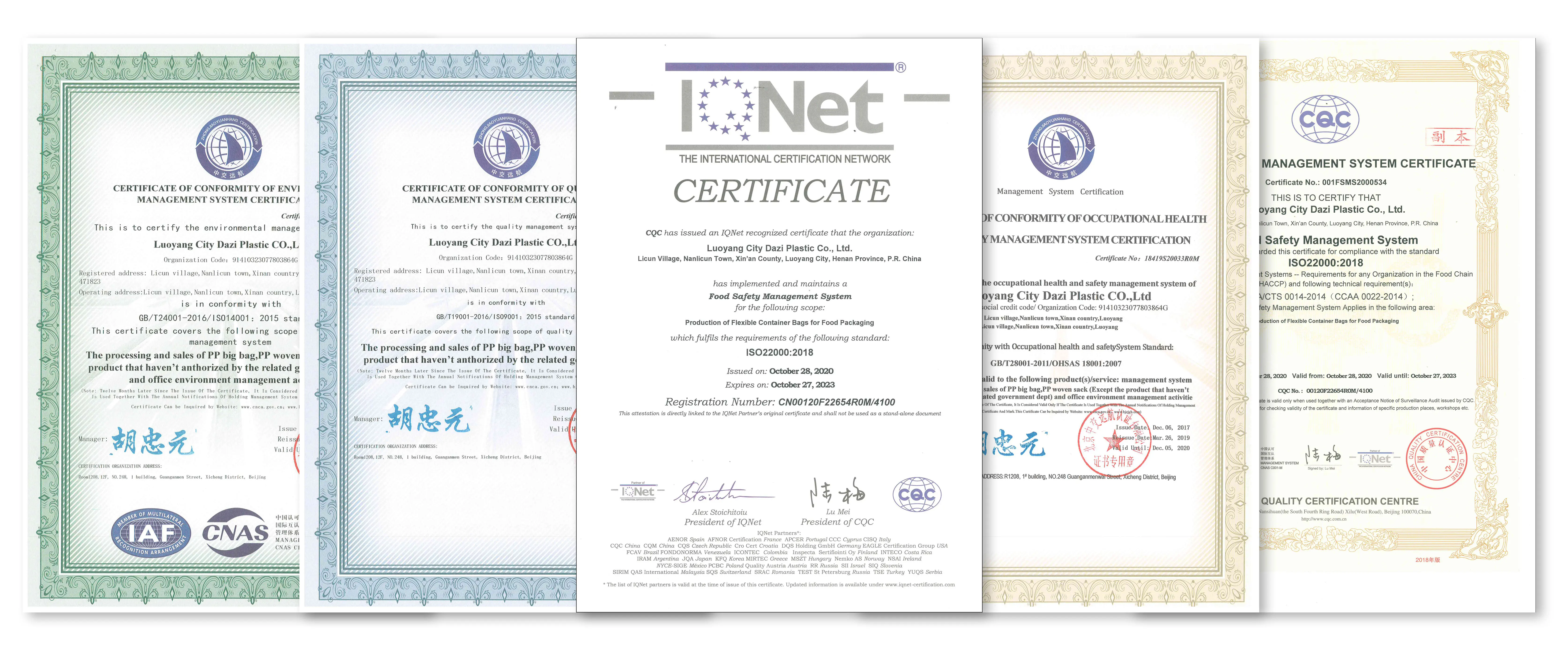
Food Grade Means Specific, Verifiable Things
"Food grade" is often treated as a label. In practice it is a set of concrete requirements that a buyer can ask to see documented.
-
Compliant materials: virgin polypropylene and additives that meet the food-contact regulation of the destination market, with no recycled content of unknown origin.
-
Migration limits: test evidence for substances that can transfer into the grain, including pigments and any coating on the fabric.
-
Odor neutrality: the fabric and liner must not impart a smell that grain absorbs — an invisible but commercially fatal defect.
-
Safe printing and marking: inks and surface treatments must not introduce non-compliant substances, which matters because export bags carry heavy printed identification.
-
No residual treatment: surface insecticide or pesticide treatments sometimes applied to ordinary bags are unacceptable on food-contact packaging.
The practical test is simple: can the supplier produce compliance documentation for the exact bag configuration being ordered, not a generic certificate for a different product?
UV Stabilization: The Risk Is Strength, Not Color
Sunlight damages polypropylene by breaking the polymer chain. The visible symptom is chalking and fading; the consequential symptom is a progressive loss of tensile strength in the fabric and in the seams. A bag that has stood outdoors for months may still look intact while its capacity to carry a tonne has quietly declined.
In-Melt Stabilization Versus Surface Treatment
UV protection can be added to the polymer during fiber production, or applied to the finished fabric as a coating. In-melt stabilization protects the fiber throughout its thickness and survives abrasion and surface wear; a surface coating protects only what it covers and declines as the coating is scuffed. For long-term outdoor storage and multi-season reuse, in-melt stabilization is the defensible choice.
The Evidence to Ask For
The useful specification is accelerated exposure hours paired with measured strength retention — the percentage of original tensile strength remaining after a defined exposure. A claim of UV stabilization without a retention figure describes a color expectation, not a mechanical guarantee.
Long Storage: Where the Physics Changes
Grain stored for a season is exposed to cycles that a two-week shipment never sees.
Condensation Over Months
Day-night and seasonal temperature swings move moisture inside a filled bag. Warm air carries moisture; as the bag cools, condensation forms on the inner surface and can drip onto grain. Over weeks this is a nuisance; over months it is the primary route to mold and caking. A food-grade liner or coated construction provides the moisture barrier, while controlled ventilation prevents trapped humid air from accumulating.
Insect Pressure That Compounds
Insect populations grow exponentially given time. A sealed, food-grade structure keeps new insects out, but bags that sit for months also need the storage environment itself to be managed — and any fumigation applied in the warehouse must be compatible with the liner and the closure system.
Aeration and Stock Rotation
Long storage requires the ability to inspect and rotate stock. Uniform bag dimensions and stable stacking make first-in-first-out handling practical, and an aeration-friendly construction allows air movement where the grain type requires it.
Export Logistics That Outlast the Shipment
An export ton bag lives far longer than its voyage. It may sit in a container yard, wait at a port in high humidity, be reused across seasons, and carry printed batch and origin markings that must remain legible and compliant. Reusability across seasons is only credible if the bag can be cleaned to food-grade standard between fills and if its strength retention is known after multiple exposures. Serial marking is what makes that history trackable per bag rather than per shipment.
Storage Duration, Risk Escalation and Design Response
|
Storage Duration
|
Risk That Escalates
|
Design Response
|
|
Up to weeks
|
Handling damage, closure failure
|
Strength, sealed closure, dust-tight seams
|
|
One to three months
|
Condensation, surface moisture
|
Moisture barrier liner, ventilation control
|
|
Three months to a season
|
Mold, insect growth, UV strength loss
|
In-melt UV, sealed structure, rotation plan
|
|
Multi-season reuse
|
Accumulated fatigue, compliance drift
|
Strength retention data, serial marking, cleaning
|
Selecting a Bag for Long-Term Grain Storage
-
Confirm food-contact compliance documents for the exact configuration ordered.
-
Request UV exposure hours with measured tensile strength retention.
-
Specify in-melt stabilization if the bag will be stored outdoors.
-
Match liner and ventilation design to the grain type and expected storage duration.
-
Verify closure and fumigation compatibility for warehouse treatment practices.
-
Require serial marking and a documented cleaning procedure for reuse.
Conclusion
Food grade UV stabilized FIBC jumbo bags are designed for the length of storage, not merely for the length of a shipment. Food grade becomes meaningful only when compliance is documented for the specific bag, UV stabilization matters because sunlight consumes mechanical strength rather than just color, and long-duration storage shifts the dominant risks to condensation, insects and cumulative fatigue. For grain exporters and traders, specifying strength retention data, compliant materials, liner and ventilation behavior, and a traceable reuse history turns a ton bag from a container that happens to be outdoors into packaging that still protects the crop at the end of the season.