A Bag's Filled Shape Is Decided Before It Is Filled
Two FIBCs of the same nominal capacity can behave completely differently on a warehouse floor. One fills into a rounded, ballooned body that leans against its neighbors and forces the stack to stop at two high. The other rises as a near-rectangular block, keeps its footprint, and stacks four high with a flat top. The difference is not the filling technique or the operator — it is the bag's construction geometry, decided at the sewing stage. U-panel baffle FIBC bulk bags are built around this principle: the shape of the fill is designed into the bag, so whether the body bulges is settled long before the first scoop of material enters.
Why Ordinary Bags Bulge When They Fill
Bulk solids behave like a fluid in one important way: they push outward on every surface that contains them. In a conventional circular or tubular bag, the woven fabric is a single continuous wall with no internal resistance — each square metre of fabric simply bulges outward under load, and the bag becomes a rounded sack.
That bulge is not cosmetic. It creates three practical problems at once: the footprint keeps moving outward as the fill level rises, the load leans rather than transferring vertically, and the bag's center of gravity shifts above a base that is wider than the declared dimension. Stacking such bags is like stacking soft pillows — possible at low height, unstable once loaded.
What U-panel Construction Does Structurally
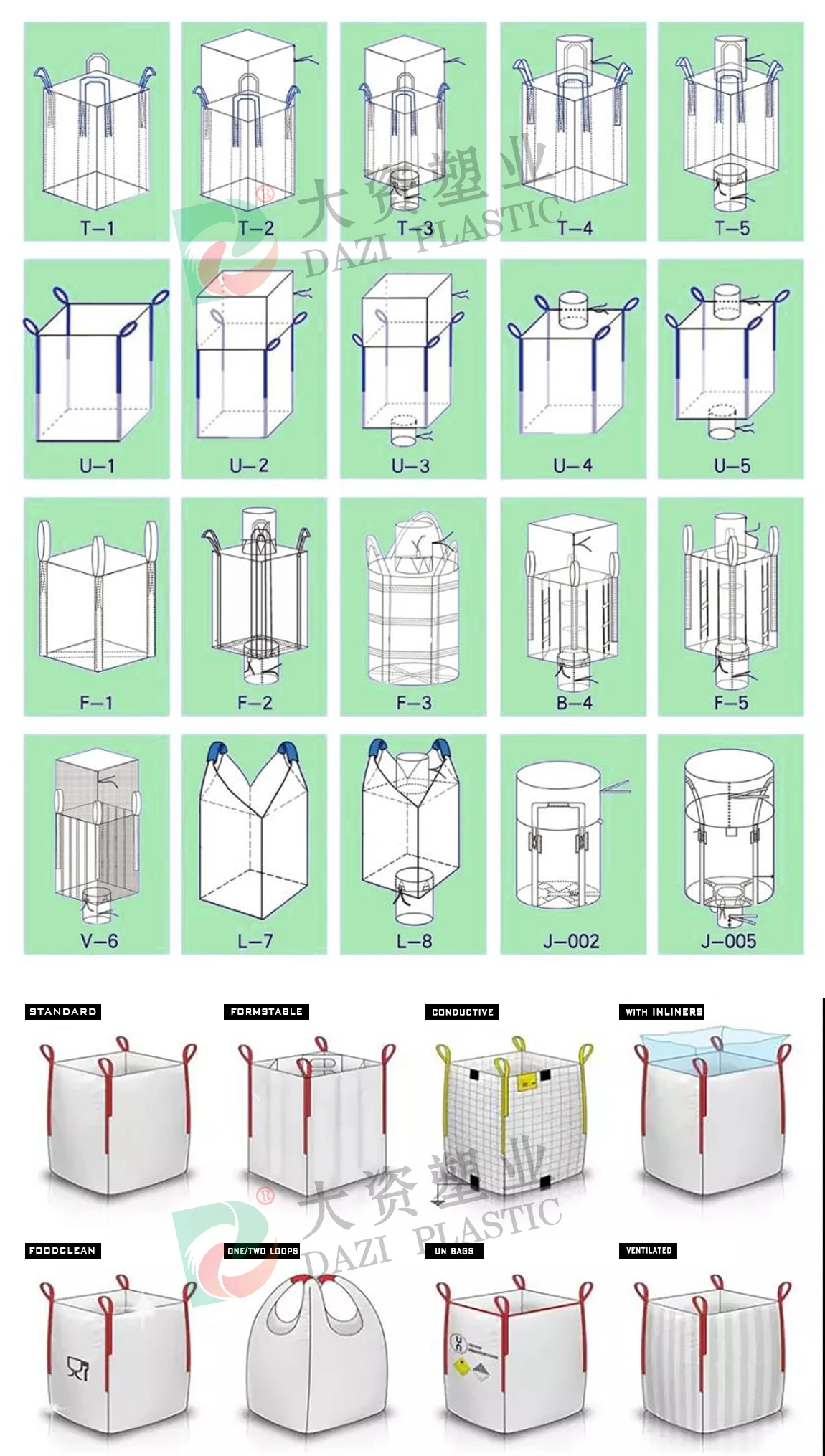
A U-panel bag is sewn from one continuous panel that forms the body's front, bottom and back, closed by two separate end panels. That layout matters more than it sounds.
Continuous Corners, Fewer Weak Lines
Because the front, bottom and back come from a single piece of fabric, the two most heavily loaded corners of the bag — where the body wall meets the base — carry no seam at all. Load distributes along continuous fabric rather than across a stitched joint. The result is a body that resists deformation under load and keeps its intended dimensions instead of stretching at the points most likely to fail.
Where the Baffles Go
The baffles are internal fabric panels sewn into the bag's four vertical corners, connecting the body walls to one another. When the material pushes outward, each baffle goes into tension and holds the walls apart at a fixed distance. The body cannot balloon into a sphere because the corners are effectively tied.
The Filled Result
A U-panel bag with corner baffles fills into a rectangular block with near-vertical walls and a stable, flat base. The footprint stays close to the declared dimension through the entire fill, from half-loaded to full. That predictability is what makes controlled stacking possible rather than hopeful.
Bag Construction Types and Their Filled Behavior
|
Construction
|
Filled Shape
|
Stacking Consequence
|
|
Circular / tubular
|
Rounded, ballooning body
|
Unstable at height, footprint drifts outward
|
|
Four-panel sewn
|
Box-like but bulges at seams
|
Moderate stability, seam deformation under load
|
|
U-panel, no baffle
|
Rectangular base, walls bow outward
|
Better footprint, still leans when stacked
|
|
U-panel with baffles
|
Near-rectangular block, vertical walls
|
Stable stacking, consistent contact area
|
What Stable Stacking Actually Requires
Stacking is a load-path problem. For bags to stack safely, three conditions must be met at once, and baffled U-panel construction addresses all three.
-
Consistent footprint: every bag in the stack must present the same base area, so weight transfers through contact rather than through leaning.
-
Vertical walls: force should travel down the bag rather than outward into neighbors, which reduces side pressure and the risk of a domino collapse.
-
Stable, flat top: the next bag needs a level surface to sit on; a domed or wrinkled top makes higher tiers unstable.
Where these are met, warehouses can raise stack height safely, use floor space efficiently and inspect stock without the risk of a leaning column. Where they are not, operators cap the stack at two tiers — wasting both volume and vertical space.
Filling Behavior With a Shape-Retaining Bag
A shape-retaining bag changes the filling operation itself. With a circular bag, operators often must slow the fill, vibrate the bag or manually settle material to avoid a lopsided load. With a baffled U-panel bag, material fills into a defined column: the bag holds its form from the first kilogram to the last, so filling can run at a steady rate without corrective handling.
The benefit is felt downstream as well. A bag that keeps its declared dimensions stacks predictably on pallets, loads into containers in a regular grid, and can be stored and retrieved by standard handling equipment without special fixtures.
Specifying the Right Baffled U-panel Bag
Not every baffled U-panel bag delivers the same result. Buyers should specify the design parameters that determine performance rather than a generic product name.
-
Define the target filled dimensions and confirm the bag is dimensioned to achieve them.
-
Set fabric weight and seam strength for the material density and stack height planned.
-
Confirm baffle panel position, depth and sewing strength against your fill rate.
-
Match the fill and discharge openings to your handling equipment.
-
Request stacking test data or photographs of filled bags at your intended height.
-
Verify dimensional tolerance for the footprint so pallet grids stay consistent.
Conclusion
U-panel baffle FIBC bulk bags solve bulging at the level where it actually originates — the bag's construction. A continuous U-panel body removes seams from the most heavily loaded corners, internal corner baffles tie the walls to a fixed dimension, and the filled result is a rectangular block with vertical walls instead of a balloon. That shape is what makes stable stacking possible: consistent footprint, downward load path and a level top. For warehouses that need to use vertical space safely, specifying a shape-retaining bag is the difference between stacking what the building can hold and stopping at two tiers.