A Bag Only Fails Where It Is Handled
Fine chemical powder rarely escapes because the fabric was poor. It escapes at the seams where it was dropped, at the spout where it was clamped twice in one day, at the corner that scraped a container wall during transshipment, at the closure that was retied by a different crew with different habits. Transfer is the phase where packaging meets the real world — four or five handovers, each with its own equipment, its own operator and its own way of stressing the bag. A leak-proof liner FIBC is designed not for the calm conditions of a warehouse, but for the sequence of handovers that fine chemical powder must survive between the reactor and the customer's feeder.
Where Ordinary Liner Bags Break Down in Transit
A standard liner bag contains powder well in steady, indoor conditions. Problems appear when the bag is moved.
-
Repeated spout clamping: each loading and unloading station clamps or ties the spout in its own way; abrasion and mis-clamping open gaps.
-
Vibration and pressure cycling: road and rail transport flexes the liner and works powder into seam gaps that were sound at filling.
-
Corner impact: the bottom corners take the brunt of forklift placement, container walls and rough ground contact.
-
Re-stacking under load: bags stacked three high compress the lower liner against sharp material edges.
Any one of these produces a slow leak that no one notices until the container floor is stained at destination — or until a dust cloud appears at the customer's unloading station.
The Redundancy Principle Behind Leak-proof Design
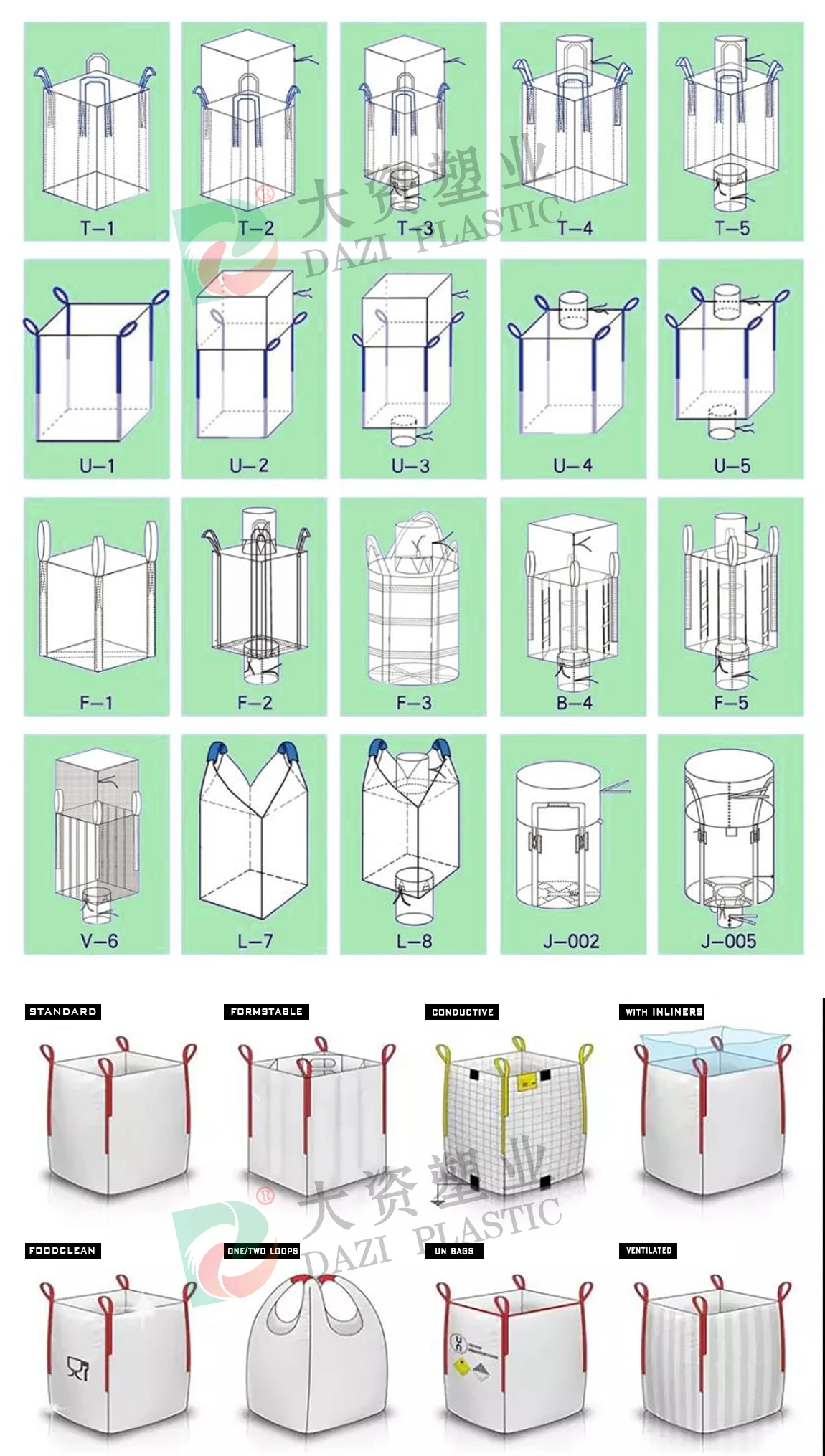
The core idea of a genuinely leak-proof liner bag is redundancy: no single barrier is asked to carry the whole containment duty. Two structural layers share the work.
The Liner as the Primary Barrier
The film liner is the actual container of the powder. In leak-proof construction it is a continuous, seamless or fully sealed body with no open corners, so there is no path for powder to escape through the film itself. Its thickness and formulation are selected for the powder's abrasiveness and the transport duration rather than for the shortest possible service life.
The Shell as Structural Protection
The woven outer bag exists to protect the liner from mechanical attack — absorbing impacts, distributing load across lifting loops and keeping sharp cargo edges away from the film. Fabric weight, coating and reinforcement at stress points are chosen so the shell takes the abuse and the liner stays intact underneath.
Sealed Interfaces at Both Ends
Most leaks start at the interfaces. Leak-proof designs extend the liner through both the fill and discharge openings, then close those paths with sealed sleeves, reliable closures or valve arrangements that can be operated repeatedly without degrading. A properly closed leak-proof liner retains powder even when the bag is tilted, dropped or compressed — exactly the conditions of transshipment.
Stage-by-Stage Risk and Design Response
|
Transfer Stage
|
Primary Failure Risk
|
Leak-proof Design Response
|
|
Plant loading
|
Spout mis-clamp, dust release, overfill stress
|
Matched spout geometry, dust-tight closure, weight control
|
|
Road / rail transport
|
Vibration working powder into seams, liner flex fatigue
|
Sealed seamless liner, sift-proof construction
|
|
Port transshipment
|
Lifting impact, corner abrasion, rough stacking
|
Reinforced corners, high safety factor, heavy shell
|
|
Customer unloading
|
Discharge spillage, dust exposure, uncontrolled flow
|
Controlled discharge spout, sealed sleeve handling
|
Designing for Transport Stress, Not Just Filling
Transport imposes a stress pattern that filling never does: continuous low-amplitude flexing, pressure changes with altitude and temperature, and repeated load reversals as the vehicle brakes and accelerates. Leak-proof liner bags are validated against this pattern rather than a single static fill test.
Practical design responses include a safety factor sized for the full transport load rather than the nominal weight, reinforced bottom corners where impact concentrates, and lifting loops engineered for repeated sling and forklift cycles instead of a single lift. Where the powder is heavy or abrasive, the liner can be paired with a protective inner coating or a thicker film so that a long sea voyage does not wear through the barrier.
Operating Practice That Keeps the Barrier Intact
Even a correctly built bag depends on handling discipline at each handover. Operators should inspect the liner and spout before filling, confirm the closure is fully engaged rather than merely tied, avoid dragging filled bags across rough surfaces, and check lifting loops before every lift. At discharge, the sleeve should be opened in a controlled manner so powder flows into the receiving equipment rather than onto the floor. Written handover procedures — especially where third-party logistics crews take over — close the gap between the bag's design intent and what actually happens at the dock.
Selection Checklist for Leak-proof Liner FIBCs
-
Specify the full transfer route and number of handovers, including third-party terminals.
-
Confirm liner construction is seamless or fully sealed, with no open corners.
-
Verify spout and closure designs are operable repeatedly without loss of seal.
-
Match film thickness and shell weight to powder abrasiveness and voyage length.
-
Request safety factor and corner reinforcement data for transshipment conditions.
-
Ask for transport simulation or drop test evidence, not only static fill tests.
Conclusion
Leak-proof liner FIBC bulk bags treat containment as a journey rather than a moment. By combining a sealed primary liner, a protective woven shell and reliably closable interfaces, they hold fine chemical powder through loading, road and rail movement, port transshipment and final discharge — the four stages where ordinary bags begin to leak. For exporters of fine chemical powder, specifying for the transfer chain and enforcing handling discipline at each handover is the most direct way to arrive at destination with the full consignment, a clean container floor and no dust incident to explain.