Automation Rewards Packaging That Cooperates
Automatic filling lines are built to run without pauses: a dosing scale measures, a filling nozzle loads, a conveyor moves the filled bag away and the next bag arrives. Every minute the line stops to adjust a misfitting bag, clear a dust leak or manually settle material is cost. FIBC jumbo bags designed for automatic filling lines remove those stoppages by cooperating with the equipment at every interface — the fill opening, the venting path, the bag geometry and the discharge outlet are all engineered so the line can run at full speed, fill accurately and feed continuously into downstream production.
What Automatic Filling Demands From a FIBC
Manual filling tolerates rough bags. Automation does not. A bag that will work smoothly on a high-speed line must satisfy four requirements that ordinary jumbo bags often miss.
-
Dimensional consistency: repeatable bag height, width and spout position so sensors, guides and grippers locate the bag the same way every cycle.
-
Spout alignment: a fill spout that seats cleanly onto the filling nozzle, with no loose fabric bunching that blocks the material stream.
-
Air management: venting that lets displaced air escape during fast filling so the scale reaches target weight without premature cutoff or pressure blow-back.
-
Stable base: a flat, stable bottom and balanced shape so the bag sits level on the pallet through filling and transport.
Fill-Side Design for Uninterrupted Loading
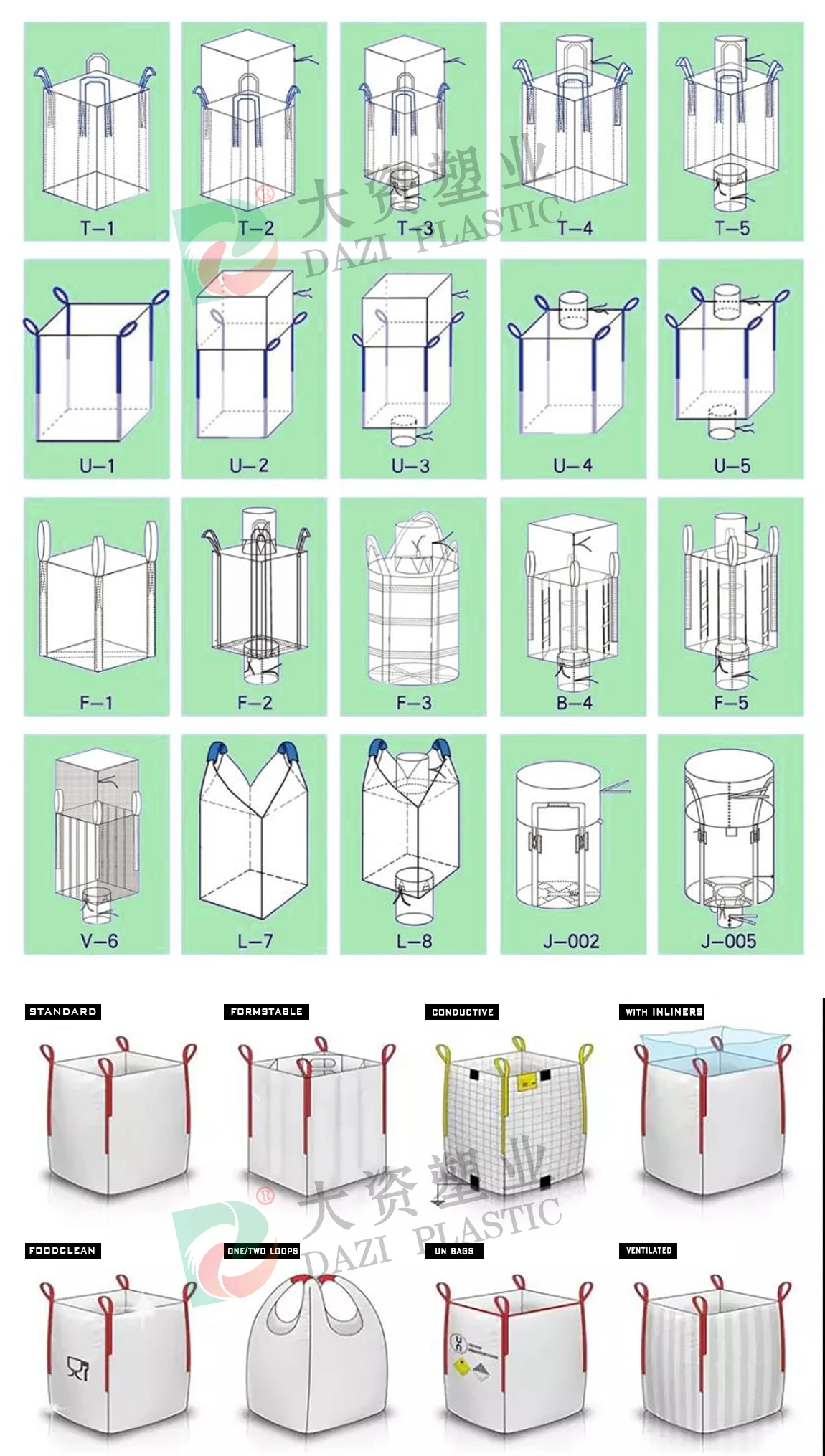
The fill spout is the first point of contact with the automatic filler. FIBCs built for automated lines offer spout diameters matched to standard filling nozzles — commonly 300 mm, 400 mm or 500 mm — with stiff cuffs or filling collars that clamp onto the nozzle without leaking. A well-designed cuff keeps the opening fully expanded, so material pours straight through at the dosing valve's full rate instead of pooling on fabric folds.
Venting is equally critical. When granules or powders pour into a closed bag at high speed, displaced air must leave quickly. Dedicated vent panels or breathable fabric sections release that air while retaining the material, preventing the pressure buildup that slows filling, disturbs the scale reading and creates dust plumes when the nozzle disengages. With proper venting, the filling sequence completes on the first attempt, every time.
Bag Geometry That Keeps Automation Simple
Automated lines use guides, clamps and conveyors that assume a regular shape. FIBCs with structured, square-bottom designs (often with internal baffles or shaped construction) hold their form through the filling cycle, keeping the bag within the conveyor footprint and preventing the rounded bulge that shifts loads and interferes with downstream handling. Consistent geometry also stabilizes gross-weight filling: the scale sees a predictable bag, so the fine-dribble correction stage is short and giveaway is minimized.
Lifting loop configuration matters too. Bags destined for automated hoist systems use uniform, precisely positioned loops with consistent webbing width, so automated spreader bars and loop grippers engage reliably without manual straightening.
Discharge Design for Continuous Feeding
The cost-saving potential of a FIBC does not end at the filling station. For continuous feeding, the filled bag becomes a supply reservoir: it is lifted above a receiving hopper or docking station and released into the process line at the plant's pace. Bottom discharge spouts with drawstring or tie closures let operators — or automated actuators — open the flow in a controlled way, feeding downstream conveying systems without surges or interruptions.
For powders that tend to bridge or flush unevenly, wide-mouth flap openings or spouts with flow-control features keep discharge steady and complete. When the bag is linked directly to a pneumatic conveying pickup or silo inlet, the discharge spout can be made dimensionally compatible with the receiving flange, turning each jumbo bag into a clean, drop-in feeder for the production line.
Where the Cost Savings Come From
|
Cost Lever
|
How the FIBC Contributes
|
Impact
|
|
Filling speed
|
Matched spouts and venting keep the nozzle at full rate
|
Higher bags per hour
|
|
Weight accuracy
|
Stable geometry shortens fine-dribble correction
|
Less giveaway per bag
|
|
Labor reduction
|
Self-aligning spouts and consistent loops cut manual adjustments
|
Fewer operators per line
|
|
Line uptime
|
Fewer misfits, leaks and stoppages between cycles
|
More continuous production
|
|
Material retention
|
Dust-tight filling and complete discharge reduce loss
|
Lower product waste
|
From Storage Bag to Buffer Feeder
In continuous feeding layouts, the FIBC works as a decoupling buffer between supply and process. Filled bags staged beside the line release material into the hopper or conveyor on demand, smoothing over delivery gaps and letting upstream production run in larger, more efficient batches. This buffer role reduces the need for intermediate silos and re-handling, cutting both capital cost and day-to-day operating expense.
Specifications to Confirm With Your Supplier
-
Provide your filling nozzle diameter and spout engagement method so the fill spout and cuff are matched precisely.
-
Confirm venting requirements based on fill rate and material type — powders need more venting than free-flowing granules.
-
Specify bag footprint, height and loop positions to match your conveyor and hoist system.
-
Select the discharge closure style (drawstring, tie, flap or valve) according to your feeding equipment.
-
Request dimensional tolerance data to verify repeatable performance across the whole order.
-
Run a trial on your actual line before volume purchase to confirm fill time, weight accuracy and discharge behavior.
Conclusion
FIBC jumbo bags built for automatic filling lines turn a packaging commodity into a production asset. Matched spouts, effective venting, consistent geometry and controlled discharge keep the line running at full speed, cut giveaway and labor, and let filled bags feed downstream processes continuously without re-handling. For plants that fill hundreds of bags per shift, these design details compound into meaningful cost reduction — and make the difference between an automated line that merely runs and one that runs profitably.