In bulk powder logistics, time is measured at two moments: how fast a bag fills, and how fast it empties. A standard FIBC treats both as afterthoughts — a generic top opening and a cut-open bottom. The result is slow filling that idles the dosing line, labor-heavy unloading that ties up forklifts and operators, and residual powder that turns every discharge into material loss. Custom FIBC bulk bags shift the design focus to the two ends of the bag: fill-side and discharge-side structures engineered around the powder's flow behavior and the plant's existing equipment, so loading and unloading stop being bottlenecks.
Where Loading and Unloading Actually Slow Down
Powder behaves differently from granules at every handling step, and the friction points are predictable.
-
Filling bottlenecks: narrow or flimsy top openings force slow, interrupted feeding and require manual spreading of the fill collar.
-
Material bridging: cohesive or aerated powders arch inside the bag and refuse to flow out even when the bottom is opened, stalling discharge.
-
Dust clouds: open filling and loose discharge release fine powder into the air, forcing work stoppages for dust control and risking operator exposure.
-
Residual material: flat bag bottoms and fold traps keep several kilograms of powder inside, adding loss to every cycle.
-
Manual handling: bags without compatible spouts must be cut open or tipped manually, multiplying labor time and creating spillage.
Custom Fill-Side Design: Faster, Cleaner Loading
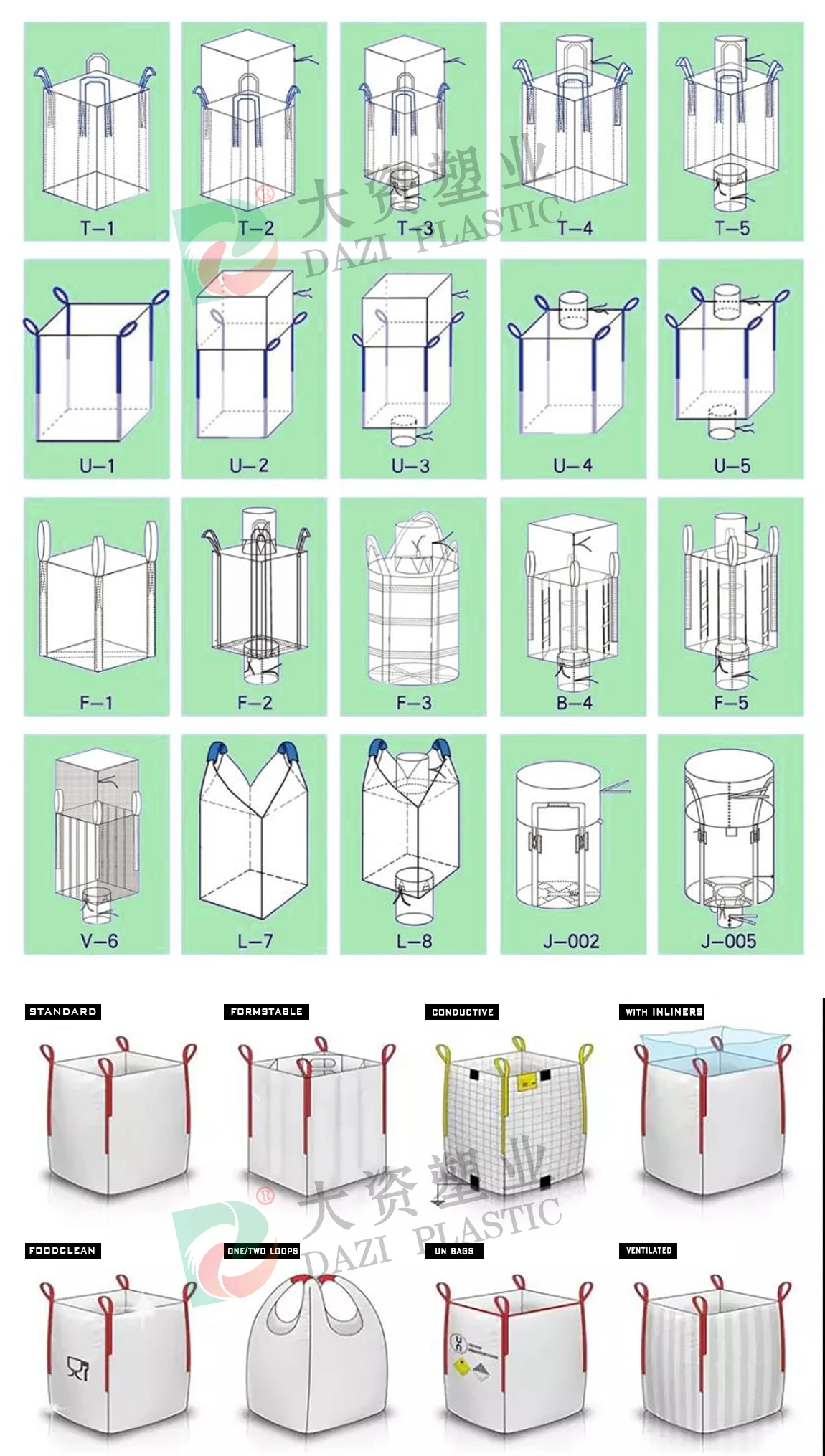
The fill opening should match the plant's feeding method, not the other way around. Custom FIBCs offer top spouts in matched diameters — commonly from 300 mm to 600 mm — sized to connect directly with filling nozzles, screw feeders or gravity chutes, so powder flows in at full equipment speed without spillage at the joint.
For plants that fill from a fixed hopper, an open-top cuff or filling collar gives operators a rigid mouth to clamp the filler onto, eliminating the awkward tugging that slows semi-automatic lines. Venting panels or breathable fabric sections let displaced air escape during rapid filling, so powder keeps flowing instead of backing up against trapped air pressure. On weighing scales, consistent fill geometry also helps reach target weight faster and reduces the fine-dribble stage that consumes cycle time.
Custom Discharge-Side Design: Complete, Controlled Emptying
Discharge design determines how much of the powder actually leaves the bag and how fast. Custom FIBCs offer a range of bottom closures so the plant can match the discharge mode to the powder's flowability and the receiving equipment.
|
Bottom Closure
|
Best For
|
Discharge Behavior
|
|
Drawstring spout
|
Free-flowing fine powders
|
Variable opening control, quick release
|
|
Tie-off spout
|
Standard powder dosing
|
Simple closure, repeatable cycles
|
|
Flap / full-width opening
|
Cohesive or bridging powders
|
Large opening prevents arches
|
|
Valve spout
|
Sealed, dust-free transfer
|
Controlled flow to closed systems
|
Conical and Shaped Bottoms for Complete Emptying
A flat-bottomed bag traps powder in its corners. Custom FIBCs can be built with conical or tapered bottom sections that funnel material toward the discharge point, letting gravity do the work and cutting residual powder to near zero. For cohesive powders that tend to bridge, wide flap-style openings or internal flow-enhancing liners break the arch and keep discharge steady without operators poking the bag.
Liner-Integrated Discharge for Dust-Free Operation
When the bag carries an internal liner, extending the liner through the bottom spout creates a sealed discharge path: powder leaves through the liner, which can be tied off or connected directly to the receiving inlet. This configuration virtually eliminates dust release at the discharge point, keeps the product isolated from the outer fabric, and leaves the bag walls clean for easier reuse.
Integrating Custom FIBCs with Plant Equipment
Loading and unloading become efficient only when the bag fits the equipment around it. Custom FIBCs are specified together with the plant's handling systems: lifting loops sized for the forklift or crane spreader, bag dimensions matched to the filling frame and discharge height, and spout positions aligned with hopper inlets and silo flanges. When the bag geometry matches the line, operators connect, fill, transport and discharge in a continuous rhythm rather than a series of manual adjustments.
For automated plants, discharge spouts can be made compatible with docking stations and pneumatic conveying pickups, converting the FIBC from a storage container into a direct feeder. The same bag that arrived full from the mill empties straight into the process line without intermediate re-handling.
Operational Practices That Protect Loading and Unloading Efficiency
-
Match spout diameter to the filler nozzle before ordering, and keep spare closures for worn drawstrings.
-
Lift filled bags fully clear before opening discharge, and open closures slowly to control initial surge.
-
Keep discharge zones enclosed or connected to extraction to avoid dust re-entry into the working area.
-
Inspect spout seams and closure cords before each reuse; replace damaged closures rather than risking mid-cycle failure.
-
Store empty bags folded in dry conditions so spouts stay free of dirt and retain their sealing shape.
Buyer's Checklist for Loading-Unloading Optimized FIBCs
-
Define the powder type and its flow behavior (free-flowing, cohesive, aerated) before choosing closures.
-
Specify top spout diameter and cuff style to match your filling equipment.
-
Select bottom closure from the table above based on discharge speed and dust requirements.
-
Confirm liner-through-spout configuration if dust-free or contamination-free discharge is needed.
-
Verify bag height and spout position against your hopper clearance and discharge level.
-
Request seam and spout strength test reports for repeated handling cycles.
Conclusion
Custom FIBC bulk bags optimize bulk powder logistics where it matters most — the loading and unloading interface. By engineering fill collars, venting, discharge closures and shaped bottoms around the powder's behavior and the plant's equipment, they turn a passive container into an active part of the material flow: faster filling, complete emptying, controlled dust and less manual labor at every cycle. For powder producers and logistics operators, this means higher line throughput, lower material loss and a cleaner, safer working environment — benefits that compound with every bag handled.