For industrial enterprises engaged in powder and granule bulk transportation, logistics costs are not only reflected in freight and packaging procurement expenses, but also hidden in material loss, operation downtime, cargo damage compensation, repeated replacement and inefficient space utilization. Many procurement teams blindly pursue low-cost ordinary FIBCs, ignoring the huge invisible losses caused by bag rupture, fine powder leakage, unstable stacking and short service life. High-quality FIBC bulk bags with standardized structure, precise weaving technology and durable performance can realize full-link cost optimization from loading and handling, warehousing and transportation to repeated turnover and after-sales maintenance. This article analyzes how premium FIBCs reduce comprehensive logistics expenditures in powder and granule bulk supply chains with quantifiable and practical cost-saving mechanisms.
Eliminate Invisible Material Loss Costs Caused by Low-Grade FIBCs
Fine industrial powders and lightweight granules are extremely prone to micro-leakage through loose weaving gaps and loose stitching of inferior bulk bags. Ordinary low-cost FIBCs adopt low-density weaving and simplified sewing processes, which cannot lock ultra-fine particles stably during long-distance transportation and frequent handling. Sustained dust leakage not only causes 2%-5% raw material loss per shipment, but also leads to workshop and container dust pollution, requiring additional labor and time for cleaning.
High-quality FIBCs adopt encrypted uniform weaving, multi-layer reinforced stitching and customized sealed spout structures tailored for powder and granule characteristics. The tight fabric and closed sealing system completely block fine particle penetration and floating dust overflow. By eliminating material waste and environmental cleaning costs, premium FIBCs directly reduce the unit transportation cost of raw materials, bringing tangible economic benefits for high-value chemical powders, mineral granules and food-grade bulk materials.
Optimize Warehouse & Container Space Utilization to Cut Unit Freight Costs
Irregular bulging is a common problem of ordinary FIBCs after being filled with fluid powder and granules. Rounded and deformed bag bodies lead to scattered placement, large gaps between cargoes and low space utilization in warehouses and shipping containers. This phenomenon forces enterprises to increase shipment times and expand warehouse occupation, resulting in redundant freight and storage overheads all year round.
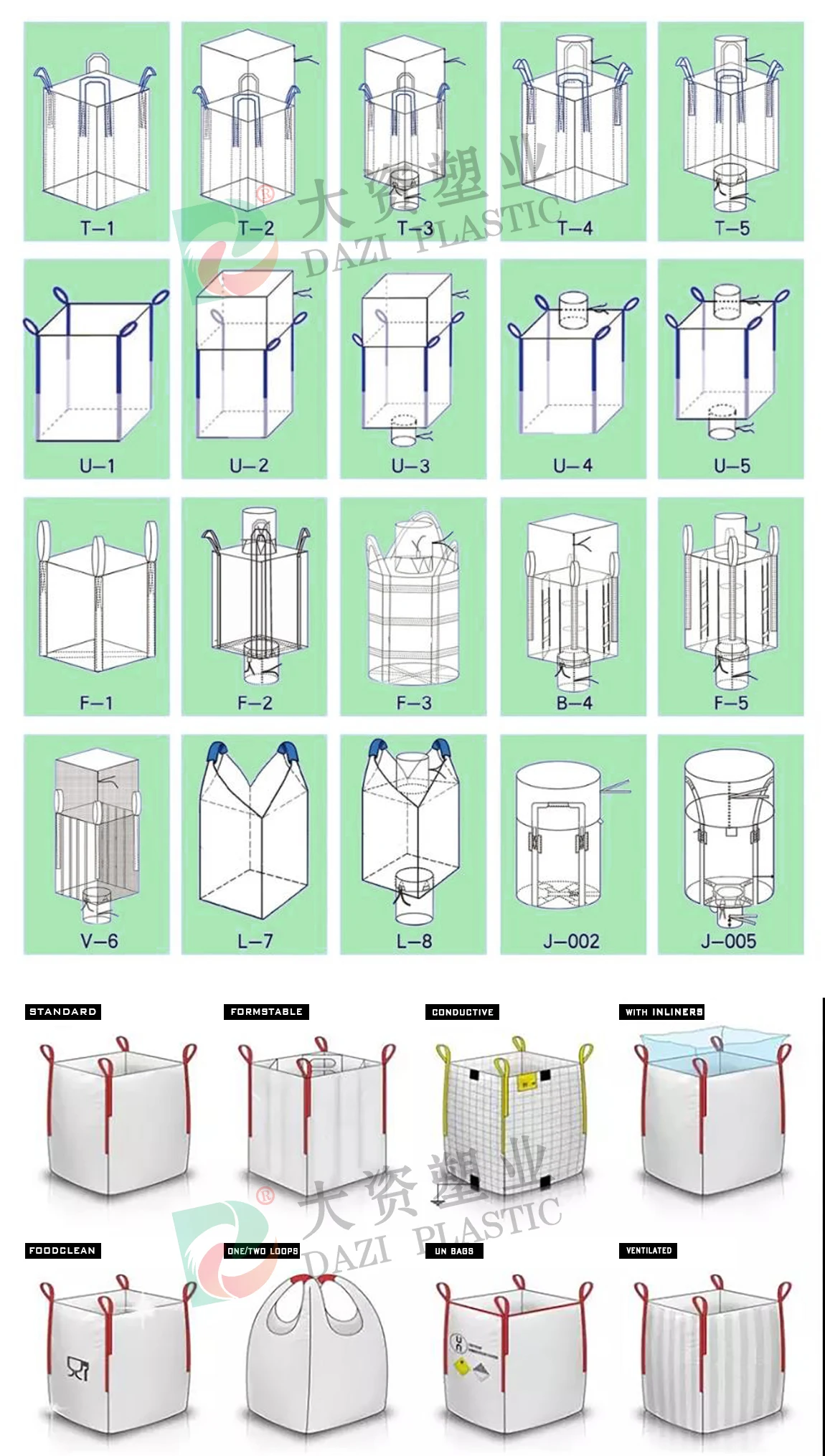
High-quality customized FIBCs adopt scientific baffle shaping and vertical sidewall structural design. After filling, the bags maintain a regular cubic shape with neat edges and no irregular expansion. This standardized shaping mode increases container and pallet space utilization by up to 30%, enabling more cargo volume per single shipment and effectively reducing ocean freight, trucking and warehousing unit costs. For enterprises with large-scale cross-regional and export bulk transportation, space optimization alone can create considerable long-term cost advantages.
Reduce Labor & Equipment Handling Costs with Standardized Structural Design
Unqualified low-quality FIBCs have inconsistent loop height, uneven stress points and unstable bearing capacity, which easily cause jamming during forklift and crane handling, requiring manual auxiliary adjustment and slow lifting speed. In severe cases, bag inclination and partial load occur, forcing suspension of loading operations and reducing overall logistics turnover efficiency. Irregular bag sizes also cannot adapt to automated assembly line filling and unloading, increasing manual intervention costs.
High-quality FIBCs follow unified industrial production standards with standardized lifting loop layout, stable load balance and precise dimensional tolerance. They are fully compatible with automated filling equipment, forklifts and stereo warehouse handling systems, realizing fast lifting, stable stacking and efficient loading. This standardized design greatly shortens single-bag handling time, reduces labor input per ton of materials, and improves the daily turnover efficiency of bulk logistics, indirectly diluting fixed equipment and labor costs.
Avoid Cargo Damage & Compensation Risks from Packaging Failure
Powder and granule transportation faces bumpy roads and multi-stage handling, which test the structural toughness and stitching firmness of FIBCs. Inferior bulk bags with insufficient safety factor and recycled material fabrics are prone to side wall tearing, bottom cracking and loop breaking during stacking and transportation. Once bag rupture occurs, bulk material leakage will cause cargo damage, customer order rejection and even delayed shipment compensation losses, far exceeding the saved procurement cost of low-price bags.
High-quality FIBCs strictly implement 6:1 industrial safety factor standards, with thickened corner reinforcement, integrated loop connection and high-tensile sewing technology. They resist lateral expansion pressure of fluid materials, multi-layer stacking load and long-distance vibration impact, achieving zero failure rate in normal logistics links. Stable packaging quality eliminates cargo damage compensation, order rework and customer complaint costs, ensuring stable and controllable logistics risk expenditure.
Realize Reusable Turnover & Reduce Long-Term Procurement Costs
Most enterprises regard FIBCs as disposable packaging consumables, but low-quality single-use bags actually form continuous high-frequency procurement costs. Ordinary FIBCs suffer from rapid aging, fabric brittleness and strength attenuation after single transportation and outdoor exposure, and cannot be reused at all. Frequent repeated purchases lead to high annual packaging material consumption.
High-quality FIBCs adopt virgin PP raw materials and anti-aging, wear-resistant optimized formulas. After standardized loading, unloading and storage, they can maintain complete structural integrity and stable tensile performance, supporting 5-8 times of cyclic turnover. For fixed factory internal material turnover, seasonal inventory storage and short-distance regional transportation, reusable premium FIBCs can reduce annual packaging procurement volume by more than 60%, realizing significant long-term total cost reduction.
Cut Hidden Compliance & Safety Operation Costs
For flammable, explosive and moisture-sensitive powder materials, unqualified ordinary FIBCs lack anti-static, moisture-proof and UV-stabilized functional configurations, which cannot meet industrial safety and export customs clearance standards. Non-compliant packaging will lead to warehouse safety audit failures, cargo detention and production suspension rectification, bringing huge hidden operational costs to enterprises.
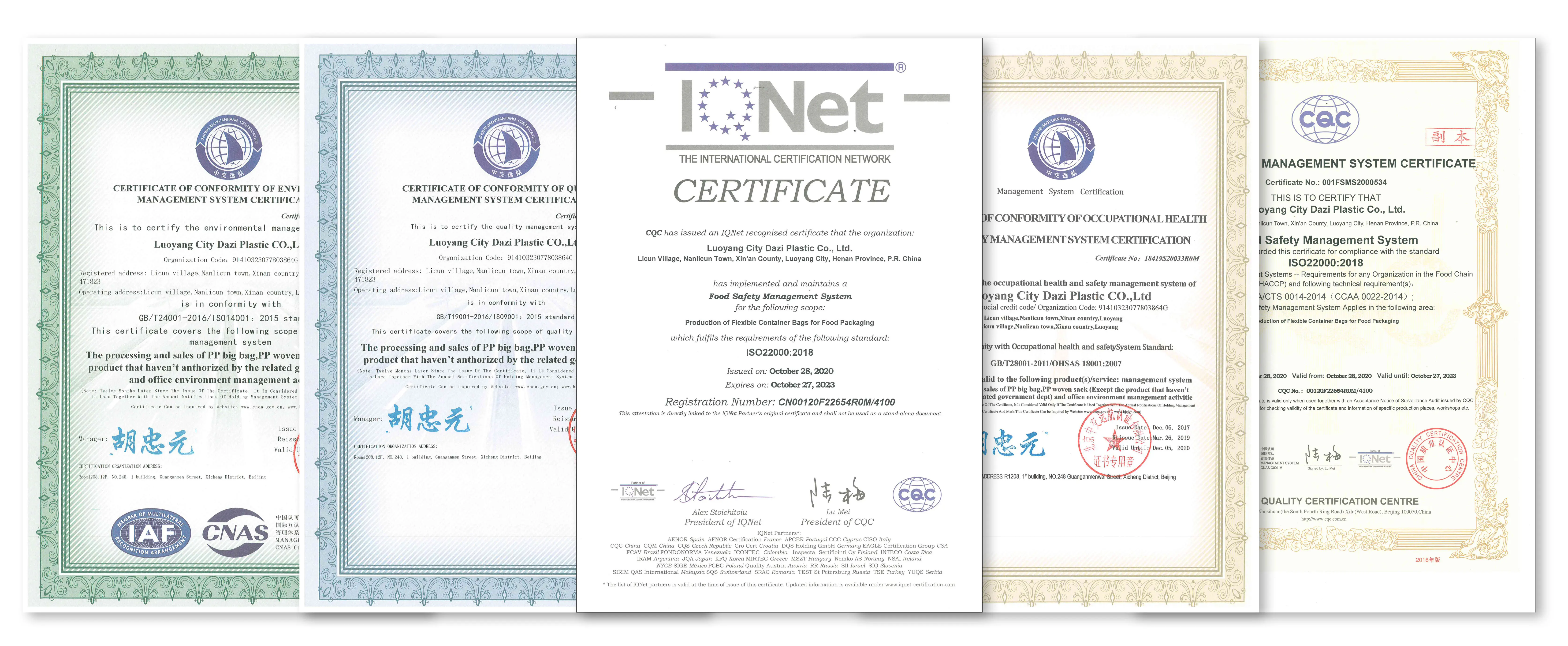
High-quality functional FIBCs (conductive, UV-stabilized, moisture-proof) are equipped with complete certification test reports, fully matching the safety requirements of hazardous powder storage and transportation. Standardized compliant packaging avoids safety risks and customs clearance obstacles, eliminates additional rectification and penalty costs, and realizes standardized and low-risk logistics operation management.
Conclusion
Optimizing logistics costs for powder and granule transportation is not simply reducing single FIBC procurement prices, but controlling full-link invisible losses. High-quality FIBC bulk bags achieve comprehensive cost optimization through six core advantages: eliminating material leakage waste, improving space utilization, reducing labor handling costs, avoiding cargo damage compensation, supporting reusable turnover and meeting compliance standards. For bulk material logistics enterprises, choosing high-quality standardized FIBCs is a low-investment and high-return cost control strategy, which effectively reduces comprehensive logistics expenditures and improves the overall profit margin of bulk material transportation business.