Hazardous powder material handling is widely recognized as one of the highest-risk operational links in chemical processing, pharmaceutical manufacturing, new energy material production and fine chemical industries. Unlike coarse granular materials that generate minimal static friction, ultra-fine and lightweight hazardous powders continuously produce electrostatic charges during pneumatic filling, gravity discharging, vibration stacking and container transportation. Standard polypropylene FIBCs are inherently insulating, unable to release accumulated static charges, which easily trigger electrostatic discharge, dust explosion, material degradation and workplace safety incidents. Beyond basic explosion prevention, professional anti-static FIBC bulk bags solve hidden operational risks, process instability and compliance loopholes unique to powder scenarios. This article elaborates on why anti-static FIBCs have become irreplaceable core packaging for standardized hazardous powder handling, focusing on scenario-specific risks, technical advantages and industrial practical value.
Unique Electrostatic Hazards of Hazardous Powder Handling Scenarios
The danger of static electricity in powder operations lies in its invisibility and suddenness, with risk mechanisms completely different from conventional bulk material logistics. Hazardous powders such as combustible chemical dust, metal alloy powder, pharmaceutical active powder and flammable resin powder feature ultra-low minimum ignition energy (MIE). Even micro-level static sparks below 10mJ can ignite suspended dust clouds in confined workshops, enclosed filling stations and sealed containers, leading to deflagration accidents.
In daily production, frequent material flow friction between powder particles and bag inner walls, repeated bag lifting and stacking vibration, and dry workshop environments all accelerate static charge accumulation. Ordinary FIBCs lock static charges on the fabric surface without dissipation channels. As charge density increases, instantaneous spark discharge becomes inevitable. Moreover, static adsorption causes hazardous powder to cling tightly to bag walls, resulting in incomplete discharge, residual material cross-contamination and uneven powder dispersion, indirectly affecting product qualification rate and batch stability. These scenario-specific risks cannot be eliminated by on-site ventilation or manual operation adjustments alone, requiring structural static elimination from packaging carriers.
Core Technical Advantages of Anti-Static FIBCs for Powder Risk Suppression
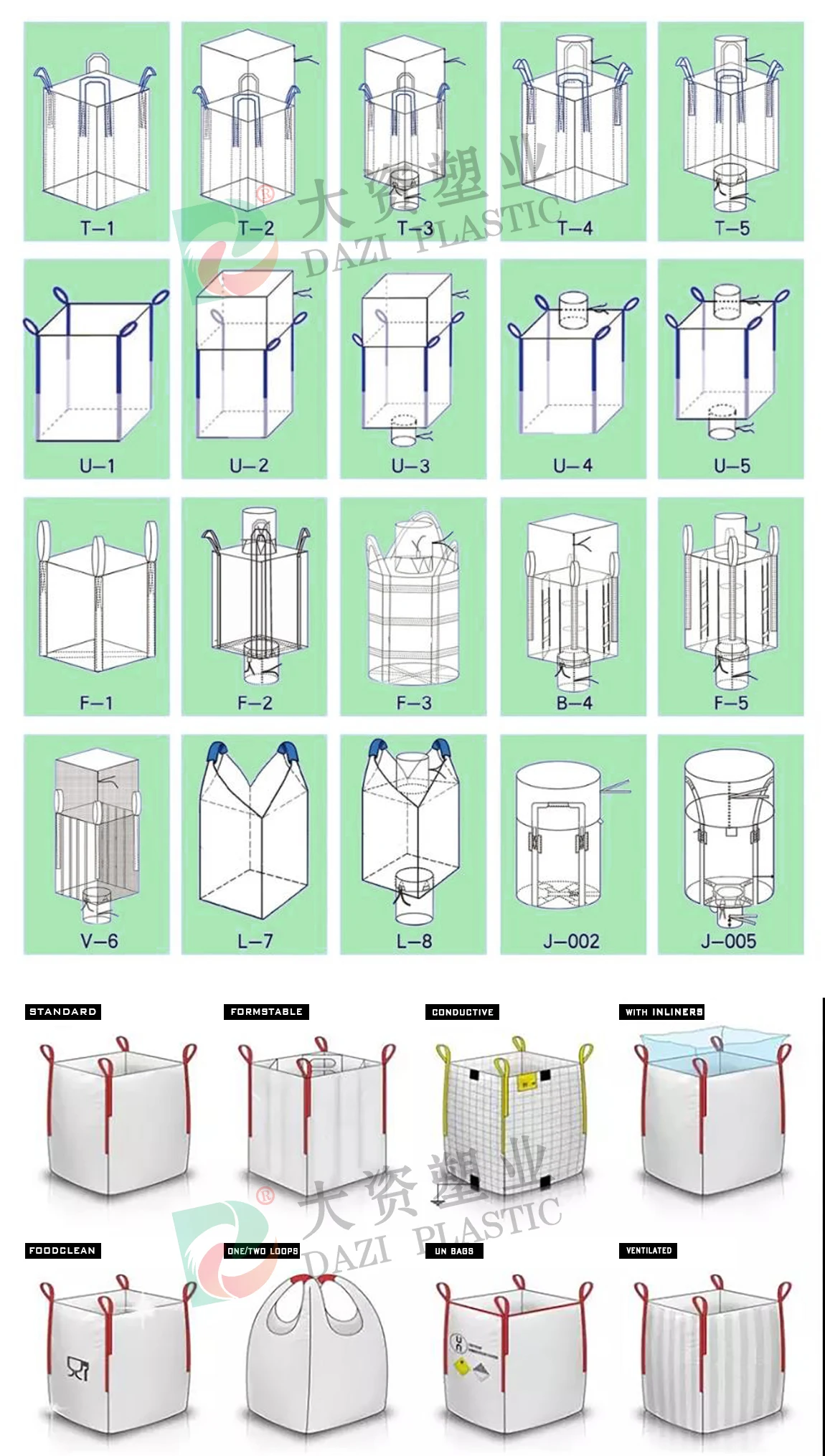
Professional anti-static FIBCs adopt targeted structural and material optimization for powder static characteristics, forming a complete static dissipation system that ordinary bags cannot match. Based on IEC 61340 international electrostatic safety standards, classified Type C and Type D anti-static designs cover all indoor fixed operations and mobile outdoor logistics scenarios, achieving zero static accumulation in full-process powder handling.
Type C grounded anti-static FIBCs are embedded with continuous conductive filament weaving networks. By connecting grounding lugs to workshop grounding devices, they can continuously guide frictional static generated during high-speed powder filling and discharging to the ground, effectively avoiding charge concentration. This design is highly suitable for fixed production lines with stable grounding conditions, covering most indoor hazardous powder processing workshops.
Type D ground-free anti-static FIBCs adopt advanced static-dissipative fabric technology, which can automatically disperse surface static charges without grounding connection. It perfectly solves the static safety blank of ungroundable scenarios such as outdoor temporary stacking, container turnover and mobile field operations, realizing full-scene static risk coverage for hazardous powder logistics.
Different from inferior surface-coated anti-static bags with invalid short-term efficacy, industrial-grade anti-static FIBCs integrate conductive structures into the fabric weaving layer permanently. Static dissipation performance will not fail due to friction, cleaning or long-term storage, ensuring stable safety protection for long-term batch powder production.
Eliminate Hidden Operational Losses Beyond Explosion Prevention
Most enterprises only recognize the explosion-proof value of anti-static FIBCs, ignoring their unique role in optimizing powder production efficiency and reducing hidden costs. Static adsorption is a key overlooked defect in powder processing. Uncontrolled static electricity causes fine hazardous powder to adhere to bag walls in large quantities, resulting in low discharge rate and massive high-value powder residue waste. For expensive pharmaceutical powders, new energy conductive powders and fine chemical hazardous materials, such residual losses bring long-term economic burdens.
Anti-static FIBCs maintain the bag surface in a neutral electrostatic state, thoroughly reducing powder adsorption residue and improving material utilization rate. Meanwhile, static-induced powder agglomeration is effectively suppressed, ensuring uniform powder fluidity and stable feeding volume for downstream mixing, granulation and reaction processes, avoiding batch quality fluctuation caused by uneven powder dispersion.
In addition, static electric shocks frequently encountered by operators during bag handling are completely eliminated. It avoids operational panic and misoperation caused by static stings, standardizes on-site handling procedures, and improves overall workshop operational safety and management efficiency.
Mandatory Compliance Value for Industrial Safety Audits and Cross-Border Logistics
Hazardous powder production and transportation belong to strictly regulated industrial links. Global occupational safety systems and dangerous goods transportation regulations clearly stipulate that flammable, explosive and static-sensitive powder materials must use certified anti-static packaging. Ordinary non-anti-static FIBCs cannot pass factory safety audits, customer ESG inspections and dangerous goods customs clearance.
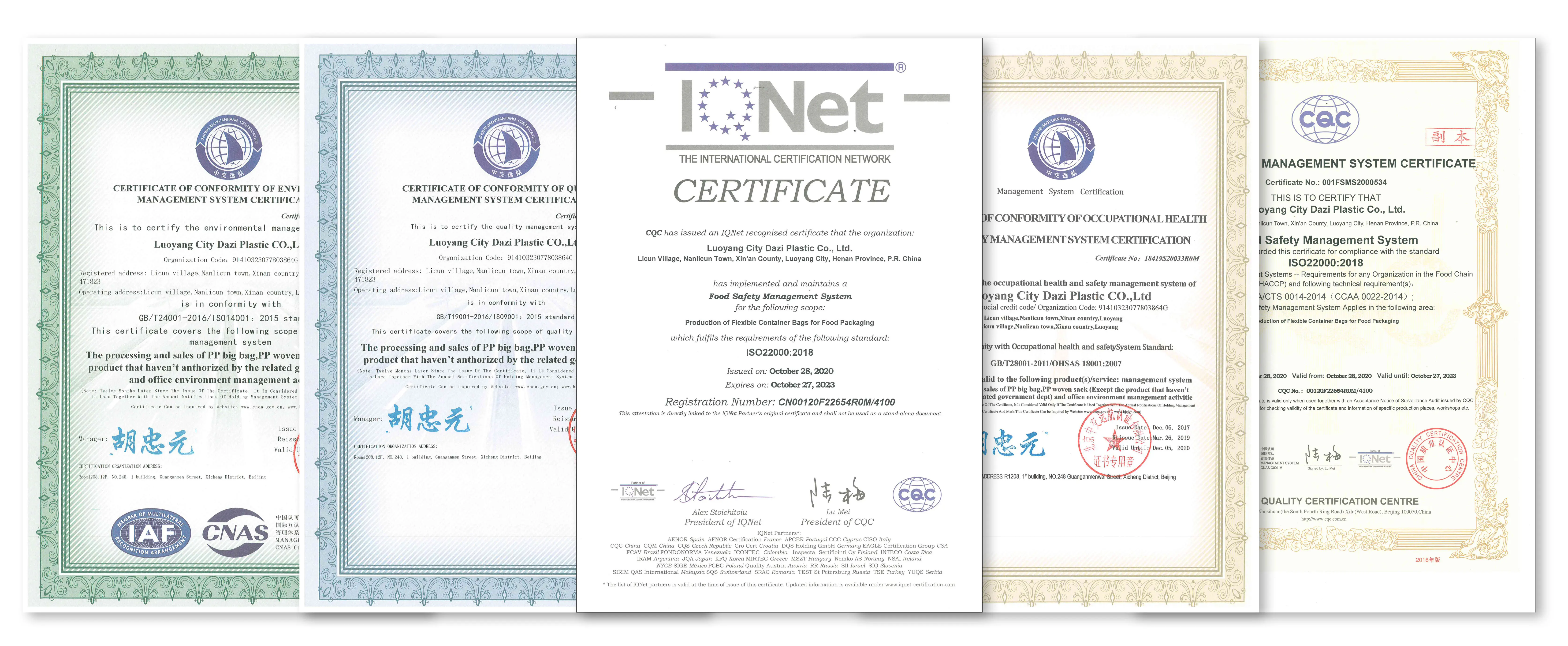
Qualified anti-static FIBCs complete professional electrostatic performance testing and certification, with traceable safety parameters. They help enterprises avoid production suspension rectification, order return and penalty losses caused by non-compliant packaging. For cross-border export of hazardous powder products, matched anti-static grade configuration is a basic threshold for smooth customs clearance and qualified logistics delivery, becoming an indispensable part of enterprise standardized production and international trade.
Avoid Common Low-Configuration Safety Pitfalls in Powder Packaging
Many safety hazards in powder workshops stem from mismatched anti-static configurations. Some enterprises mistakenly use ordinary conductive printed bags and temporary anti-static coated bags to replace industrial permanent anti-static FIBCs. These low-cost alternative products have unstable static dissipation performance, prone to failure after slight friction and moisture change, forming "false safety" status.
Another common mistake is single-type anti-static bag coverage. Using Type C FIBCs without effective grounding will completely lose static elimination function; using ordinary anti-static bags for outdoor ungroundable mobile operations leaves major explosion hidden dangers. Only scenario-based matching of professional permanent anti-static FIBCs can achieve real full-process risk control for hazardous powder handling.
Conclusion
Anti-static FIBC bulk bags are not optional upgraded packaging accessories, but indispensable safety and process guarantee facilities for hazardous powder material handling. They fundamentally solve core industry pain points including static explosion risks, powder adsorption waste, unstable process quality and non-compliant logistics. With dual values of safety risk prevention and production efficiency optimization, professional anti-static FIBCs help hazardous powder processing enterprises achieve standardized, compliant and efficient safe production, becoming an essential foundation for long-term stable industrial operation.